


Establish a gGmbH – Non-Profit Status, Articles of Association & Tax Law for Germany
Establish a gGmbH – Non-Profit Status, Articles of Association & Tax Law for Germany


Establishing a gGmbH: Legally Secure Setup in Germany
MTR Legal provides nationwide advice on all matters related to establishing a gGmbH
Establishing a gGmbH in Germany requires careful legal planning. Entrepreneurs often face the challenge of clearly defining the nonprofit purposes of their organization and meeting the tax framework requirements. The consequences of a poorly drafted statute or inadequate consideration of tax requirements are often overlooked. These oversights can not only jeopardize nonprofit status but also lead to significant financial disadvantages. Therefore, it is crucial to thoroughly examine and clarify all legal and tax aspects in advance.
MTR Legal assists you in setting up your gGmbH legally secure. Our team of experienced attorneys is at your disposal across Germany to answer all questions related to establishing a gGmbH. We offer tailored advice that aligns with the individual needs of your organization. With our extensive experience and strategic approach, we help you minimize risks and establish your organization securely. Leverage our experience to successfully achieve your nonprofit goals.
- Breslauer Platz 4, 50668 Köln
- +49 221 9999220
- info@mtrlegal.com
5000+
Mandate
Team
Experienced Attorneys
Global
Operating Internationally
8
Offices
Competence that Convinces.
Leverage our Expertise für Germany and book a consultation to address your concerns professionally.
MTR Legal – Your Attorneys for Establishing a gGmbH Across Germany
From initial consultation to implementation — legally secured
- Establishing a gGmbH: What Clients Need to Know
- Establishing a gGmbH: Legal Foundations in Germany
- Who Should Choose a gGmbH
- MTR Legal's Approach to gGmbH Establishments
- Avoiding Common Mistakes in Establishing a gGmbH
- Process and Timeline: Establishing a gGmbH Step by Step
- Frequently Asked Questions About Establishing a gGmbH
- Ongoing Management of a gGmbH: Nonprofit Report and Documentation Obligations
Establishing a gGmbH: What Clients Need to Know
Background and Options for Clients in Germany
Establishing a gGmbH involves specific legal requirements. Central to the planning is the design of the statutes, which outline the framework for the nonprofit engagement of the company. A precise statute is essential to meet the requirements for nonprofit status and secure tax benefits. Entrepreneurs must ensure that the statutes fulfill the legally prescribed purposes according to the Fiscal Code. MTR Legal supports you in mastering these complex requirements and creating a legally robust foundation.
Another essential aspect is adhering to the nonprofit purposes falling under § 52 of the Fiscal Code. These purposes must be clearly defined in the statutes and implemented in the gGmbH's operational business. Failure to do so risks losing nonprofit status. The legal consequences can be significant, as the tax benefits would then be forfeited. Our attorneys at MTR Legal are experienced in drafting statutes that meet all legal requirements and ensure that nonprofit status is permanently recognized.
MTR Legal offers comprehensive advice that goes beyond mere statute drafting. We guide you through the entire establishment process and help avoid common pitfalls. Thanks to our experience in Germany, we understand how important it is to tailor to the specific circumstances of the company. Rely on our experience to create a stable legal basis for your gGmbH.
Establishing a gGmbH: Legal Foundations in Germany
Concise Overview of Establishing a gGmbH in Germany
Various legal frameworks determine the establishment of a gGmbH. A central aspect is compliance with the regulations of nonprofit law. These stipulate that the gGmbH must exclusively and directly pursue nonprofit, charitable, or religious purposes. In Germany, recognition by the tax office plays a crucial role, as it is a prerequisite for tax benefits. Therefore, the gGmbH's statutes must meet these requirements. This includes the precise formulation of nonprofit purposes and ensuring that the company's resources serve these purposes exclusively.
Establishing a gGmbH also requires compliance with the GmbH Act. § 5a GmbHG regulates the requirements for the minimum share capital, which is set at 25,000 euros for a gGmbH. At least half of the capital must be paid in at the time of establishment. The limitation of liability is also a key component of the gGmbH, protecting shareholders from personal financial risks. Additionally, the gGmbH is subject to strict accounting requirements to ensure transparent and traceable use of resources. These legal regulations aim to ensure that the gGmbH efficiently achieves its nonprofit goals.
For clients, it is important to seek comprehensive legal advice before establishment. This allows the statutes to be designed in accordance with legal requirements and potential liability risks to be minimized. An experienced attorney can guide you through the entire establishment process and ensure that all legal prerequisites are met to guarantee the gGmbH's nonprofit status.
Create Clarity – Now!
For legal clarity and strategic foresight – our team in Germany is ready to support you. Don’t hesitate to contact us.
Your Team
Competent. Assertive. Successful.
Our team offers comprehensive nationwide advice on establishing a gGmbH. We emphasize a personal and structured approach that places your individual needs at the forefront. At MTR Legal, we understand the importance of a trustworthy collaboration and always engage with our clients on equal footing. Our approach combines legal experience with a deep understanding of the specific challenges associated with establishing a gGmbH.
In the area of gGmbH establishment, our team focuses on creating tailored statutes and clarifying questions regarding nonprofit status. We assist you in the legal implementation of your projects, allowing you to concentrate on your nonprofit goals. Let our experienced attorneys advise you and benefit from our extensive knowledge in this legal field. Contact us to clarify your questions about establishing a gGmbH and take the next step.

Michael Rainer
Rechtsanwalt, Founder & CEO
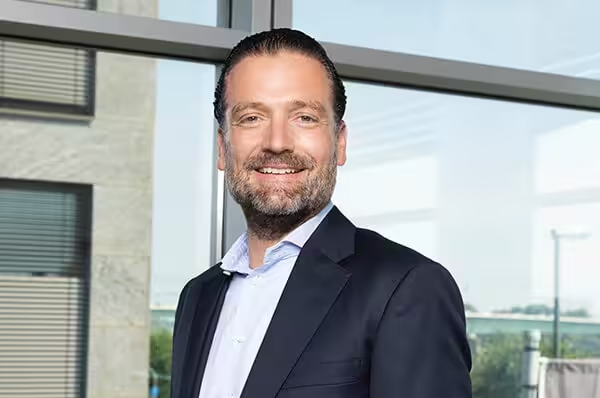
Marc Klaas
Rechtsanwalt, Partner

Michael Below
Rechtsanwalt, LL.M., Salary Partner



Berlin
Cologne
Hamburg
Düsseldorf
Frankfurt
Munich
Stuttgart
Leipzig
Local. Regional. International.
Who Should Choose a gGmbH
Typical Applications and Target Groups at a Glance
Social Enterprises and Social Entrepreneurs
Social enterprises and social entrepreneurs appreciate the gGmbH as a legal form because it is ideally suited to combine social goals with entrepreneurial action. The gGmbH allows for profit generation while pursuing the nonprofit purpose that is prioritized. This structure is particularly advantageous as the use of funds is clearly regulated and tax benefits can be utilized. In Germany, the gGmbH thus provides a solid foundation for innovative projects that create social value while operating economically.
Educational Institutions and Language Schools
Educational institutions and language schools benefit from the gGmbH by expanding their educational offerings without bureaucratic hurdles. This legal form supports nonprofit educational institutions in utilizing tax benefits and efficiently implementing funded programs. The gGmbH offers a flexible structure that allows for adaptation to the changing needs of the education market while optimally utilizing funding. Thus, educational institutions and language schools can sustainably pursue their mission to make education accessible to all.
Cultural Projects and Art Initiatives
Cultural projects and art initiatives find in the gGmbH a suitable legal form to realize creative projects with social benefits. The gGmbH enables these organizations to efficiently manage both public funding and private resources. Through clear regulations on the use of funds, cultural projects can plan long-term and successfully implement their artistic goals. This structure supports creative minds in realizing their visions without losing sight of the nonprofit orientation.
NGOs with Commercial Activities
NGOs pursuing commercial activities use the gGmbH to align their economic and nonprofit goals. Through this legal form, NGOs in Germany can generate commercial income to financially support their nonprofit projects. The gGmbH offers the opportunity to design entrepreneurial activities transparently and legally, while maintaining the nonprofit character. This flexibility is particularly valuable for organizations looking to develop innovative solutions and sustainable business models.
MTR Legal's Approach to gGmbH Establishments
Step by Step to a Legally Secure Solution — with MTR Legal by Your Side
MTR Legal employs a strategic approach to establishing gGmbHs. Our methodical process begins with a detailed initial consultation to understand the specific goals and needs of the founder. Subsequently, our attorneys conduct a thorough analysis of the planned projects to review the requirements for nonprofit status according to § 52 AO. Based on this analysis, we develop a tailored strategy that considers both legal and tax aspects. The implementation steps are precisely planned to ensure that the statutes comply with legal requirements and all necessary applications are correctly submitted.
In the context of establishing a gGmbH, it is essential to design the statutes so that all nonprofit purposes are clearly defined and comply with the financial administration's requirements. This includes determining the use of funds and ensuring that no profits are distributed to shareholders. Additionally, tax hurdles, such as exemption from corporate and trade tax, must be addressed early. Our attorneys accompany the entire process to ensure legal security and avoid unwanted tax consequences. Typically, the establishment process takes about three to six months, depending on the complexity of the undertaking.
For founders in Germany, this means having MTR Legal as a partner who not only offers legal experience but also the ability to develop individual solutions. We support the practical implementation by coordinating all necessary steps and ensuring that the establishment proceeds efficiently and smoothly. From the initial consultation to the final registration, we provide comprehensive and structured support.
Need Legal Assistance?
MTR Legal Germany offers professional legal advice. Let’s find the best solution together.
Avoiding Common Mistakes in Establishing a gGmbH
Costly Mistakes, Underestimated Risks, and Pitfalls at a Glance
Common mistakes in establishing a gGmbH can be avoided. Without legal advice, founders risk underestimating the complex requirements for the statutes. These must be precisely formulated to maintain nonprofit status. An inadequate statute can lead to significant delays and additional costs. The importance of clear management regulations and representation powers is also often underestimated. Mistakes in these areas can lead to internal conflicts and legal disputes that jeopardize the entire project.
Compliance with the requirements for nonprofit status according to § 52 Fiscal Code is crucial. Mistakes in purpose determination or fund usage can result in the loss of nonprofit status, which brings significant tax disadvantages. Additionally, tax hurdles, such as the correct handling of VAT, are often underestimated. Lack of awareness of these aspects can lead to retroactive tax demands. Careful legal advice ensures that the establishment is not only formally correct but also sustainably successful.
For social entrepreneurs and NGO founders, it is advisable to seek legal advice early to efficiently manage the establishment process. Through precise planning and in-depth knowledge of the legal framework, risks can be minimized and the long-term success of the project secured. In Germany, we offer comprehensive support to ensure that your gGmbH fully complies with legal requirements and successfully achieves your social, cultural, or educational goals.
Process and Timeline: Establishing a gGmbH Step by Step
From Initial Consultation to Implementation — Timeline and Required Documents
The establishment process of a gGmbH follows a clear sequence. Initially, a detailed company agreement must be created. This must precisely reflect both the legal requirements of nonprofit status and the specific goals of the project. Building on this, the notarization of the company agreement takes place. Following this, registration in the commercial register is applied for. In parallel, a tax review by the tax office is necessary to confirm nonprofit status. These steps typically take several weeks, with delays avoidable through complete documentation.
The tax office specifically examines compliance with §§ 51 ff. of the Fiscal Code, which govern the requirements for nonprofit status. The company agreement must explicitly outline the social, cultural, or educational purposes of the gGmbH and ensure that profits are used exclusively for these purposes. Timely and precise preparation of documents is crucial to expedite the process. Errors in the statutes or ambiguities can lead to significant delays, as a renewed review by the tax office becomes necessary. Therefore, careful legal guidance is essential.
For founders, it is important to compile all necessary documents early and identify potential tax hurdles. A structured approach, supported by the experienced team at MTR Legal, can help make the establishment process efficient. This ensures that the gGmbH in Germany can quickly commence operations and all legal requirements are met.
Have Questions?
Our team in Germany of experienced attorneys is ready to address your legal concerns. Book your callback now!
Frequently Asked Questions About Establishing a gGmbH
Answers to the Most Important Questions About Establishing a gGmbH
What are the requirements for a gGmbH to be recognized as nonprofit?
To be recognized as nonprofit, the gGmbH must exclusively and directly pursue nonprofit purposes as defined by the Fiscal Code. The statutes must clearly and comprehensively describe the nonprofit purposes being pursued. Additionally, the gGmbH's resources must be used for these purposes, and no profit distribution to shareholders is allowed. Surpluses must be fully reinvested in nonprofit projects to maintain nonprofit recognition.
What tax benefits does establishing a gGmbH offer?
A gGmbH enjoys various tax benefits, provided nonprofit status is recognized. This includes exemption from corporate tax and trade tax. Additionally, donations to the gGmbH can be tax-deductible, which is attractive to potential donors. VAT obligations may also be waived or reduced if the gGmbH does not exceed certain turnover thresholds or if it engages in VAT-exempt activities. These tax reliefs are intended to support nonprofit activities.
What requirements must the statutes of a gGmbH meet?
The statutes of a gGmbH must meet certain criteria to secure nonprofit status. This includes a clear definition of nonprofit purposes, which must align with the Fiscal Code's requirements. The statutes must include provisions on the use of funds and asset allocation in the event of dissolution. Additionally, no profits may be distributed to shareholders. These requirements are essential to obtain recognition as a nonprofit entity.
What steps are involved in establishing a gGmbH?
Establishing a gGmbH involves several steps. Initially, founders must draft a company agreement and formulate statutes that meet nonprofit requirements. Subsequently, the gGmbH must be notarized. Following this, registration in the commercial register is necessary. In parallel, nonprofit recognition should be applied for at the tax office. Finally, the gGmbH must be registered with the relevant trade office to fulfill all legal requirements.
Ongoing Management of a gGmbH: Nonprofit Report and Documentation Obligations
Nonprofit Report and Documentation Obligations — Background and Options for Clients
Ongoing management of a gGmbH requires adherence to certain reporting obligations. For social entrepreneurs and NGO project founders, it is crucial to maintain the nonprofit status of their gGmbH. A central element is the nonprofit report, which discloses the use of funds and documents the fulfillment of the statutory purposes. Additionally, further documentation obligations must be observed to avoid jeopardizing recognition as a nonprofit organization by the tax office. These requirements are not only formal but also substantively demanding, requiring precise and regular documentation.
The legal framework for the nonprofit status of a gGmbH is outlined in §§ 51 ff. of the Fiscal Code (AO). These regulations require that the gGmbH's resources are used exclusively and directly for nonprofit, charitable, or religious purposes. Furthermore, the requirements for the statutes are clearly defined to obtain tax benefits. Errors in preparing the nonprofit report or failing to meet documentation obligations can lead to the loss of tax privileges. Therefore, careful attention to legal provisions is essential to secure nonprofit status in the long term.
Our team at MTR Legal provides comprehensive support in fulfilling your gGmbH's reporting obligations legally. Through informed legal advice and practical assistance, we help you maintain your organization's nonprofit status and overcome tax hurdles. In Germany, compliance with these legal requirements is a crucial factor for the continuity of nonprofit projects. Rely on our experience to achieve your goals effectively and legally.