

Restructuring in Crisis – StaRUG & Protective Shield Proceedings for Wuppertal
Swift, discreet, and decisive – MTR Legal provides comprehensive support.
Restructuring in Crisis (StaRUG) in Wuppertal: Legally Securely Positioned
MTR Legal advises clients in Wuppertal on all matters related to Restructuring in Crisis (StaRUG)
Restructuring in Crisis (StaRUG) in Wuppertal requires legally sound decisions and strategic actions. Companies in Wuppertal’s industrial landscape, whether in the chemical or textile industry, often face the challenge of responding swiftly to financial constraints. The obligation to file for insolvency can place significant pressure on directors and shareholders. Additionally, the complexity of the StaRUG process, while offering opportunities, also presents legal hurdles. Personal liability risks for executives in these situations should not be underestimated. Therefore, it is crucial to promptly evaluate suitable restructuring options such as self-administration or regular insolvency to secure the company’s future.
As your legal partner on-site, MTR Legal offers comprehensive support in crisis situations in Wuppertal. Our team has extensive experience in guiding restructuring processes and understands the specific challenges faced by companies in Wuppertal. With us by your side, you can minimize legal risks and develop the best possible solutions for your company. Act now to preserve your options and shape the entrepreneurial future.
- Friedrich-Ebert-Straße 55, 42103 Wuppertal
- +49 202 29528970
- wuppertal@mtrlegal.com
5000+
Mandate
Team
experienced lawyers
Global
Internationally active
8
Offices
Competence that convinces.
Utilize our expertise für Wuppertal and book a consultation to address your concerns professionally.
MTR Legal – Your Attorneys for Restructuring in Crisis (StaRUG) in Wuppertal
From initial consultation to implementation — legally secure
- Recognizing Crisis and Acting Early
- Restructuring Options: Out-of-Court and Court-Supervised
- Restructuring in Crisis (StaRUG) in Wuppertal: Legal Foundations
- Insolvency Filing or Self-Administration: Which Path Fits in Crisis
- Director Liability in Crisis: Duties and Options
- Creditor Interests in Crisis: Legal Duties and Flexibilities
- Frequently Asked Questions on Restructuring and the StaRUG Procedure
- Protective Shield Procedure under § 270b InsO: Opportunities and Limits
- Self-Administration: Requirements and Risks for Directors
Internationally Represented
As a member of the international network of lawyers IR Global, we are your contact for cross-border matters and represent you in an international context.
Recognizing Crisis and Acting Early
Recognizing crisis and acting early — Background and practice overview
Recognizing a crisis early can provide companies with crucial advantages. For directors and shareholders, it is of utmost importance not to ignore the signs of financial distress. Proactive measures, such as regular liquidity checks and identifying market changes, are essential to respond timely and set the course for successful restructuring. In Wuppertal, a location with an industrial tradition, companies benefit from the timely identification of such risks to enable strategic realignment and minimize liability risks.
The StaRUG offers a structured way to manage restructuring processes and protect the company from the obligation to file for insolvency. A key aspect is early communication with creditors, which can occur within a preventive restructuring framework under §§ 1-102 StaRUG. This allows for a consensual solution that considers both the company's and creditors' interests, potentially avoiding escalation into regular insolvency proceedings, which could endanger the company's continuity. Directors must always keep in mind the personal liability that threatens in the event of delayed filing.
For clients, it is crucial not only to understand the legal framework but also to know the practical steps that support successful restructuring. Close collaboration with experienced attorneys can help assess risks and develop appropriate measures. This not only secures the company's continuity but also protects the personal interests of decision-makers. A comprehensive restructuring plan and dialogue with all parties involved are essential here.
Restructuring Options: Out-of-Court and Court-Supervised
Out-of-court and court-supervised — Background and action options for clients
Restructuring options are diverse, but choosing the right path is crucial. Companies facing financial difficulties are challenged to choose between out-of-court settlements and court-supervised procedures like StaRUG. While out-of-court solutions often allow for flexible negotiations with creditors, court-supervised procedures offer clear legal structures. The right decision depends on many factors, including the company's financial situation, debt structure, and creditors' willingness to cooperate. In Wuppertal, with its industrial tradition, choosing a suitable restructuring option is particularly important to maintain long-term business relationships.
The StaRUG procedure offers companies the opportunity to restructure within a legally protected framework without immediately filing for insolvency. It allows a focus on restructuring while temporarily suspending the threat of insolvency. In contrast, self-administration under § 270a InsO can be an attractive alternative for some companies, as it allows them to retain control under the supervision of a custodian. Both procedures require careful legal examination and planning to minimize the risks of personal liability for directors and secure business operations.
For clients, especially directors and shareholders, it is essential to understand the various restructuring options and know the steps required to minimize liability risks. Early legal advice and the creation of a solid restructuring plan are crucial to achieving financial stability and protecting the interests of all parties involved. Our team at MTR Legal supports you in developing and implementing the appropriate restructuring strategy.
Restructuring in Crisis (StaRUG) in Wuppertal: Legal Foundations
Compact overview knowledge on Restructuring in Crisis (StaRUG) for clients in Wuppertal
Restructuring in crisis requires solid legal foundations and precision. The StaRUG provides companies in financial distress with a means to pursue early restructuring and avoid insolvency. By initiating an out-of-court restructuring process, companies can involve their creditors in restructuring efforts and seek a consensual solution. This is particularly important for directors and shareholders to minimize personal liability risks and ensure the company's continuation.
The StaRUG allows creditors to be bound to a restructuring plan under certain conditions, even if they do not agree. This possibility is regulated by § 5 StaRUG and requires the plan to be accepted by a majority. The advantage lies in avoiding lengthy negotiations and quickly developing legally secure solutions. The application of StaRUG can be an effective tool for companies in Wuppertal, especially in the chemical and mechanical engineering sectors, to secure the company's continuity and prepare for economic uncertainties.
For directors and shareholders, it is crucial to fully understand the legal framework of StaRUG and make informed decisions early. Timely advice from our team can help initiate optimal steps and weigh the various restructuring options, including self-administration and regular insolvency. This not only minimizes personal liability risks but can also strengthen creditors' confidence in restructuring measures.
Create Clarity – Now!
For legal clarity and strategic foresight – our team in Wuppertal is ready to support you. Do not hesitate to contact us.
Your Team
Competent. Assertive. Successful.
Our team in Wuppertal provides you with comprehensive legal experience. We place great importance on advising our clients individually and at eye level. Our attorneys take the time to understand the specific challenges of your company to develop tailored solutions. We rely on a structured approach that enables us to explain complex legal issues clearly and find the optimal restructuring path together with you.
In the area of restructuring and corporate reorganization, our range of services includes guiding StaRUG procedures, self-administrations, and regular insolvencies. Our goal is to navigate directors and shareholders through difficult times legally securely and minimize personal liability risks. In Wuppertal, a city with a strong industrial tradition, we particularly support medium-sized companies in the chemical and textile sectors undergoing transformation processes. Trust in our experience to sustainably secure the future of your company.
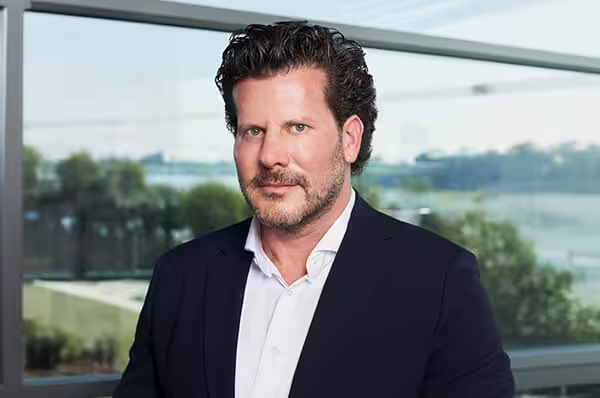
Michael Rainer
Rechtsanwalt, Founder & CEO

Marc Klaas
Rechtsanwalt, Partner

Michael Below
Rechtsanwalt, LL.M., Salary Partner



Berlin
Cologne
Hamburg
Düsseldorf
Frankfurt
Munich
Stuttgart
Leipzig
Local. Regional. International.
Insolvency Filing or Self-Administration: Which Path Fits in Crisis
Insolvency filing and self-administration — Background and practice overview
Filing for insolvency requires careful legal consideration. Within the framework of self-administration, companies can conduct their restructuring independently, which involves specific legal requirements. The decision for or against self-administration should not be taken lightly, as it depends on creditors' approval and requires a careful analysis of the company's economic situation. The StaRUG can be used as an additional tool to take early restructuring measures and avert impending insolvency.
The legal aspects of self-administration include appointing a custodian who oversees management and secures creditors' interests. The director remains in operational control of the company, requiring a high level of responsibility and legal precision. Ignoring legal frameworks, such as the obligation to file for insolvency or proper bookkeeping, poses significant personal liability risks. These risks are particularly relevant for directors of medium-sized companies in Wuppertal operating in industries like chemicals or machinery.
For directors and shareholders, choosing self-administration means they must thoroughly engage with the legal prerequisites and potential consequences. Sound legal advice can help leverage the benefits of self-administration while minimizing personal liability risks. It is crucial to develop a clear strategy early to achieve restructuring goals successfully and position the company for the future.
Director Liability in Crisis: Duties and Options
Minimizing director liability — Background and practice overview
Director liability can pose a significant risk in times of crisis. It is crucial to identify suitable restructuring options early to minimize personal liability. In the current economic climate, where companies in Wuppertal often face challenges in the chemical, textile, and machinery sectors, the timely use of procedures like StaRUG or self-administration is essential. These procedures offer directors the opportunity to retain control over processes and actively steer corporate restructuring, significantly reducing the risk of personal liability.
A key aspect of minimizing liability is timely filing for insolvency to avoid accusations of delayed filing. The StaRUG allows for preventive restructuring to avoid insolvency while ensuring company protection. Particularly, §§ 15a InsO, which regulate the filing obligation, and § 1 StaRUG, which describes restructuring possibilities, must be observed. Failure to adhere to these regulations can expose directors to significant personal liability risks, which can be avoided through sound legal advice and early measures.
For directors and shareholders in crisis, it is essential to seek comprehensive legal advice to choose the appropriate restructuring options and minimize personal liability. Our team offers comprehensive support in Wuppertal for analyzing the specific company situation and selecting suitable legal instruments for crisis management.
Creditor Interests in Crisis: Legal Duties and Flexibilities
Preserving creditor interests — Background and practice overview
Creditor interests must be particularly preserved and protected in a crisis. In restructuring procedures like StaRUG or self-administration, protecting creditors is paramount. This requires careful legal planning to balance creditors' interests and the company's continuation interests. Especially in traditional industries like the chemical and textile sectors in the Wuppertal area, where many medium-sized companies are located, choosing the right restructuring procedure is crucial. The goal is to secure the company's continuity while best preserving creditors' claims.
The legal methods for preserving creditor interests are diverse. The StaRUG offers the opportunity to take early measures to avoid insolvency. Here, creditors are involved in restructuring plans, requiring the most transparent communication and involvement possible. Furthermore, self-administration protects the company management from direct creditor influence while the insolvency code under § 270ff InsO still applies. A careful legal analysis and the right involvement of creditors are crucial here to minimize liability risks for directors and shareholders.
For directors and shareholders in crisis, it is essential to act proactively and seek legal advice early. The individual situation and specific risks must be assessed to choose the appropriate restructuring strategy. Transparency towards creditors plays a decisive role in gaining their trust and obtaining approval for necessary restructuring measures. In a dynamic economic environment like Wuppertal, it is important to react flexibly to changes and take the appropriate steps in time.
Frequently Asked Questions on Restructuring and the StaRUG Procedure
Answers to the most important questions about Restructuring in Crisis (StaRUG)
What is the StaRUG and how can it help in a crisis?
The StaRUG stands for the Act on the Stabilization and Restructuring Framework for Companies. It enables companies facing financial difficulties to take early restructuring measures without directly entering insolvency proceedings. The law provides tools to bind creditors and enforce restructuring plans. This can help avoid insolvency and stabilize the company by relieving directors from the obligation to file for insolvency and enabling restructuring.
What advantages does self-administration offer over regular insolvency?
Self-administration allows the company to continue operating independently under the supervision of a custodian while restructuring its finances and operations. Unlike regular insolvency, management retains control and can actively participate in the restructuring. This promotes a targeted restructuring and can better consider the interests of creditors and shareholders. Additionally, self-administration can favor the company's continuity as it can respond flexibly to market conditions.
What personal liability risks exist for directors in a crisis?
Directors bear significant responsibility in times of crisis, particularly concerning the obligation to file for insolvency. If they fail to file for insolvency in a timely manner, they can be held personally liable. There is also the risk of liability for payments made after insolvency maturity has occurred. The StaRUG can help mitigate these risks by enabling earlier restructuring measures before insolvency maturity occurs, thereby reducing liability risks.
When must an insolvency application be filed?
An insolvency application must be filed immediately if the company is insolvent or over-indebted. Management has the duty to continuously monitor the financial situation to react in a timely manner. Insolvency occurs when the company cannot meet its due payments. Over-indebtedness exists when liabilities exceed assets unless a positive continuation forecast exists. Timely action is crucial to avoid liability risks.
Protective Shield Procedure under § 270b InsO: Opportunities and Limits
Opportunities and limits — Background and action options for clients
The protective shield procedure under § 270b InsO offers opportunities but also clear limits. Companies facing financial difficulties can benefit from this procedure as it allows them to develop a restructuring plan under supervision and with support. It is important for directors and shareholders to know the legal framework to minimize liability risks. In this context, the procedure is an attractive option as it offers the possibility to retain control over the company while a restructuring takes place. However, the requirements and timeframes are strict, making careful preparation essential.
The protective shield procedure requires that a company is still solvent, but impending insolvency or over-indebtedness is foreseeable. The peculiarity lies in the possibility of self-administration, allowing the company to independently take restructuring measures. Protection from creditors' enforcement actions is ensured by the court's order of a protective shield. A key aspect is close collaboration with an experienced insolvency administrator who oversees the procedure. The legal requirements are complex, and non-compliance can have serious consequences, including personal liability for management.
For directors and creditors in crisis situations, it is crucial to carefully weigh the options. MTR Legal supports clients in Wuppertal in identifying and implementing suitable restructuring measures. Our team offers sound legal advice to optimally utilize the opportunities of the protective shield procedure and avoid legal pitfalls. Through early and strategic planning, liability risks can be reduced, and the company's continuity secured.
Self-Administration: Requirements and Risks for Directors
Requirements and risks for directors — Background and action options for clients
Self-administration can be an attractive option for directors. This option provides the opportunity to retain control over the company despite financial difficulties. However, the requirements for self-administration are demanding and require careful legal planning. Directors are imposed with a high level of responsibility, particularly regarding compliance with the obligation to file for insolvency and avoiding liability risks. To successfully conduct self-administration, companies must present comprehensive restructuring concepts and safeguard creditors' interests.
Legally, self-administration is subject to strict conditions, which are examined within the StaRUG procedure. A key aspect is the timely and proper filing of an insolvency application. Management must demonstrate that the company is capable of restructuring and that a viable restructuring plan exists. Additionally, it is crucial to ensure business continuity. Failure to meet these requirements can lead to the rejection of the application and place management in a personal liability situation, which could have severe consequences.
For directors, shareholders, and creditors in Wuppertal, it is essential to know and understand the legal framework of self-administration precisely. MTR Legal offers extensive support to meet the complex requirements and minimize risks. Our team guides you through the entire restructuring process, assists in the creation and implementation of restructuring concepts, and ensures your interests are protected. This allows you to focus on what matters most: realigning and stabilizing your company.