


Asset Structuring – Strategy, Structure & Protection for Wiesbaden
Asset Structuring for Entrepreneurial Families for Wiesbaden

Asset Structuring in Wiesbaden: Legally Secure Solutions
Your contact in Wiesbaden for all asset structuring inquiries
MTR Legal is your law firm for asset structuring in Wiesbaden, specializing in legal solutions for entrepreneurial families. Inadequate asset structuring poses significant risks, particularly in succession planning and family governance. Missing or inefficient structures can lead to tax disadvantages and legal conflicts, jeopardizing the long-term preservation of assets. The complexity of tax laws and legal frameworks requires careful planning to avoid unpleasant surprises. Especially in times of economic uncertainty, it is crucial to take proactive steps to optimally protect and manage family wealth.
As your partner in Wiesbaden, MTR Legal offers comprehensive advice and tailored solutions that address your individual needs. Our team places special emphasis on designing efficient governance structures and legally securing your assets. We assist you in making informed decisions and achieving your long-term goals. Rely on our experience and experience to ensure your asset structuring is secure and successful. Act now to tackle future challenges and sustainably secure your wealth.
- Klingholzstraße 7, 65189 Wiesbaden
- +49 611 23669360
- wiesbaden@mtrlegal.com
5000+
Mandate
Team
Experienced Lawyers
Global
Internationally Active
8
Offices
Competence that Convinces.
Leverage our expertise für Wiesbaden and book a consultation to address your matters professionally.
MTR Legal – Your Attorneys for Asset Structuring in Wiesbaden
MTR Legal in Wiesbaden: Expertly guided asset structuring
- Asset Structuring: What Clients Need to Know
- Legal Foundations of Asset Structuring
- Asset Structuring in Wiesbaden: Legal Foundations
- MTR Legal's Approach to Asset Structuring Mandates
- Common Mistakes in Asset Structuring: What Clients Should Avoid
- Process and Timeline: Asset Structuring Step by Step
- Frequently Asked Questions about Asset Structuring
- Asset Structuring with MTR Legal: Your Next Step
- In-depth Analysis: Special Cases and Specific Topics
- Tax Aspects in Detail
- Legal Foundations of Asset Structuring
- International Relations and Specificities
- Practical Checklist
- Current Case Law and Trends
International Representation
As a member of the international network of lawyers IR Global, we are your contact for cross-border matters and represent you in the international context.
Asset Structuring: What Clients Need to Know
Basic concepts, applications, and initial guidance
Asset structuring is a complex process that requires strategic planning. For multi-generational entrepreneurial families, it is crucial to establish clear structures for managing and transferring assets. Well-thought-out asset structuring considers both legal and economic aspects. The goal is to effectively protect and optimally utilize wealth. Family constitutions and governance mechanisms play a key role, as they not only regulate decision-making processes within the family but also support long-term planning and safeguarding of family wealth.
Legal and organizational steps are crucial in asset structuring. These include drafting partnership agreements, complying with compliance requirements, and considering tax frameworks. A solid understanding of legal regulations, such as inheritance and corporate law, is essential. This knowledge enables the development of individual solutions that meet the specific needs of the family. In complex cases, it may be necessary to consider international aspects to ensure a comprehensive and stable structure.
For entrepreneurial families in Wiesbaden, it is important to start planning early and be accompanied by an experienced team. Successful asset structuring requires not only legal knowledge but also an understanding of a family's individual goals and values. Through close collaboration with your team, tailored strategies can be developed to address both current and future challenges.
Legal Foundations of Asset Structuring
Law, case law, and design practice explained concisely
The legal frameworks for asset structuring are diverse and require in-depth knowledge. Various laws, including the Civil Code (BGB) and the Commercial Code (HGB), fundamentally regulate the design of such structures. These laws form the basis for the legal security of asset structures. Additionally, current rulings by the Federal Court of Justice are significant for better understanding the legal consequences of asset structuring. Knowledge of these legal foundations is crucial to avoid potential pitfalls and develop sustainable solutions.
In practice, numerous design options arise. Inheritance law, governed by the BGB, offers various possibilities for intergenerational asset transfer. At the same time, corporate law regulations, as anchored in the HGB, can be considered when structuring company shares and participations. These legal mechanisms enable the development of individual and tailored solutions. It is important to keep an eye on tax implications to avoid unwanted financial burdens. Continuous observation of case law ensures that chosen structures always meet current legal requirements.
For clients, this means they must rely on sound advice to make their asset structuring future-proof. In Wiesbaden, MTR Legal is ready to support you in developing and implementing a legally secure asset structure. We place great emphasis on crafting tailored solutions that meet both legal and economic demands.
Asset Structuring in Wiesbaden: Legal Foundations
MTR Legal explains: Asset structuring in practice
What questions should you clarify in advance regarding asset structuring? One of the central considerations concerns the legal security of the planned structure. Clients often want to know which legal instruments are suitable for sustainably protecting assets while remaining flexible. It is important to choose the appropriate legal form for businesses or assets to maximize tax benefits and limit liability. Another focus is on succession planning: How can asset structures be designed to smoothly support the transition between generations?
A key legal aspect is compliance with inheritance and gift tax regulations. These can significantly impact asset structuring. Among other things, § 6 ErbStG, which governs the valuation of business assets, plays a role. Clients should be well aware of tax allowances and possible tax reliefs to avoid unnecessary burdens. Especially when transferring business shares, careful planning is essential to fully utilize the legal frameworks.
In practice, this means for clients that early planning and the involvement of legal advice are essential. A thorough analysis of existing assets and potential legal pitfalls can help minimize long-term risks. Clients from Wiesbaden who consider these aspects can rely on a legally sound and future-proof asset structuring that includes both tax and legal optimizations.
Create Clarity – Now!
For legal clarity and strategic foresight – our team for Wiesbaden is ready to support you. Don’t hesitate to contact us.
Your Team
Competent. Assertive. Successful.
Our team in Wiesbaden combines extensive experience and legal experience. We place great importance on advising our clients personally and at eye level. Our structured approach allows us to develop tailored solutions specifically designed for the needs of entrepreneurial families and family offices. When designing your asset and corporate structure, we ensure that the interests of both older and younger generations are considered to secure a harmonious and sustainable future.
Our attorneys in Wiesbaden specialize in drafting family constitutions and implementing governance structures. These focal points help minimize potential generational conflicts and improve transparency within the asset structure. We encourage you to contact us early to set the course for long-term and successful asset planning together. Let us clarify the complex legal requirements for you and create a stable foundation for future generations.
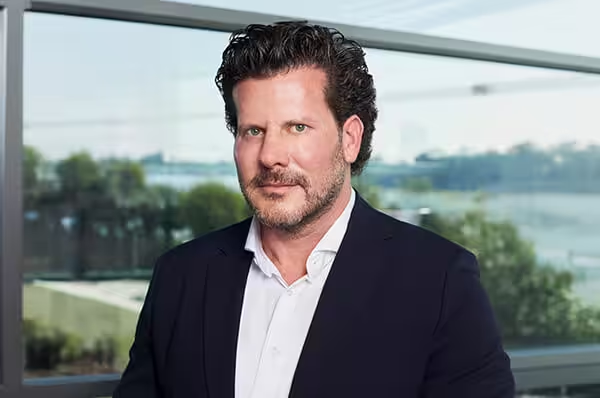
Michael Rainer
Rechtsanwalt, Founder & CEO

Marc Klaas
Rechtsanwalt, Partner

Michael Below
Rechtsanwalt, LL.M., Salary Partner



Berlin
Cologne
Hamburg
Düsseldorf
Frankfurt
Munich
Stuttgart
Leipzig
Local. Nationwide. International.
MTR Legal's Approach to Asset Structuring Mandates
What our clients can expect from MTR Legal in asset structuring
A thorough analysis is the first step towards successful asset structuring. At MTR Legal, we begin with an initial consultation to capture our clients' specific needs and goals. This forms the basis for developing a tailored strategy. Our team places particular emphasis on designing a balanced family constitution and efficient governance structures to avoid generational conflicts and improve asset transparency. The strategy is implemented in clearly defined steps, tailored to the individual requirements of the entrepreneurial family. A typical timeframe for this process can vary depending on complexity, but we strive for efficient results within a reasonable period.
During the strategy development phase, our attorneys consider the legal frameworks relevant to asset structuring. We take into account, among other things, the regulations of the Civil Code and the Commercial Code to ensure legal security. By implementing a family constitution and clear governance structures, we create transparency and prevent potential conflicts. This is particularly important for entrepreneurial families planning across multiple generations. These legal mechanisms enable clear asset allocation and decision-making, securing the long-term preservation of family wealth.
For clients in Wiesbaden and beyond, it is crucial to be clear about the legal and strategic steps to build a stable asset and corporate structure. We support you in gathering relevant information and planning the necessary steps. Collaborating with MTR Legal provides you with the assurance that all aspects of your asset structuring are thoroughly examined and legally secured.
Common Mistakes in Asset Structuring: What Clients Should Avoid
Concrete examples: Where clients make mistakes in asset structuring
Pitfalls in asset structuring can have serious consequences. Entrepreneurial families often face the challenge of creating a clear governance structure that minimizes generational conflicts and increases asset transparency. Without sound legal advice, families often risk embedding unclear regulations in their family constitution, leading to misunderstandings and conflicts. A precise definition of responsibilities and decision-making processes is indispensable to maintain control over assets and ensure smooth generational transitions.
Another common mistake is neglecting legal mechanisms that secure the interests of all family members. Without clear regulations, there can be uncertainties regarding the rights and obligations of individual members, leading to lengthy legal disputes. Especially in Wiesbaden, a location with high demand for qualified advice, it is essential to establish clear structures from the outset. Implementing legally sound agreements, such as through a detailed family constitution, can help avoid potential conflicts and secure assets in the long term.
For entrepreneurial families, it is crucial to seek legal advice in a timely manner to consider individual needs and goals in a structured asset planning. An experienced attorney can help develop a tailored strategy that meets both legal requirements and integrates family values and goals. By working closely with experienced attorneys, pitfalls can be identified and avoided early on to ensure a stable and future-proof asset structure.
Process and Timeline: Asset Structuring Step by Step
Realistic timeline and preparation for your asset structuring mandate
A structured implementation from start to finish is crucial for success. In asset structuring for entrepreneurial families, it is about creating clear structures that endure across generations. The process begins with a comprehensive analysis of the current asset situation and the existing corporate structure. Subsequently, our team develops a tailored plan that considers the individual needs and goals of the family. This plan is implemented step by step, with each phase of the process clearly defined. Starting with the creation of a family constitution to the implementation of governance structures, a systematic approach is essential.
In the further course of asset structuring, legal documents such as partnership agreements, marriage contracts, or wills are essential. These documents are created in close coordination with the clients to ensure that all legal aspects are considered. Each phase of the process can take several weeks to months, depending on the complexity of the asset and corporate relationships. Especially in generational transitions, clear regulations are essential to avoid conflicts. The goal is to create a transparent structure that provides a clear asset overview and safeguards the interests of all parties involved.
For clients, this means engaging early with the planning and implementation of their asset structuring. Our attorneys accompany you at every step to ensure that all legal and strategic requirements are met. Through a structured approach, you lay the foundation for a sustainable and conflict-free asset and corporate future. In Wiesbaden, MTR Legal offers the necessary experience to design complex structures transparently and future-proof.
Frequently Asked Questions about Asset Structuring
What you should know before consulting on asset structuring
How can a family constitution assist in asset structuring?
A family constitution provides clear guidelines for managing and utilizing family wealth. It serves as a framework that defines roles and responsibilities within the entrepreneurial family. This can minimize potential conflicts, especially between different generations. The constitution promotes transparency and helps ensure decisions align with the family's long-term goals, thus facilitating sustainable asset structuring across generations.
What role does governance play in entrepreneurial families?
Governance in entrepreneurial families involves regulating decision-making processes and establishing responsibilities. An effective governance structure ensures that all family members are involved in business management and that there are clear communication channels. This is crucial to avoid misunderstandings and pursue a common vision. With a well-established governance, entrepreneurial families can better tackle both strategic and operational challenges and ensure the continuity of business objectives.
Why is asset transparency important within entrepreneurial families?
Asset transparency is essential to foster trust within the family and avoid misunderstandings. It allows all parties involved to have a clear view of the assets and their distribution. This is particularly important in complex family structures to ensure that all members have the same information and can make informed decisions. Transparency helps reduce conflicts and strengthen collaboration, which is vital for the family's long-term success.
How can generational conflicts in entrepreneurial families be avoided?
To avoid generational conflicts, it is important to establish clear communication structures early on and involve all family members in decision-making processes. Regular family meetings and workshops can help promote understanding and agreement on common goals. Additionally, developing a succession strategy is crucial to ensure a smooth transition of responsibility and assets. These measures help reduce tensions and strengthen cross-generational collaboration.
Asset Structuring with MTR Legal: Your Next Step
From the first consultation to a legally secure solution
Every successful asset structuring begins with well-founded advice. MTR Legal accompanies you as an entrepreneurial family or family office from the initial consultation to the final implementation. Our team guides you safely through the complex process of asset structuring by developing tailored strategies that consider both legal and economic aspects. This is crucial to avoid generational conflicts and ensure asset transparency. With a clear focus on governance structures, we provide sustainable and legally secure solutions that protect your wealth for future generations.
The advisory process at MTR Legal always begins with a detailed initial consultation, where we identify your specific needs and challenges. Based on this, we develop a strategy grounded in the legal frameworks, such as those anchored in the Civil Code (BGB) or the Commercial Code (HGB). A clear and transparent asset distribution is essential to avoid long-term conflicts within the family and meet legal requirements. Our attorneys assist you in implementing governance structures that enable effective asset management.
If you are looking for a legally secure and sustainable solution for your asset structuring in Wiesbaden, MTR Legal is your reliable partner. With our extensive experience and deep understanding of legal frameworks, we offer you individual advice and support. Contact us to schedule a non-binding initial consultation and find the best solutions for your asset and corporate structure.
In-depth Analysis: Special Cases and Specific Topics
Backgrounds, risks, and the right strategy
In-depth legal security is key to sustainable structures. Entrepreneurial families often face the challenge of structuring assets to protect them across generations. A clear family constitution and effective governance mechanisms are indispensable. Our attorneys at MTR Legal support you in developing tailored solutions that meet both family and business requirements. Especially in Wiesbaden, where the demand for advice is high due to the dense population of affluent residents, we offer comprehensive legal advice to make your family's asset structure future-proof.
The legal measures necessary for sustainable asset structuring require precise coordination and often consideration of complex legal requirements. A crucial factor is the implementation of a transparent asset overview that provides clarity to all parties involved and minimizes potential conflicts. § 1371 BGB could be relevant, for example, in adjusting inheritance contracts to optimally utilize tax advantages. Additionally, corporate law instruments such as holding structures play a significant role in securing control over the family business while ensuring tax efficiency.
For entrepreneurial families, it is crucial to take timely action to avoid generational conflicts and optimally protect family wealth. Our attorneys work closely with you to develop individual strategies that not only protect assets but also preserve family harmony. With MTR Legal by your side, you can ensure that your legal and strategic goals are firmly anchored for future generations.
Need Legal Assistance?
MTR Legal offers for Wiesbaden professional legal advice. Let’s find the best solution together.
Tax Aspects in Detail
Backgrounds and the right strategy for clients
Tax aspects play a central role in asset structuring. When designing asset and corporate structures for entrepreneurial families, tax optimization opportunities are of great importance. Unclear asset transparency can lead to tax disadvantages, especially when generational conflicts exist. To create long-term stable structures, it is important to carefully examine the tax implications of each decision. This includes the choice of legal form, succession planning, and the use of tax reliefs and allowances.
A key point is the consideration of inheritance and gift tax according to §§ 1 ErbStG. Planning must also consider aspects such as the tax treatment of family businesses and the use of family pools. A solid tax strategy can offer significant financial advantages and secure the family's ability to act. However, lacking governance structures can lead to inefficient tax planning, which could negatively impact wealth. Therefore, timely and comprehensive advice from our team in Wiesbaden is essential.
For entrepreneurial families and family offices, proactive action is crucial. Developing a family constitution and establishing clear governance structures are essential to minimize tax risks and secure wealth across generations. Close collaboration with your legal advisory team can help avoid potential conflicts and optimally meet tax requirements. This ensures that the asset structure aligns with the family's individual needs and long-term goals.
Legal Foundations of Asset Structuring
Law, case law, and design practice explained concisely
A solid understanding of the legal frameworks is essential. In asset structuring for multi-generational entrepreneurial families, the Civil Code (BGB) and the Inheritance and Gift Tax Act play a significant role. These laws define how asset transfers can be legally secured. Family constitutions and governance structures developed in accordance with these legal requirements are crucial to avoid conflicts between generations and create transparency in asset distribution. Current developments in case law can also influence design possibilities.
A central challenge is to optimally utilize the legal leeway. This requires a deep understanding of the relevant regulations, such as § 1922 BGB, which governs the transition of assets in the event of death. Design practice offers numerous possibilities here, such as establishing family companies or implementing trust models that consider the specific needs of entrepreneurial families. Such structures allow for flexible management of assets while taking advantage of tax benefits. The consequences of non-optimized asset structuring can be significant, especially regarding tax burdens and family disputes.
For entrepreneurial families in Wiesbaden, it is advisable to start planning asset structuring early. Close collaboration with experienced attorneys can help optimally utilize the legal frameworks and develop tailored solutions. This not only avoids generational conflicts but also ensures the long-term security of family wealth.
International Relations and Specificities
Backgrounds and the right strategy for clients
International relations can significantly influence asset structuring. When planning a family constitution and corporate structure, multinational aspects such as different legal regulations, double taxation agreements, and inheritance regulations must be considered. Especially for entrepreneurial families in Wiesbaden, who often have international assets, these aspects are of central importance. It is essential to avoid conflicts between generations and create clear structures based on governance and transparency. This requires careful coordination between the legal requirements of different countries and the individual family situation.
The mechanisms of international asset structuring often involve complex legal constructions such as trusts or international holdings. These structures can offer tax advantages but require a precise knowledge of the relevant regulations, such as those for avoiding double taxation under §§ 2 and 3 of the Double Taxation Agreement. Additionally, legal compliance in the respective countries must be maintained to avoid later legal consequences. The right governance structure can help coordinate the interests of different family members and increase asset transparency.
For clients, it is crucial to develop a clear strategy that considers both legal and family-internal aspects. Regular consultations with legal and tax advisors are essential to adapt the structure to changing legal frameworks and ensure long-term stability. This way, entrepreneurial families can ensure that their asset and corporate structure remains viable for future generations.
Practical Checklist
Backgrounds and the right strategy for clients
A practical checklist helps organize asset structuring. It is important to consider both the legal and economic aspects of the asset and corporate structure. For entrepreneurial families, a clear governance structure that addresses potential generational conflicts is crucial. A family constitution can serve as a guide to harmonize and secure the interests of all parties involved in the long term. Defining decision-making processes and establishing responsibilities are central elements that should not be missing from the checklist.
Legal aspects such as liability limitation and tax optimization are the focus of asset structuring. Choosing the right legal form and transparently designing asset relationships are crucial to minimize legal risks. In Wiesbaden, with its proximity to Frankfurt, it is particularly important to consider international aspects to effectively manage cross-border asset structures. § 15a EStG, for example, can play a role in structuring participations and should be noted in the checklist.
A structured plan that monitors the implementation of the established measures is essential for success. Entrepreneurial families should regularly review whether the established structures still meet current requirements and make adjustments if necessary. Working with an experienced team specializing in the specifics of asset structuring can provide valuable support and ensure that all relevant aspects are considered in the checklist.
Current Case Law and Trends
Backgrounds and the right strategy for clients
Current case law influences asset structuring. Decisions by the Federal Court of Justice and the Federal Fiscal Court in the areas of inheritance and corporate tax are particularly important for multi-generational entrepreneurial families. These rulings often uncover gaps that have led to uncertainties in the past and provide points of orientation for legally secure asset structuring. Clearly defining ownership relationships and establishing governance structures are crucial to avoid generational conflicts and ambiguities in asset transparency.
A central ruling concerns the regulations on corporate succession in family businesses. Here, the valuation of company shares plays a crucial role, especially with regard to §§ 2032 ff. BGB, which regulate inheritance settlement. The correct application of these provisions can have significant tax implications and influences the strategic planning of asset structuring. Additionally, considering rulings on avoiding double taxation is essential to avoid financial disadvantages and ensure the company's liquidity.
For clients in Wiesbaden and beyond, it is advisable to closely follow these legal developments and regularly consult with an experienced team. Proactively adapting the asset and corporate structure to current case law can not only provide legal security but also ensure sustainable and conflict-free asset planning across generations. This ensures that family interests are preserved and wealth is secured in the long term.