

Anti-Money Laundering Compliance – AML & Obligations for Osnabruck
Legal Support for UWG Violations
Anti-Money Laundering in Osnabruck: Securely Fulfilling AML Obligations
From initial consultation to implementation: AML Compliance in Osnabruck
In Osnabruck, a significant hub for logistics and agriculture, adhering to anti-money laundering regulations is crucial. Companies in these key sectors often engage in complex trade relationships, increasing the risk of money laundering activities. Particularly during business transfers and succession planning, entrepreneurs in Osnabruck face the challenge of minimizing penalty risks and fulfilling the reporting obligations under the Anti-Money Laundering Act (AMLA). Efficient KYC (Know Your Customer) processes are essential to meet legal obligations and avoid sanctions. For clients in Osnabruck, this means staying vigilant and ensuring all compliance requirements are comprehensively met.
MTR Legal is your reliable partner in Osnabruck for implementing AML compliance. The firm has extensive experience advising companies on the implementation of AML compliance systems. Our interdisciplinary team works closely with businesses to develop tailored solutions that meet specific requirements. Trust MTR Legal to optimize your compliance processes and minimize legal risks. Contact our team in Osnabruck to learn more about our services.
- Neumarkt 1, 49079 Osnabrück
- +49 541 98109790
- osnabrueck@mtrlegal.com
5000+
Mandate
Team
Experienced Lawyers
Global
Internationally Active
8
Offices
Competence that convinces.
Utilize our expertise für Osnabruck and book a consultation to professionally address your concerns.
Legal Advice on AML Compliance in Osnabruck
Experienced Team, Clear Strategy, Secure Implementation
- AML Compliance: Who is Obligated to Prevent Money Laundering
- Legal Requirements of the Anti-Money Laundering Act
- AML Compliance in Osnabruck: Legal Foundations
- How MTR Legal Builds Your AML Compliance
- Common Pitfalls in Anti-Money Laundering
- Step by Step to an AML-Compliant Organization
- Frequently Asked Questions about Anti-Money Laundering
- Structure and Duties of the Money Laundering Officer
- Sanctions for AML Violations
- Interfaces Between Tax Law and AML
- Due Diligence in Customer Relationships
- International Money Laundering Standards and FATF
- AML Checklist for Your Company
International Representation
As a member of the international network of lawyers IR Global, we are your contact for cross-border matters and represent you in an international context.
AML Compliance: Who is Obligated to Prevent Money Laundering
When is AML Compliance relevant — and what does legal advice provide?
AML Compliance is particularly important for companies in Osnabruck, especially in the logistics and agricultural sectors. These sectors are often involved in international trade, increasing the risk of money laundering activities. Compliance with legal requirements is not only mandatory but also protects the company from significant fines and reputational damage. For lawyers, notaries, real estate agents, and financial service providers, understanding and implementing the requirements of the Anti-Money Laundering Act is essential to effectively advise and protect their clients.
At its core, AML Compliance requires companies to take measures to prevent money laundering. This includes implementing Know-Your-Customer (KYC) processes to verify customer identities. The legal requirements are outlined in the Anti-Money Laundering Act (§§ 10 to 17 AMLA) and focus on the identification and monitoring of transactions. If money laundering is suspected, companies must promptly file a suspicious activity report. Non-compliance can lead to substantial fines and potentially criminal consequences.
For clients in Osnabruck, this means that a careful analysis and implementation of AML Compliance is essential. MTR Legal supports you in efficiently integrating legal requirements and securing your business. We provide comprehensive advice on your obligations and help you establish an effective compliance system that meets both your legal and business needs.
Legal Requirements of the Anti-Money Laundering Act
Overview of Legal Framework for AML Compliance
Anti-money laundering is a critical issue for companies in Osnabruck, particularly for logistics and agricultural businesses operating in an increasingly regulated environment. Compliance with the Anti-Money Laundering Act (AMLA) is crucial to minimize the risk of fines and legal consequences. Companies must ensure that their internal processes meet legal requirements to properly file suspicious activity reports and conduct Know-Your-Customer (KYC) processes for partner identification. This is especially relevant for local entrepreneurs dealing with complex business transfers or succession arrangements.
The legal framework for anti-money laundering is primarily determined by the Anti-Money Laundering Act (AMLA). This law obligates companies to report suspicious transactions and conduct comprehensive KYC processes. Recent developments and rulings emphasize the need for rigorous implementation of these requirements, focusing particularly on identity verification and documentation of business relationships. Non-compliance can result in significant fines. For companies in Osnabruck, especially in logistics and agriculture, this means regularly reviewing and adjusting their internal compliance structures to remain legally compliant.
Companies should act proactively to ensure all employees are trained in anti-money laundering prevention. Implementing effective compliance programs can help minimize risks and enhance legal security. MTR Legal provides comprehensive advice on setting up and optimizing your internal compliance structures to ensure all legal requirements are met and protect you from legal risks.
AML Compliance in Osnabruck: Legal Foundations
Your Team in Osnabruck for All AML Compliance Matters
In Osnabruck, a significant hub for logistics and agriculture, companies face unique challenges in complying with anti-money laundering regulations. For lawyers, notaries, real estate agents, and financial service providers, implementing AML compliance is crucial to minimize penalty risks and meet legal requirements. A thorough understanding and application of anti-money laundering regulations are essential to protect not only one's reputation but also the integrity of the business. This is where the MTR Legal team comes in, supporting clients in Osnabruck with a structured and personal advisory approach.
Compliance with the provisions of the Anti-Money Laundering Act (AMLA) is essential. Key obligations include conducting Know-Your-Customer (KYC) processes and filing suspicious activity reports in case of potential violations. These mechanisms help prevent legal risks and ensure business operations are in line with legal requirements. The MTR Legal team assists you in efficiently designing and implementing these processes to ensure compliance with legal requirements. This helps avoid potential fines and strengthens trust in your business practices.
For companies in Osnabruck, this means that with a reliable partner like MTR Legal by their side, they can not only ensure compliance but also optimize their business processes. The team's level-headed advice and practical approach help identify individual risks and develop tailored solutions. Trust MTR Legal to achieve your business goals safely and in compliance with the law.
Create Clarity – Now!
For legal clarity and strategic foresight – our team is ready to support you. Do not hesitate to contact us.
Your Team
Competent. Assertive. Successful.
Our team in Osnabruck adopts a personal and structured approach to effectively support you with AML compliance. We place great emphasis on level-headed advice, ensuring our clients are always informed and involved in the decision-making process. Working with us, you can expect targeted and precise advice that considers your individual needs and helps minimize legal risks.
Our key services include implementing compliance measures according to the Anti-Money Laundering Act (AMLA), supporting suspicious activity reports, and optimizing your KYC processes. MTR Legal is your reliable partner in tackling complex legal challenges in the area of anti-money laundering. Our extensive experience and deep understanding of legal requirements make us the ideal choice for companies in Osnabruck. Contact us to elevate your compliance to the next level.
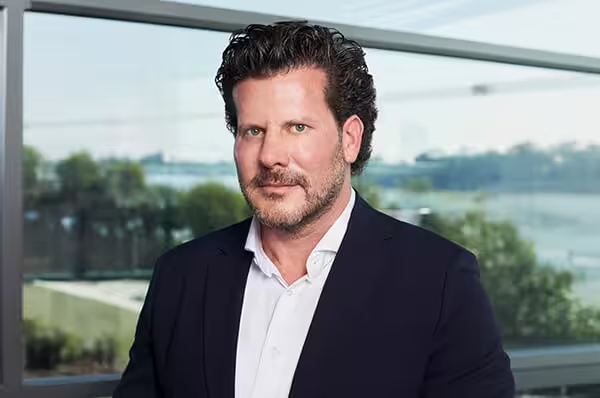
Michael Rainer
Rechtsanwalt, Founder & CEO

Marc Klaas
Rechtsanwalt, Partner

Michael Below
Rechtsanwalt, LL.M., Salary Partner




Berlin
Cologne
Hamburg
Düsseldorf
Frankfurt
Munich
Stuttgart
Leipzig
Local. Regional. International.
How MTR Legal Builds Your AML Compliance
From Initial Consultation to Outcome — Our Approach
In Osnabruck and beyond, implementing AML compliance plays a crucial role for many industries, particularly logistics companies and agricultural businesses. Compliance with the Anti-Money Laundering Act (AMLA) is essential to minimize the risk of fines and legal consequences. For entrepreneurs and companies operating in the region, it is important to know the legal requirements and take appropriate measures. The importance is especially evident in the obligation to report suspicious activities, which, if ignored, can have significant financial and legal repercussions.
At MTR Legal, a structured approach is at the forefront of our advisory services. Initially, a detailed initial consultation is conducted to analyze the specific requirements and risks of the client. Based on this, our team develops a tailored strategy for implementing the necessary compliance measures. A central aspect is a thorough understanding of the provisions as set out in § 2 AMLA, which apply to the respective company. Practical implications include the introduction of KYC processes to verify the identity of business partners and ensure that all transactions meet legal standards.
For clients, this means that with the support of MTR Legal, they not only fulfill their legal obligations but also gain solid protection against potential fines and reputational damage. The typical timeframe for implementing these measures depends on the complexity of the corporate structure but is designed for quick and efficient implementation to avoid unnecessary disruption to business operations.
Common Pitfalls in Anti-Money Laundering
Typical Traps in AML Compliance and How to Avoid Them
Adhering to AML compliance is crucial for companies in Osnabruck, particularly in industries such as logistics and agriculture. Violating the provisions of the Anti-Money Laundering Act (AMLA) can result in substantial fines and damage the company's reputation. Entrepreneurs must ensure they correctly implement money laundering prevention regulations to minimize risks. Especially in Osnabruck, where many medium-sized family businesses operate, it is important to consider compliance requirements during business transfers and succession planning to avoid legal difficulties.
Without legal advice, many companies make common mistakes in implementing AML compliance. A frequent issue is the inadequate execution of Know-Your-Customer (KYC) processes, which are essential for verifying the identity of business partners. Failures here can lead to insufficient documentation and thus an increased risk of fines. Additionally, the obligation to file a suspicious activity report is often underestimated. The AMLA requires that a report be filed promptly if there is a reasonable suspicion of money laundering to avoid criminal consequences.
For clients, this means they must act proactively. Implementing robust compliance processes is crucial to minimizing risks. MTR Legal can support this by developing tailored solutions for KYC processes and the correct filing of suspicious activity reports. Through our legal advice, we help you counteract common mistakes and reliably meet the requirements of the AMLA.
Step by Step to an AML-Compliant Organization
Typical Process and Key Milestones in AML Compliance
Implementing AML compliance is of great importance for companies in Osnabruck to minimize the risk of fines and meet the legal requirements of the Anti-Money Laundering Act. Especially in industries like logistics and agriculture, which are strongly represented in Osnabruck, compliance with these requirements is crucial. Companies, such as a typical freight forwarding company, must ensure their KYC (Know Your Customer) processes are robust to file suspicious activity reports promptly. This not only protects against legal consequences but also strengthens the trust of business partners.
The timeline for implementing AML compliance begins with a comprehensive risk analysis, which typically takes a few weeks. During this phase, potential risk sources are identified and assessed. This is followed by the development and implementation of internal security measures that must comply with the provisions of § 6 AMLA. This process can take several months, depending on complexity. Employee training plays a central role to ensure they can recognize and report suspicious cases. The suspicious activity report itself is filed according to § 43 AMLA and should be submitted promptly upon recognizing a potential money laundering suspicion. Clear documentation is required, encompassing all relevant information and evidence.
For clients, this means they must act proactively to avoid legal risks. MTR Legal supports you in developing and implementing tailored compliance strategies that meet your company's specific requirements. Through close collaboration and individually tailored solutions, we help ensure you are well-prepared for potential audits and that your company's reputation remains protected.
Frequently Asked Questions about Anti-Money Laundering
Everything Essential about AML Compliance at a Glance
What is AML Compliance?
AML Compliance refers to the adherence to the requirements of the Anti-Money Laundering Act (AMLA) by companies and organizations. The goal is to prevent money laundering and terrorist financing. Companies must fulfill certain due diligence obligations, including identifying customers, monitoring transactions, and reporting suspicious activities. A solid compliance management system helps implement legal requirements and avoid fines. This is particularly relevant for lawyers, notaries, real estate agents, and financial service providers, who are legally obligated.
When is a Suspicious Activity Report Required under the AMLA?
A suspicious activity report is required when a company detects indications of money laundering or terrorist financing. This can occur when unusual or inexplicable transactions take place. Obligated parties must promptly report the suspicion to the responsible authority, the Financial Intelligence Unit (FIU). Failure to report can lead to significant fines. Companies should therefore implement clear processes for detecting and reporting suspicious activities to minimize legal risks.
What Costs are Involved in Implementing AML Compliance?
The costs of implementing AML compliance vary depending on the size and structure of the company. Typical expenses include employee training, setting up internal control systems, and implementing software solutions for customer identification and transaction monitoring. Additionally, costs for external advisors may arise to support implementation. Investing in compliance can, however, prevent much more costly fines and secure the integrity of the company. A precise cost estimate should be conducted individually.
How Does the KYC Process Work in the Context of AML Compliance?
The KYC process (Know Your Customer) is a central component of AML compliance. It involves identifying and verifying the identity of customers. Companies must obtain relevant documents such as identification papers and verify their authenticity. For companies, identifying beneficial owners is also required. The KYC process is continuous and requires regular reviews to detect changes in customer structure. Careful execution protects against legal risks and ensures compliance with legal requirements.
Structure and Duties of the Money Laundering Officer
Concrete Next Steps for Your AML Compliance Mandate
Compliance with the requirements of the Anti-Money Laundering Act (AMLA) is crucial for companies to minimize legal risks. In an economically active environment like Osnabruck, characterized by logistics and agriculture, companies in these sectors are particularly challenged to comply. The penalty risks for violations of AML compliance are significant and can jeopardize a company's financial stability. Additionally, the legal obligation to file suspicious activity reports requires a clear understanding of KYC processes to ensure all transactions meet legal requirements.
The legal requirements, particularly the obligation to file suspicious activity reports under § 43 AMLA, present significant challenges for companies. Implementing effective KYC processes is necessary to identify and report potential risks early. The practical application of these processes requires a deep understanding of the legal framework and its concrete impact on daily business operations. Failures in compliance can lead to substantial fines and damage the company's reputation. MTR Legal's experience helps identify and mitigate these risks by developing tailored compliance strategies.
For companies in Osnabruck looking to implement an AML compliance strategy or optimize existing structures, MTR Legal offers comprehensive legal advice. The advisory process begins with an initial consultation to analyze the client's specific requirements. Subsequently, a strategy is developed that meets the company's individual needs. Implementation is carried out in close collaboration to ensure all legal requirements are met. MTR Legal stands by your side as a reliable partner to effectively and practically design your AML compliance.
Sanctions for AML Violations
In-Depth: Navigate Legally Secure with MTR Legal
Compliance with anti-money laundering regulations is essential for companies in Osnabruck, particularly in industries like logistics and agriculture, which are strongly represented here. Companies that are obligated under the Anti-Money Laundering Act (AMLA) face the challenge of implementing extensive compliance measures. Violating the regulations can lead to substantial fines and significantly damage the company's reputation. This includes the obligation to file suspicious activity reports when signs of money laundering activities are present. For medium-sized companies, often family-run in Osnabruck, a legally secure implementation of AML compliance is therefore essential to minimize legal risks and maintain the trust of business partners.
In the legal framework of anti-money laundering, the requirements for Know Your Customer (KYC) processes, regulated in §§ 10 ff. AMLA, are particularly crucial. These include identifying contract partners and continuously monitoring business relationships. For notaries, lawyers, and real estate agents, who often deal with large money transactions, these processes are especially relevant. The practical implementation of these requirements requires a deep understanding of legal obligations and the specific risks existing in the respective industries. Failures in this area can lead to not only legal consequences but also impair business operations.
For companies, this means they need to engage intensively with the specifics of AML compliance. MTR Legal offers comprehensive support in this context by developing tailored solutions for the legally secure implementation of compliance measures. Our team helps identify weaknesses and develop effective strategies to minimize risks, ensuring compliance with the Anti-Money Laundering Act and minimizing the risk of fines.
Need Legal Assistance?
MTR Legal Osnabruck offers professional legal advice. Let’s find the best solution together.
Interfaces Between Tax Law and AML
Legally Secured: Tax Aspects in Detail with MTR Legal
For companies in Osnabruck, especially in logistics and agriculture, compliance with AML regulations is crucial. The tax aspects of these compliance measures should not be underestimated. A key element is the obligation to file suspicious activity reports, which can also have tax implications. These reports not only serve to prevent money laundering but also as a means to avoid fines and legal disputes. For entrepreneurs, it is essential to understand and consider the tax implications of these processes to minimize financial risks.
In the context of AML compliance, companies are required to implement comprehensive KYC processes (Know Your Customer). These processes involve identifying and verifying business partners, as regulated by the Anti-Money Laundering Act, particularly § 10 AMLA. Non-compliance with these regulations can lead to significant tax and legal consequences. For instance, inadequate documentation of transactions can result in fines and trigger tax audits by the authorities. This underscores the necessity of a detailed and legally secure implementation of compliance measures.
For MTR Legal clients, this highlights the urgent need to continuously review and adjust their compliance strategies. This involves close collaboration with experienced lawyers to ensure all legal requirements are met. Support from our experienced team can help clarify complex tax issues related to anti-money laundering prevention, significantly reducing business risks.
Due Diligence in Customer Relationships
Overview of Legal Framework for AML Compliance
Compliance with AML regulations is crucial for companies, particularly in industries like logistics and agriculture, which are strongly represented in Osnabruck. Violations of the Anti-Money Laundering Act (AMLA) can result in substantial fines and permanently damage the company's image. For entrepreneurs operating in Osnabruck, understanding and implementing the legal requirements of the AMLA is essential. This is especially true during business transfers or succession arrangements, where the risk of money laundering activities may be heightened.
The legal framework is primarily determined by the Anti-Money Laundering Act (AMLA), which obligates companies to conduct comprehensive KYC processes (Know Your Customer). These include identifying contract partners and continuously monitoring business relationships. Recent rulings emphasize the importance of careful documentation and risk assessment. Companies must promptly report suspicious transactions to the relevant authorities. There is room for maneuver in implementing internal security measures tailored to the company's specific risks. Non-compliance can lead to fines and criminal consequences.
For clients in Osnabruck, this means they must proactively engage with the requirements of the AMLA. If there is uncertainty about implementing compliance requirements, the MTR Legal team can provide advisory support. We help minimize legal risks and implement the necessary steps to comply with anti-money laundering regulations. This not only ensures the company's continuity but also builds trust with business partners and customers.
International Money Laundering Standards and FATF
Legally Secured: International References and Specifics with MTR Legal
In an increasingly globalized economy, international references in AML compliance are of great importance. Companies in Osnabruck, particularly in logistics and agriculture, often face the challenge of legally securing international transactions and business relationships. Compliance with anti-money laundering regulations is not only a legal obligation but also essential to minimize the risk of fines or criminal consequences. Especially during business transfers or succession arrangements, entrepreneurs in Osnabruck must ensure their compliance processes meet international standards.
The legal requirements for anti-money laundering are anchored in the Anti-Money Laundering Act (AMLA), which also considers international references. Companies must ensure they fulfill their due diligence obligations according to § 10 AMLA, especially in cross-border transactions. This includes identifying contract partners and monitoring transactions. Non-compliance with these requirements can lead to significant fines. Moreover, the obligation to report suspicious activities is a critical aspect that must be particularly observed in international business relationships. Companies must promptly report suspicious transactions to fulfill their legal responsibility and avoid sanctions.
For clients, this means a comprehensive compliance strategy is essential. MTR Legal supports companies in understanding the legal framework and developing tailored solutions that meet international requirements. Our experience helps you implement all necessary measures to minimize the risks of fines and legal disputes, allowing you to focus on your core business while we secure the legal aspects of your international business relationships.
AML Checklist for Your Company
Legally Secured: Practical Checklist with MTR Legal
Implementing AML compliance is crucial for companies, especially in Osnabruck. This practice not only protects against legal consequences but also secures the integrity and reputation of a company. For local players like logistics and agricultural companies, it is essential to understand the requirements of the Anti-Money Laundering Act (AMLA) to avoid fines and legal risks. Entrepreneurs in Osnabruck involved in business transfers must ensure their processes meet legal requirements to ensure smooth transactions.
A solid understanding of the legal framework, particularly § 3 AMLA, is essential. This section outlines the due diligence obligations that obligated companies must observe when identifying and verifying customers. This includes conducting KYC processes (Know Your Customer) and handling suspicious activity reports. Non-compliance with these regulations can lead to significant fines. For companies in Osnabruck operating in logistics and agriculture, this means regularly reviewing and adjusting their compliance processes to minimize legal risks and protect their market position.
For clients, this means acting proactively and regularly reviewing their internal compliance structures. MTR Legal supports you in identifying and implementing the necessary steps to develop a legally secure and efficient compliance strategy. This includes advice on creating suspicious activity reports and implementing KYC processes to ensure your company meets legal requirements while maintaining operational efficiency.