

Restructuring in Crisis – StaRUG & Protective Shield Proceedings for Nuremberg
Swift, discreet, and decisive – MTR Legal provides comprehensive support.
Restructuring in Crisis (StaRUG) in Nuremberg: Legally Secure Solutions
Experienced advice on Restructuring in Crisis (StaRUG) in Nuremberg — structured and legally sound
Nuremberg, as a robust economic hub, offers companies a variety of restructuring options in times of crisis. Companies facing financial difficulties must make the complex decision of which restructuring option is most suitable. Whether StaRUG, self-administration, or regular insolvency, each option comes with specific legal and financial risks. Uncertainty about the best path can exacerbate the situation, necessitating prompt action. Missing the right timing can lead to severe consequences affecting not only the company but also employees and creditors. Therefore, it is crucial to choose the right strategy early to ensure the company’s survival.
MTR Legal stands by your side in Nuremberg as a competent partner to tackle these challenges in a structured manner. Our team provides experienced support in selecting the appropriate restructuring strategy. With a deep understanding of the legal framework, we help you minimize risks and capitalize on opportunities. Our goal is to develop sustainable solutions with you that provide stability and a future perspective for your company. Contact us for legal advice tailored to your specific situation.
- Bahnhofstraße 2, 90402 Nürnberg
- +49 911 59058500
- nuernberg@mtrlegal.com
5000+
Mandate
Team
experienced lawyers
Global
Internationally active
8
Offices
Competence that convinces.
Utilize our expertise für Nuremberg and book a consultation to address your concerns professionally.
MTR Legal – Your Attorneys for Restructuring in Crisis (StaRUG) in Nuremberg
Comprehensive advice on Restructuring in Crisis (StaRUG) from a single source
- Recognizing Crisis and Acting Early
- Restructuring Options: Out-of-Court and Court-Supervised
- Restructuring in Crisis (StaRUG) in Nuremberg: Legal Foundations
- Insolvency Application or Self-Administration: Which Path Fits in Crisis
- Managing Director Liability in Crisis: Duties and Options
- Creditor Interests in Crisis: Legal Obligations and Flexibility
- Frequently Asked Questions about Restructuring and the StaRUG Process
- Protective Shield Proceedings under § 270b InsO: Opportunities and Limits
- Self-Administration: Requirements and Risks for Managing Directors
Internationally Represented
As a member of the international network of lawyers IR Global, we are your contact for cross-border matters and represent you in an international context.
Recognizing Crisis and Acting Early
What clients need to know about recognizing crisis and acting early
Recognizing signs of a crisis early is crucial for corporate restructuring. Companies that can identify the first signs of a crisis can take timely action to prevent greater damage. It is important for company leaders to understand the legal framework that allows them to act early. StaRUG provides valuable tools for taking preventive steps to stabilize the company. Timely intervention can not only secure the continuation of the company but also strengthen creditor confidence.
StaRUG enables companies to enter the restructuring process early before insolvency becomes inevitable. A key aspect is the establishment of a crisis early warning system, allowing financial bottlenecks or market changes to be recognized in time. § 1 StaRUG emphasizes the obligation for early crisis detection and the development of restructuring strategies. These legal requirements are not merely theoretical but require concrete measures and a proactive attitude from company management. Ignoring these obligations can exacerbate the crisis and lead to legal consequences.
For companies in Nuremberg and beyond, it is crucial to implement an effective system for early crisis detection. This includes regular financial analyses, market observations, and close communication with key stakeholders. By collaborating with experienced attorneys, companies can ensure they meet the legal requirements of StaRUG while maintaining their ability to act. Early legal advice can make the difference between successful restructuring and impending insolvency.
Restructuring Options: Out-of-Court and Court-Supervised
What you need to know about restructuring options
The choice between out-of-court and court-supervised restructuring requires solid legal knowledge. Both options offer different advantages and disadvantages that need to be carefully weighed. Out-of-court restructuring often allows for quicker implementation and requires the consent of all relevant creditors. It can be realized through negotiations and restructuring measures such as out-of-court settlement agreements. This option is particularly suitable when a discreet solution is sought and creditors are cooperative.
In contrast, court-supervised restructuring, such as under StaRUG, offers the advantage of a structured process with legal force. StaRUG allows restructuring plans to be enforced even against the resistance of individual creditors, which can be crucial in particularly complex debtor structures. The legal requirements for creating and implementing the plan are high, and careful preparation is essential. The mechanisms of StaRUG, such as the possibility of stabilization and restructuring, provide companies with a legal framework to carry out comprehensive restructuring measures.
When deciding which restructuring option is appropriate, entrepreneurs should consider the specific circumstances of their company. MTR Legal assists clients in identifying and implementing the best solution for them. Through our experience in guiding complex restructuring processes in Nuremberg and beyond, we ensure that all legal aspects are handled efficiently and securely.
Restructuring in Crisis (StaRUG) in Nuremberg: Legal Foundations
Overview of Legal Framework and Practice
StaRUG offers new opportunities for corporate restructuring in times of crisis. The legal framework provides companies with the chance to respond early and structured to financial difficulties before an insolvency application is filed. StaRUG aims to enable sustainable restructuring through legally sound measures by considering the interests of all parties involved. This includes the possibility of involving creditors in a restructuring plan, thereby securing the continuation of the company.
A central legal aspect of StaRUG is the introduction of the preventive restructuring framework. This framework allows companies, under certain conditions, to initiate restructuring measures before insolvency occurs. § 16 StaRUG plays a crucial role by clearly defining the rights and obligations of the parties involved. For example, creditor negotiations can be conducted with legal certainty, securing the company's continuation. The option to seek court assistance in the form of a restructuring officer provides additional security and control over the process.
For clients, it is crucial to know the legal options early and to take appropriate steps. In-depth advice from our team can help leverage the legal and economic advantages of StaRUG. Especially in complex cases, as can occur in an economically active environment like Nuremberg, understanding the exact legal mechanisms is essential for successful corporate restructuring.
Create Clarity – Now!
For legal clarity and strategic foresight – our team in Nuremberg is ready to support you. Do not hesitate to contact us.
Your Team
Competent. Assertive. Successful.
Our team in Nuremberg is ready to support you with legal challenges. We place great importance on providing our clients with personal and structured advice. In a trusting collaboration at eye level, we develop tailored solutions that meet the individual needs and goals of your company. Our attorneys combine in-depth knowledge with the ability to convey complex issues in an understandable and comprehensible manner, providing you with the best possible decision-making basis.
In the field of corporate restructuring, we focus on the legal challenges that can arise under StaRUG. This includes analyzing the economic situation, developing restructuring concepts, and assisting with out-of-court and court-supervised proceedings. Our goal is to secure your company's economic stability and position it for the future. Contact us to jointly develop appropriate strategies for your specific situation and to master the challenges of restructuring with legal certainty.
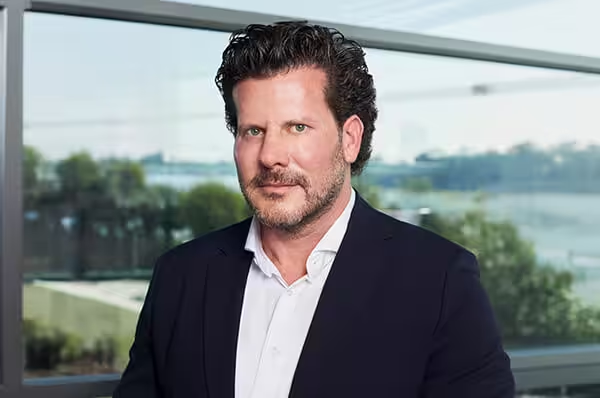
Michael Rainer
Rechtsanwalt, Founder & CEO

Marc Klaas
Rechtsanwalt, Partner

Michael Below
Rechtsanwalt, LL.M., Salary Partner



Berlin
Cologne
Hamburg
Düsseldorf
Frankfurt
Munich
Stuttgart
Leipzig
Local. Regional. International.
Insolvency Application or Self-Administration: Which Path Fits in Crisis
What clients need to know about insolvency application and self-administration
An insolvency application can often be avoided if self-administration is utilized in time. Self-administration allows companies to retain control over the restructuring process despite impending insolvency. This is particularly important in economically strong regions like Nuremberg, where many family businesses and medium-sized companies are based. Through self-administration, managing directors can actively shape the restructuring of their company, which can be especially beneficial in industries such as electronics and retail. However, self-administration requires a coherent restructuring concept and the ability of the management to demonstrate proper corporate governance.
Legally, StaRUG provides additional instruments for restructuring in crisis. It is intended to enhance the chances of successful corporate restructuring without the need for an insolvency application. According to § 270a InsO, a company can apply for self-administration under certain conditions to secure the insolvency estate and satisfy creditors. The legal protection provided by StaRUG helps minimize liability risks for managing directors by offering clear guidelines and protection mechanisms. Nevertheless, careful consideration of restructuring options and timely initiation of necessary measures remain crucial.
For clients, it is essential to seek professional legal support early to identify and implement the appropriate restructuring strategy. Our team is ready to explain the legal framework and develop individually tailored solutions that meet the specific requirements of your company. Especially in times of crisis, close collaboration with experienced attorneys is a decisive factor for the success of the restructuring.
Managing Director Liability in Crisis: Duties and Options
What clients need to know about minimizing managing director liability
Managing director liability can be minimized through targeted legal measures. In the context of corporate restructuring, various procedures like StaRUG play a crucial role. Especially in crisis situations, it is essential to understand and limit personal liability as a managing director. The Insolvency Act (InsO) is of central importance here. Managing directors must ensure they fulfill their duties to avoid liability risks. Timely application for StaRUG procedures or self-administration can help minimize liability risks and ensure the continuation of the company.
Legal mechanisms like StaRUG and self-administration offer important tools for reducing personal liability risks. Since 2021, StaRUG allows restructuring measures to be carried out without insolvency proceedings, thereby preserving creditor rights. It allows for early restructuring, which can be significant for medium-sized companies in Nuremberg. Managing directors must adhere to the provisions of §§ 1–91 InsO to avoid liability risks. Ignoring the obligation to file for insolvency can lead to significant personal consequences. Close collaboration with an experienced team is essential to initiate the right steps in time.
For managing directors, it is important to familiarize themselves early with the legal possibilities and seek professional advice. In a crisis situation, a well-founded legal analysis helps choose the appropriate restructuring paths. By weighing StaRUG, self-administration, or regular insolvency, personal liability can be reduced. A timely decision not only protects the company but also the personal position of the managing director.
Creditor Interests in Crisis: Legal Obligations and Flexibility
What clients need to know about safeguarding creditor interests
Safeguarding creditor interests is an essential part of any restructuring. The legal framework is complex and requires a thorough analysis to consider the interests of all parties involved. Especially in crisis situations, managing directors and shareholders face the challenge of fulfilling the obligation to file for insolvency while protecting creditor interests. StaRUG offers new approaches to achieve an out-of-court settlement and stabilize the company. Precise knowledge of the legal possibilities and risks is crucial for successful corporate restructuring.
StaRUG provides companies in crisis with the opportunity to safeguard creditor interests through a restructuring plan. This plan must receive the approval of the majority of creditors and offers the chance to obtain court approval under certain conditions. This can help avert regular insolvency while minimizing the liability risks of managing directors. §§ 1 ff. StaRUG lay the legal foundations for this process and provide a structured framework that ensures the involvement of all relevant parties. Knowledge of these mechanisms is essential for successful restructuring.
For managing directors and shareholders in and around Nuremberg, it is crucial to familiarize themselves early with the legal possibilities and obligations. Timely advice from our team can help identify the best restructuring options and safeguard creditor interests. A well-founded legal assessment and the development of a tailored restructuring plan are central elements to create long-term stable corporate structures and reduce personal liability risks.
Frequently Asked Questions about Restructuring and the StaRUG Process
What clients frequently want to know about Restructuring in Crisis (StaRUG)
What restructuring options are available for companies in crisis?
Companies in crisis have several restructuring options. Common procedures include the StaRUG process, self-administration, and regular insolvency. StaRUG (Corporate Stabilization and Restructuring Act) offers the possibility to initiate restructuring early without having to file for insolvency. Self-administration allows the company to retain control over the restructuring process under the supervision of a custodian. In regular insolvency, however, an insolvency administrator takes control. Each procedure has specific advantages and disadvantages that should be individually assessed.
When is there an obligation to file for insolvency?
An obligation to file for insolvency exists when a company is insolvent or over-indebted. Insolvency occurs when the company can no longer meet its due liabilities. Over-indebtedness occurs when the company's assets no longer cover the existing liabilities. Managing directors are legally obliged to file for insolvency without undue delay, but no later than within three weeks of these circumstances arising. Ignoring this obligation can lead to personal liability risks and criminal consequences.
What is the StaRUG process?
The StaRUG process allows companies to initiate restructuring measures early to avert impending insolvency. It provides a legal framework for negotiating with creditors about adjustments to claims and other contractual conditions. Unlike insolvency, the management usually remains in office and can actively shape the process. The procedure is particularly suitable when the crisis is recognized early, and the company still has sufficient liquidity to finance the restructuring process.
What personal liability risks exist for managing directors?
Managing directors are personally liable if they breach their duties in a crisis. This includes, in particular, the timely filing of an insolvency application in the event of insolvency or over-indebtedness. They can also be held liable if they take actions that deplete the company's assets or disadvantage creditors. Violations of tax or social security obligations also pose personal liability risks. A careful review of the situation and timely measures are therefore essential to minimize liability risks.
Protective Shield Proceedings under § 270b InsO: Opportunities and Limits
What you need to know about protective shield proceedings under § 270b InsO
The protective shield proceedings under § 270b InsO offer companies protection and structuring opportunities. For managing directors and shareholders in financial difficulties, it represents an important option to secure the future of their company. Unlike regular insolvency, the protective shield proceedings allow for extensive self-administration, which can be particularly advantageous in Nuremberg, where many medium-sized companies with a long history are based. These companies benefit from the opportunity to develop and implement a restructuring plan under court supervision and with the support of our experienced team, safeguarding both creditor interests and business continuity.
The legal mechanisms of the protective shield proceedings allow for restructuring measures to be taken even before impending insolvency. According to § 270b InsO, the proceedings can only be initiated if insolvency has not yet occurred. This proactive approach offers the advantage of gaining time to develop a sustainable solution without fearing immediate liquidation measures. However, managing directors must observe the obligation to file for insolvency under § 15a InsO. Ignoring this obligation can lead to significant personal liability risks, making well-founded legal advice indispensable.
For managing directors and shareholders, it is crucial to correctly assess the opportunities and risks of the protective shield proceedings. MTR Legal supports you in developing the right strategy for your company. We offer comprehensive advice to ensure that all legal possibilities are exhausted and help set the course for successful restructuring. Early involvement of our attorneys can mean the difference between successful restructuring and impending insolvency.
Self-Administration: Requirements and Risks for Managing Directors
What you need to know about self-administration
Self-administration can be associated with specific requirements and risks for managing directors. When deciding on self-administration, managing directors must be well-versed in the legal framework. This begins with the obligation to file for insolvency, which carries not only legal but also personal liability risks. Self-administration allows companies to conduct restructuring under the leadership of the existing management. This offers the advantage of largely retaining control over the company. However, the requirements are high, and comprehensive legal knowledge about the procedure is necessary to avoid mistakes that could lead to personal liability.
The Corporate Stabilization and Restructuring Act (StaRUG) has introduced significant changes that managing directors should be aware of. Self-administration requires that no insolvency ground exists or that it can be eliminated through restructuring. Additionally, the trust of creditors in the management must be ensured. §§ 270 to 285 of the Insolvency Act (InsO) regulate self-administration, and compliance with these provisions is crucial. Mistakes can lead to personal liability risks with severe financial and legal consequences. Therefore, well-founded legal advice is essential to meet the complex requirements.
Companies in crisis situations should examine the legal options available to them early. Our team in Nuremberg supports managing directors in assessing the requirements and risks of self-administration and developing tailored strategies. Through timely and targeted advice, liability risks can be minimized, and the chances of successful restructuring maximized. Rely on our experience to navigate your company safely through the crisis.