

Anti-Money Laundering Compliance – AML & Obligations for Munster
Legal Support for UWG Violations
Anti-Money Laundering in Munster: Securely Fulfilling AML Obligations
MTR Legal advises clients in Munster on all matters related to AML Compliance / Anti-Money Laundering
In Munster, a city with a strong focus on agriculture, IT, and FinTech, adherence to AML Compliance plays a crucial role. Companies in these sectors, as well as real estate agents and financial service providers, are required to adhere to strict KYC processes and submit suspicious activity reports to avoid fines. These regulations are particularly important for agricultural entrepreneurs during farm transfers or IT founders during investments in Munster. The Finance Court in Munster, as one of the most significant tax law courts, underscores the necessity of secure structures in the field of anti-money laundering.
MTR Legal is your reliable partner in Munster for all questions related to AML Compliance. With extensive client experience and an interdisciplinary team, the firm offers tailored solutions for the specific needs of Munster’s economy. Our deep understanding of local market conditions and legal frameworks enables us to provide optimal support. Consult with our team in Munster to secure your business legally and minimize the risk of fines.
- Hafenweg 19, 48155 Münster
- +49 251 66019270
- muenster@mtrlegal.com
5000+
Mandate
Team
Experienced Lawyers
Global
Internationally Active
8
Offices
Competence that convinces.
Utilize our expertise für Munster and book a consultation to professionally address your concerns.
MTR Legal – Your Attorneys for AML Compliance / Anti-Money Laundering in Munster
From initial consultation to implementation — legally secured
- AML Compliance: Who is Obliged to Prevent Money Laundering
- Legal Requirements of the Anti-Money Laundering Act
- AML Compliance / Anti-Money Laundering in Munster: Legal Foundations
- How MTR Legal Builds Your AML Compliance
- Common Failures in Anti-Money Laundering
- Step by Step to a GwG-Compliant Organization
- Frequently Asked Questions about Anti-Money Laundering
- Structure and Duties of the Money Laundering Officer
- Sanctions for GwG Violations
- Interfaces between Tax Law and GwG
- Due Diligence in Customer Relationships
- International Money Laundering Standards and FATF
- AML Checklist for Your Company
International Representation
As a member of the international network of lawyers IR Global, we are your contact for cross-border matters and represent you in an international context.
AML Compliance: Who is Obliged to Prevent Money Laundering
Fundamentals, Applications, and Why AML Compliance / Anti-Money Laundering is Relevant for Your Situation
In an era of increasing regulatory requirements, AML Compliance is highly relevant for many industries, especially in Munster. Lawyers, notaries, real estate agents, and financial service providers face the challenge of meeting legal obligations for anti-money laundering. This is particularly true in a city like Munster, characterized by its vibrant IT and FinTech scene. Adhering to the provisions of the Anti-Money Laundering Act (GwG) is not only a legal obligation but also serves to protect against substantial fines and reputational damage.
The mechanisms of Anti-Money Laundering are complex and require a thorough understanding of the legal foundations. A central element is the implementation of KYC (Know Your Customer) processes, which are mandated by the GwG. These processes help identify suspicious transactions early and, if necessary, submit a suspicious activity report to the authorities. Compliance with due diligence obligations under §§ 10 ff. GwG is crucial to minimize the risk of money laundering activities. Companies that fail to meet these requirements risk not only financial penalties but also significant reputational loss.
For clients, this means that careful implementation of AML Compliance is essential. MTR Legal can provide comprehensive advice and support in this regard. Our team develops tailored solutions specifically designed to meet the needs of companies in Munster. This ensures that all legal requirements are met while allowing you to focus on your core competencies.
Legal Requirements of the Anti-Money Laundering Act
Legal Foundations, Current Developments, and Opportunities
The implementation of anti-money laundering compliance is crucial for companies in Munster to minimize legal risks and meet statutory obligations. Especially in a city with a diverse economic structure, ranging from agriculture to IT and FinTech, compliance with the provisions of the Anti-Money Laundering Act (GwG) is essential. Companies must ensure that they optimize their KYC (Know Your Customer) processes and submit suspicious activity reports to the Financial Intelligence Unit (FIU) promptly to avoid fines and reputational damage.
The Anti-Money Laundering Act forms the central framework for preventing money laundering in Germany. It requires companies to fulfill extensive due diligence obligations, particularly in identifying customers and monitoring transactions. According to § 10 GwG, companies must develop risk-based approaches to identify and mitigate potential money laundering risks early. Recent rulings have further emphasized the importance of these regulations, showing that violations can lead to significant fines and criminal consequences. Companies should therefore continuously review and adapt their internal compliance structures to meet changing legal requirements.
For clients, this means acting proactively to meet legal requirements. Comprehensive legal advice from MTR Legal can help develop and implement effective compliance measures. Our team supports companies not only in implementing legally compliant processes but also in optimizing existing structures to minimize the risks of fines and legal disputes.
AML Compliance / Anti-Money Laundering in Munster: Legal Foundations
Experienced Attorneys for AML Compliance / Anti-Money Laundering — Personal and Directly Accessible
In Munster, a significant hub for IT and FinTech companies, AML Compliance plays a central role. Compliance with legal requirements under the Anti-Money Laundering Act (GwG) is essential for lawyers, notaries, and financial service providers to avoid fines and ensure smooth business operations. The obligation to report suspicious activities and implement Know-Your-Customer (KYC) processes requires a careful and structured approach. Our team at MTR Legal assists you in efficiently implementing the necessary compliance measures.
The Anti-Money Laundering Act requires companies to adhere to strict due diligence obligations. This includes not only identifying business partners but also documenting and retaining relevant data. Non-compliance with these regulations can have significant legal consequences. Within our advisory philosophy, we place great importance on personal and structured consultation at eye level. Our experience in anti-money laundering enables us to develop tailored solutions that meet your company's specific requirements while ensuring compliance with legal obligations.
For companies in Munster looking to optimize their compliance processes, MTR Legal offers practical and reliable advice. Our team helps you implement the necessary measures to comply with AML requirements and assists you in submitting suspicious activity reports. With our profound knowledge of legal frameworks, we can help you minimize risks while optimizing your business processes. Rely on our experience and competence in the field of AML Compliance.
Create Clarity – Now!
For legal clarity and strategic foresight – our team is ready to support you. Do not hesitate to contact us.
Your Team
Competent. Assertive. Successful.
Our team in Munster follows a consulting philosophy in AML Compliance based on personal and structured collaboration. We value advising our clients at eye level while considering their individual needs. Entrepreneurs can expect us to act with a deep understanding of their industry and develop tailored solutions. Whether in agriculture, IT, or FinTech, we are at your side in Munster with comprehensive experience.
Our focus areas in AML Compliance include implementing measures under the Anti-Money Laundering Act (GwG), supporting suspicious activity reports, and optimizing KYC processes. MTR Legal is the right partner for anyone looking to avoid high fines and seeking support in complying with legal requirements. Our experience spans various industries, allowing us to address specific challenges faced by agricultural and food entrepreneurs or IT founders in Munster. Trust in our experience and experience — contact us.
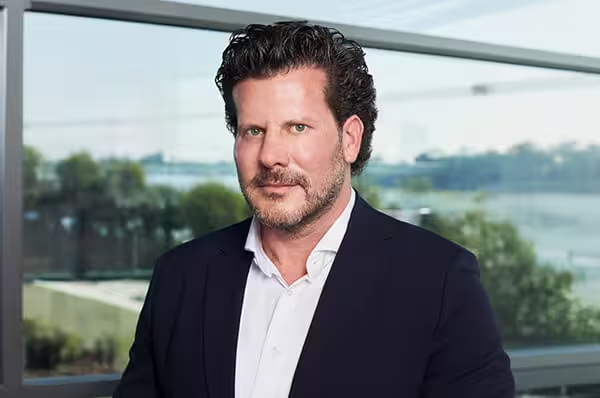
Michael Rainer
Rechtsanwalt, Founder & CEO

Marc Klaas
Rechtsanwalt, Partner

Michael Below
Rechtsanwalt, LL.M., Salary Partner




Berlin
Cologne
Hamburg
Düsseldorf
Frankfurt
Munich
Stuttgart
Leipzig
Local. Regional. International.
How MTR Legal Builds Your AML Compliance
Step by Step to a Legally Secure Solution — With MTR Legal by Your Side
Compliance with AML regulations is crucial for companies in Munster, especially those operating in agriculture, IT, or FinTech. Business responsibility includes implementing the requirements of the Anti-Money Laundering Act (GwG) to avoid fines and legal consequences. For lawyers, notaries, and real estate agents, it is essential to take the obligation to report suspicious activities seriously and implement Know-Your-Customer (KYC) processes stringently. MTR Legal assists clients in fulfilling these requirements securely and efficiently, thereby ensuring legal integrity and business success.
In the context of consulting with MTR Legal, the process begins with a comprehensive initial meeting to analyze the specific requirements and risks of the company. Based on this, a tailored strategy is developed that considers all relevant legal requirements, particularly the Anti-Money Laundering Act (GwG). Practical consequences include implementing KYC processes and training employees to ensure that suspicious activity reports are submitted timely and correctly. The typical timeframe for establishing a solid compliance structure can vary depending on company size and the complexity of business processes.
For clients, this means a significant reduction in the risk of fines and increased legal certainty. Close collaboration with MTR Legal ensures that all steps are properly documented and implemented. This not only builds trust with business partners but also strengthens the internal compliance culture. Companies in Munster benefit from the firm's legal experience and practical approach, enabling them to conduct their business safely and successfully.
Common Failures in Anti-Money Laundering
Costly Mistakes, Underestimated Risks, and Pitfalls at a Glance
Adhering to AML Compliance is crucial for lawyers, notaries, real estate agents, and financial service providers to minimize the risk of fines and meet legal requirements. Especially in Munster, a city with a growing IT and FinTech scene, the correct implementation of AML Compliance is becoming increasingly important. Errors in this area can not only lead to financial losses but also cause lasting damage to a company's reputation. Without sound legal advice, companies risk misinterpreting or incorrectly implementing the requirements of the Anti-Money Laundering Act (GwG), which can lead to significant legal consequences.
A common issue is the inadequate implementation of KYC (Know Your Customer) processes, which are a central element of anti-money laundering. Companies must be able to carefully verify and document their customers' identities to submit suspicious activity reports under § 43 GwG in a timely manner. Failing to submit a suspicious activity report when there are signs of money laundering can result in high fines. Additionally, ignorance of the obligations under the GwG, such as maintaining an internal control system and training employees, can lead to non-compliance and criminal consequences.
For clients, this means they must act proactively to minimize compliance risks. Support from an experienced team like MTR Legal can be crucial in ensuring that all legal requirements of the GwG are met. MTR Legal offers comprehensive advice to support companies in implementing effective compliance structures, thereby reducing legal and financial risks.
Step by Step to a GwG-Compliant Organization
From Initial Consultation to Implementation — Timeline and Required Documents
The implementation of measures for AML Compliance is essential for companies in Munster to minimize legal risks. Especially in the growing IT and FinTech scene of the city, companies are increasingly required to meet the requirements of the Anti-Money Laundering Act (GwG). It is not only about avoiding fines but also about protecting against reputational loss. A clearly structured plan helps to efficiently and legally design the necessary steps. Compliance with due diligence obligations and the timely identification and reporting of suspicious cases are central elements.
At the beginning is the risk analysis, which significantly influences the further steps. This analysis typically takes two to four weeks, depending on the company's size and the complexity of business relationships. Documentation of KYC (Know Your Customer) processes, required under § 3 GwG, is important. This is followed by the implementation of specific measures and controls, which can take about two weeks. In the case of suspicious cases, the company is obliged to submit a suspicious activity report immediately, requiring the prompt provision of relevant documents. Collaboration with an experienced team like MTR Legal can be crucial here.
For clients, this means they can rely on a clearly structured approach. Close collaboration with MTR Legal ensures that all legal requirements are met while optimizing business processes. Especially in industries like agriculture or for IT founders in Munster, this can lead to a significant reduction in the risk of fines and sustainably strengthen the company's reputation.
Frequently Asked Questions about Anti-Money Laundering
Answers to the Most Important Questions about AML Compliance / Anti-Money Laundering
What is the Goal of AML Compliance?
AML Compliance aims to protect the integrity of the financial system by preventing and uncovering illegal financial flows. Companies subject to the Anti-Money Laundering Act (GwG) must take measures to ensure they are not unknowingly involved in money laundering activities. This includes implementing KYC processes, regularly training employees, and reporting suspicious transactions to the relevant authorities. Non-compliance with these regulations can lead to significant legal and financial consequences.
When Must I Submit a Suspicious Activity Report under the GwG?
A suspicious activity report must be submitted when there are indications that a transaction is related to money laundering or terrorism financing. This is the case when you encounter inconsistencies in the course of your due diligence that suggest a criminal origin of the funds. The report should be submitted promptly to the Financial Intelligence Unit (FIU). It is important to act even with only slight suspicion to avoid potential fines.
What Costs Are Associated with Implementing AML Compliance?
The costs of implementing an AML compliance program can vary and depend on several factors, such as the size of the company, the industry, and specific risks. Typical cost points include employee training, the implementation of software solutions for KYC processes, and conducting internal and external audits. However, companies should consider the long-term benefits of a solid compliance strategy, as it can significantly reduce the risk of fines and reputational damage.
How Does a KYC Process Work under the Anti-Money Laundering Act?
The KYC (Know Your Customer) process involves identifying and verifying the identity of your customers. This is a central component of AML compliance. Initially, personal data such as name, date of birth, and address are collected. This is followed by verifying these details through appropriate documents, such as identification papers or commercial register excerpts. The process concludes with a risk analysis to assess whether the business relationship can continue. Regular updates of this information are also part of the compliance requirements.
Structure and Duties of the Money Laundering Officer
Direct Contacts for Your Situation — Without Detours
In a city like Munster, which is not only shaped by the university but also by a dynamic IT and FinTech scene, compliance with anti-money laundering regulations is gaining increasing importance. For lawyers, notaries, real estate agents, and financial service providers, the topic is particularly important as they fall under the Anti-Money Laundering Act (GwG) and are thus subject to strict regulations. The obligation to implement Know-Your-Customer (KYC) processes and report suspicious transactions are central requirements. Non-compliance with these regulations can result in significant fines and jeopardize business operations.
Specific mechanisms of anti-money laundering compliance include implementing a risk-based approach tailored to the company's specific circumstances. The Anti-Money Laundering Act requires, among other things, a risk analysis and the establishment of internal safeguards. Companies must ensure they fulfill due diligence obligations under § 10 GwG and submit suspicious activity reports under § 43 GwG to minimize legal risks. The practical consequences are far-reaching: in addition to financial risks, violations threaten significant reputational loss.
Clients who choose to consult with MTR Legal benefit from a structured advisory process. In the initial consultation, our team analyzes your individual situation and develops a tailored compliance strategy. Implementation occurs in close cooperation with you to ensure that all legal requirements are effectively met. MTR Legal offers you competent support to avoid fine risks and securely fulfill compliance requirements.
Sanctions for GwG Violations
Special Cases and Special Topics — Background and Options for Clients
In Munster, an important location for IT and FinTech companies, compliance with anti-money laundering regulations is crucial. Companies in the financial sector, as well as lawyers, notaries, and real estate agents, face the challenge of implementing the comprehensive regulations of the Anti-Money Laundering Act (GwG). The obligation to submit suspicious activity reports and ensure efficient KYC processes are central aspects to avoid fine risks. Especially in Munster's emerging IT and FinTech scene, the correct implementation of these requirements is a decisive factor for business success.
The Anti-Money Laundering Act, with its regulations, particularly the requirements for due diligence under § 10 GwG, places high demands on affected companies. Compliance with these regulations is not only legally binding but also necessary for business to secure customer trust. Suspicious activity reports must be submitted in a timely and correct manner according to § 43 GwG to avoid sanctions. Violations can result in significant fines that can financially and reputationally burden the company. Therefore, it is essential to regularly review and adjust internal processes.
For clients, this means that a proactive approach to anti-money laundering is essential. MTR Legal supports you with tailored solutions that are designed to meet your company's specific requirements. Whether it's implementing an effective compliance management system or legal advice on suspicious activity reports, our team is at your side with comprehensive experience to ensure compliance with legal requirements and minimize your risks.
Need Legal Assistance?
MTR Legal Munster offers professional legal advice. Let’s find the best solution together.
Interfaces between Tax Law and GwG
Tax Aspects in Detail — Background and Practice Overview
Compliance with anti-money laundering regulations is crucial for companies in Munster, especially given the dynamic development in the IT and FinTech sectors. The strict requirements of the Anti-Money Laundering Act (GwG) necessitate a comprehensive compliance strategy to prevent legal risks. Companies that fail to meet these requirements risk significant fines. This is particularly relevant for sectors such as agriculture and financial services, which are strongly represented in Munster. The obligation to report suspicious activity and implement Know-Your-Customer (KYC) processes are central components of compliance management that can have tax implications.
In the context of anti-money laundering, companies must pay special attention to tax aspects, as non-compliance with the provisions of § 43 GwG can have both financial and criminal consequences. Implementing KYC processes means that companies must collect and store detailed information about their customers. This has tax implications, as the collected data must be aligned with tax reporting obligations. Additionally, in agriculture during farm transfers or in IT investments, tax optimizations may be required to meet compliance requirements while taking advantage of tax benefits.
For companies in Munster, this means they must proactively take measures to comply with anti-money laundering regulations. MTR Legal supports you in implementing and optimizing your compliance strategy to meet both legal requirements and economic goals. Early involvement of legal advice can help minimize risks and ensure entrepreneurial capability.
Due Diligence in Customer Relationships
Legal Foundations, Current Developments, and Opportunities
The importance of AML Compliance has increased significantly in recent years, especially for sectors like agriculture, IT, and FinTech, which are strongly represented in Munster. Given the strict legal requirements of the Anti-Money Laundering Act (GwG) and the associated obligations to prevent and report suspicious cases, companies in Munster must ensure they meet all requirements to avoid fines and legal consequences. The relevance of this issue is particularly evident in the necessity to implement KYC (Know Your Customer) processes to verify the identity of business partners and effectively prevent money laundering.
The Anti-Money Laundering Act forms the central legal foundation for anti-money laundering in Germany. It obliges companies to observe strict due diligence obligations and report suspicious cases immediately. Recent developments and rulings have further tightened the requirements for compliance measures. Companies are thus required to establish and continuously monitor effective risk management. Non-compliance with these obligations can lead to significant fines. Companies must therefore also deal with the opportunities that allow them to design their compliance processes efficiently and legally.
For our clients, this means that careful analysis and adjustment of internal processes are essential. MTR Legal supports you in implementing the legal requirements of the GwG and minimizing potential risks. Our team develops tailored solutions that are both legally compliant and practical in everyday business. This ensures that your company in Munster and beyond is optimally positioned to meet the challenges of anti-money laundering.
International Money Laundering Standards and FATF
International References and Particularities — Background and Practice Overview
International references and particularities in AML Compliance are of significant importance, especially for companies in Munster operating across national borders. The increasing globalization and interconnection of financial flows increase the complexity of complying with anti-money laundering regulations. Companies operating internationally must consider not only German regulations but also international standards and regulations. This is particularly relevant for lawyers, notaries, and financial service providers who often deal with cross-border transactions and therefore have an increased risk of money laundering suspicions.
A central element in the international context is compliance with the Act on the Detection of Proceeds from Serious Crimes (GwG), which regulates the implementation of EU anti-money laundering directives in Germany. Companies must ensure that their KYC (Know Your Customer) processes meet international standards to avoid fines. Another important aspect is the obligation to report suspicious activities, which also applies to international transactions. Practically, this means that companies must carefully examine whether a report to the relevant authorities is required for cross-border transactions to avoid legal consequences.
For clients, this means that a thorough compliance strategy is necessary to minimize risks. MTR Legal supports companies in designing their internal processes to meet both international and national requirements. Through comprehensive advice and the implementation of tailored solutions, clients can ensure that they are not only legally secure but also able to continue their business relationships successfully and in compliance with regulations in the international context.
AML Checklist for Your Company
Practical Checklist — Background and Practice Overview
Compliance with AML regulations is crucial for companies, especially in cities like Munster with their dynamic IT and FinTech scene. Violations of the Anti-Money Laundering Act (GwG) can result in significant fines, increasing the financial risk for lawyers, notaries, real estate agents, and financial service providers. A practical checklist can help meet the complex requirements of AML Compliance and minimize risks. Particularly for entrepreneurs in sectors like agriculture, it is essential to understand and implement legal obligations to avoid sanctions and ensure smooth business operations.
The GwG requires companies to implement Know-Your-Customer (KYC) processes to verify their customers' identities and identify potential money laundering activities. § 10 GwG plays a central role here, describing the due diligence obligations in detail. Companies must submit suspicious activity reports when there are indications of money laundering, which in extreme cases can even lead to a report. These obligations are not only legally binding but also practically relevant as they strengthen trust in business relationships. A structured checklist can help verify compliance with these regulations and ensure that all relevant measures are taken.
For clients, this means they must act proactively and either set up internally or seek external support to meet the requirements of the GwG. MTR Legal offers the necessary legal advice and support to master these challenges. Through a clear strategy and the implementation of an effective compliance structure, companies can not only minimize legal risks but also make business processes more efficient and strengthen trust with business partners.