

ESG Compliance – Sustainability Law & Supply Chain Due Diligence for Heidelberg
Corporate Criminal Law
LkSG Compliance in Heidelberg: Securely Fulfilling Supply Chain Obligations
From Initial Consultation to Implementation: ESG Compliance in Heidelberg
In Heidelberg, a hub for biotechnology and life sciences, companies face the challenge of implementing the due diligence obligations of the Supply Chain Act (LkSG). For biotech founders and life sciences entrepreneurs, the requirements for risk analysis are particularly significant as they can directly impact the corporate structure. The obligation to conduct risk analysis and potential penalties of up to 2% of annual turnover make a well-founded compliance strategy indispensable. In an environment characterized by innovation and international orientation, it is crucial to ensure legal protection and integrate compliance requirements into business models.
MTR Legal is the right partner in Heidelberg to support companies in implementing ESG compliance. The firm offers an interdisciplinary setup and extensive experience tailored specifically to the needs of biotech and life sciences companies. With in-depth knowledge in the areas of compliance, IP, and IT, MTR Legal assists companies in meeting the complex requirements of the LkSG. Talk to our team in Heidelberg to optimize your compliance strategy and minimize legal risks.
- Rudolf-Diesel-Str. 11, 69115 Heidelberg
- +49 6221 4312570
- heidelberg@mtrlegal.com
5000+
Mandate
Team
Experienced Attorneys
Global
International Presence
8
Offices
Competence that Convinces.
Utilize our expertise für Heidelberg and book a consultation to address your concerns professionally.
Legal Advice on ESG Compliance in Heidelberg
Experienced Team, Clear Strategy, Secure Implementation
- Supply Chain Act: Who is Affected and What Needs to be Done
- Legal Requirements of the LkSG and the CSRD
- ESG Compliance in Heidelberg: Legal Foundations
- How MTR Legal Builds Your LkSG Compliance
- Typical Compliance Gaps in the Supply Chain Act
- Step by Step to an LkSG-Compliant Organization
- Frequently Asked Questions on LkSG Compliance
- Risk Analysis under LkSG: What Needs to be Examined
- Managing Identified Risks in the Supply Chain
International Representation
As a member of the international network of lawyers IR Global, we are your point of contact for cross-border matters and represent you in an international context.
Supply Chain Act: Who is Affected and What Needs to be Done
Supply Chain Act: Navigate Securely with MTR Legal
The Supply Chain Act (LkSG) is of central importance for companies, especially in industries such as biotechnology and life sciences, which are strongly represented in Heidelberg. For compliance officers and managing directors, it is crucial to correctly implement due diligence obligations to avoid risks such as sanctions, which can amount to up to 2% of annual turnover. Companies in Heidelberg, often with complex ownership structures and IP-intensive business models, must ensure that their supply chains meet the requirements of the LkSG to protect their market position.
The LkSG requires companies of a certain size to conduct a detailed risk analysis. According to § 3 LkSG, potential risks in the supply chain must be identified and assessed. This analysis forms the basis for all further compliance measures. Failures in this area can have significant financial and legal consequences. Additionally, companies are required to take preventive and remedial measures. These mechanisms ensure that both direct and indirect suppliers adhere to human rights and environmental standards. Non-compliance can lead not only to legal sanctions but also to lasting damage to the company's reputation.
For companies, this means they must scrutinize and, if necessary, adjust their internal processes. MTR Legal assists clients in implementing the requirements of the LkSG securely. Our team offers comprehensive advice on risk analysis and the implementation of effective compliance strategies. This enables companies not only to meet legal requirements but also to demonstrate their commitment to sustainable and ethical business practices. This not only minimizes the risk of sanctions but also strengthens the company's reputation.
Legal Requirements of the LkSG and the CSRD
Overview of Legal Frameworks for ESG Compliance
In today's corporate landscape, ESG compliance is becoming increasingly important, especially for companies in Heidelberg operating in the biotechnology and life sciences sector. Adherence to environmental, social, and governance guidelines is not only legally required but also a crucial factor for long-term competitiveness. Companies that fail to meet their due diligence obligations under the Supply Chain Act (LkSG) risk sanctions of up to 2% of their annual turnover. This poses a significant challenge, particularly for larger companies with complex supply chains, as precise risk analysis is required to meet these demands.
The legal framework for ESG compliance is determined by various national and international laws. The Supply Chain Act in Germany requires companies to fulfill comprehensive due diligence obligations along their supply chains. This includes conducting risk analyses, preventing human rights violations, and adhering to environmental standards. Recent rulings and developments show that the judiciary is increasingly insisting on strict compliance with these regulations. Companies must prepare for potential liability risks and proactively take risk mitigation measures. However, the legal requirements also offer room for maneuvering, which can be wisely used to meet both legal requirements and business objectives.
For compliance officers and managing directors in Heidelberg, this means they must engage intensively with the requirements of the LkSG. MTR Legal supports companies in overcoming these challenges by developing tailored compliance strategies and advising on the implementation of legal requirements. Through close collaboration with our team, companies can effectively manage the complexity of ESG compliance while safeguarding their business interests.
ESG Compliance in Heidelberg: Legal Foundations
Your Team in Heidelberg for All ESG Compliance Matters
The Supply Chain Act (LkSG) presents new challenges for companies in Heidelberg and beyond. Especially in the biotechnology and life sciences sector, which is strongly represented in Heidelberg, compliance officers and managing directors are required to implement extensive due diligence obligations. These obligations are crucial to avoid potential sanctions, which can amount to up to 2% of annual turnover. MTR Legal offers well-founded advice in Heidelberg, tailored to the specific requirements and risks of local companies. Our team understands the unique needs of biotech founders and life sciences entrepreneurs and accompanies them on their way to a legally compliant supply chain.
The risk analysis obligation under the Supply Chain Act is a central component of ESG compliance. Companies must identify and assess risks along the entire supply chain. This requires a structured approach and a deep understanding of the legal framework. At MTR Legal, we rely on personal and transparent communication to support companies in fulfilling these obligations. Our team specializes in effectively guiding companies in implementing the requirements of the LkSG while considering individual business models. This not only ensures compliance with legal regulations but also promotes the sustainable alignment of corporate strategy.
For companies, this means they must proactively take measures to legally secure their supply chains. MTR Legal stands as a reliable partner to overcome these challenges. In Heidelberg, clients benefit from our extensive experience and detailed experience in the field of ESG compliance. Our team's structured approach ensures that companies not only meet legal requirements but also gain competitive advantages through sustainable corporate governance.
Create Clarity – Now!
For legal clarity and strategic foresight – our team in Heidelberg is ready to support you. Don’t hesitate to contact us.
Your Team
Competent. Assertive. Successful.
Our team in Heidelberg places great emphasis on personal and structured advice, always conducted at eye level with our clients. With our many years of experience, we are able to develop individual solutions for complex legal challenges. Clients can expect transparent communication and a goal-oriented approach based on trust and respect. In Heidelberg, a center for biotechnology and life sciences, we are particularly familiar with the requirements and structures of local companies.
In the area of LkSG compliance, our team focuses on implementing due diligence obligations and conducting detailed risk analyses to avoid sanctions. Our legal experience and comprehensive industry knowledge make us a strong partner for companies looking to efficiently structure their compliance frameworks. We support you in strategically and sustainably implementing the requirements of the Supply Chain Act. Contact us to learn more about our tailored solutions and how we can help your company ensure legal security.
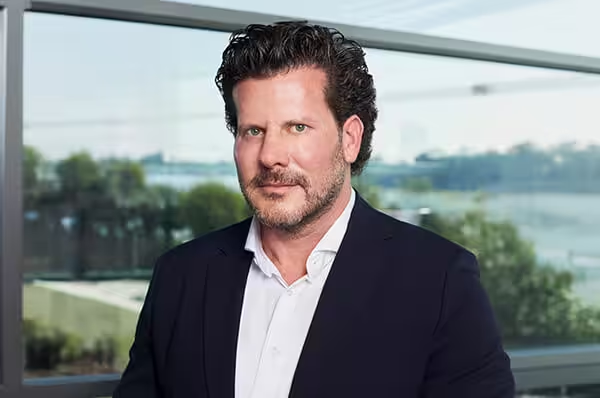
Michael Rainer
Rechtsanwalt, Founder & CEO

Marc Klaas
Rechtsanwalt, Partner

Michael Below
Rechtsanwalt, LL.M., Salary Partner




Berlin
Cologne
Hamburg
Düsseldorf
Frankfurt
Munich
Stuttgart
Leipzig
Local. National. International.
How MTR Legal Builds Your LkSG Compliance
From Initial Consultation to Outcome — Our Approach
The implementation of due diligence obligations under the Supply Chain Act (LkSG) is of central importance for companies in Heidelberg, especially in the biotechnology and life sciences sector. Companies with more than 1,000 employees face the challenge of identifying and minimizing risks in their supply chain. Failure to meet these obligations can lead to significant sanctions, which can amount to up to 2% of annual turnover. Therefore, it is crucial for companies to establish solid compliance structures to minimize both legal and financial risks.
MTR Legal offers a structured approach to ESG compliance consulting. In an initial discussion, our team analyzes the company's existing compliance structure. Based on this, we develop a tailored strategy that meets the requirements of § 3 LkSG. This strategy includes, among other things, conducting risk analyses and creating action plans for risk mitigation. Practical consequences of these measures are not only compliance with legal requirements but also the strengthening of the company's reputation and protection against financial losses due to sanctions.
For the client, this means that MTR Legal provides a clear, actionable roadmap. Our support does not end with strategy development; we accompany the implementation of measures and are continuously available for questions. This ensures that our clients are not only legally protected but also able to operate sustainably and responsibly.
Typical Compliance Gaps in the Supply Chain Act
Common Pitfalls in ESG Compliance and How to Avoid Them
In Heidelberg, a center for biotechnology and life sciences, the implementation of due diligence obligations under the Supply Chain Act (LkSG) is of central importance for companies. For compliance officers and managing directors of large companies, it is crucial to understand the risks of insufficient implementation. Failures in ESG compliance can lead not only to significant sanctions but also to lasting damage to the company's image. Especially in a research-intensive environment like Heidelberg, where many companies rely on complex ownership structures and IP-intensive business models, a precise understanding of legal requirements is essential.
A common problem is that companies do not conduct their risk analysis with sufficient detail. Under the Supply Chain Act, this can lead to sanctions of up to 2% of annual turnover. Another common mistake is the lack of integration of ESG criteria into supplier contracts. These omissions can have serious legal consequences, as companies are obliged under the LkSG to monitor not only their own processes but also those of their suppliers. Non-compliance with these obligations can result in companies being held liable for violations within their supply chain. To minimize these risks, comprehensive knowledge of the legal framework is essential.
For clients, this means they should take preventive measures to meet the stringent requirements of the LkSG. Close collaboration with an experienced legal team can be crucial here. MTR Legal offers comprehensive support in implementing the necessary compliance measures. This ensures that your company is not only legally protected but also perceived as a responsible player in the global supply chain.
Step by Step to an LkSG-Compliant Organization
Typical Process and Key Milestones in ESG Compliance
The implementation of due diligence obligations under the Supply Chain Act is a crucial step for companies in Heidelberg and beyond to ensure ESG compliance. Particularly for biotech founders and life sciences entrepreneurs, adherence to ESG standards is important not only from a legal perspective but also for reputational reasons. The process begins with a thorough risk analysis to identify and assess potential risks along the supply chain. This is a central component to minimize liability risks and avoid potential sanctions, which can amount to up to 2% of annual turnover.
Companies must first conduct a comprehensive risk analysis to meet the requirements of the Supply Chain Act. This analysis forms the basis for developing preventive measures and should be regularly updated to adapt to dynamic market conditions. Subsequently, the implementation and documentation of these measures are required to ensure compliance with the legal requirements of § 3 LkSG. The creation of an annual report on the fulfillment of due diligence obligations is also mandatory. This enables companies not only to meet legal requirements but also to build trust with investors and business partners.
For compliance officers and managing directors, this means they must act proactively to efficiently integrate the requirements of the Supply Chain Act. Support from an experienced team like MTR Legal can help navigate the complex legal requirements and develop tailored solutions. A systematic approach makes it easier to implement all necessary measures promptly and ensure sustainable ESG compliance.
Frequently Asked Questions on LkSG Compliance
Everything Essential About ESG Compliance at a Glance
What are the essential due diligence obligations under the Supply Chain Act?
The Supply Chain Act obliges companies to analyze and minimize human rights and environmental risks along their supply chains. Essential due diligence obligations include conducting a risk analysis, establishing a risk management system, and implementing preventive measures. Companies must also set up a grievance procedure and regularly report on compliance with the requirements. Non-compliance can lead to sanctions of up to 2% of annual turnover, underscoring the importance of proper implementation.
When is a company required to implement the requirements of the Supply Chain Act?
The obligation to implement the requirements of the Supply Chain Act applies to companies with more than 3,000 employees from January 1, 2023, and to companies with more than 1,000 employees from January 1, 2024. Companies must ensure that they take all necessary measures in a timely manner to fulfill the required due diligence obligations. This includes setting up a comprehensive compliance management system that covers all relevant aspects of the law. Early planning and implementation are crucial to avoid potential sanctions.
How does a risk analysis under the Supply Chain Act work?
A risk analysis under the Supply Chain Act begins with identifying relevant suppliers and business partners. Human rights and environmental risks are identified, assessed, and prioritized. Companies must develop and implement appropriate measures to mitigate risks. The analysis must be continuously updated to respond to changes in the supply chain. Additionally, documenting the results and measures is essential to demonstrate compliance with due diligence obligations.
What costs arise from implementing LkSG compliance?
The costs of implementing LkSG compliance vary depending on company size, industry, and existing compliance management system. Typical cost factors include setting up a risk management system, employee training, and implementing IT systems to monitor the supply chain. External consulting services for conducting risk analyses and adjusting internal processes may also be incurred. Comprehensive planning is essential to effectively manage costs and efficiently meet the requirements of the Supply Chain Act.
Risk Analysis under LkSG: What Needs to be Examined
LkSG Risk Analysis: Navigate Securely with MTR Legal
The implementation of due diligence obligations under the Supply Chain Act (LkSG) is of central importance for companies in Heidelberg and beyond. Particularly for biotech and life sciences entrepreneurs operating in a dynamic and often complex environment, navigating the requirements of the LkSG securely is a challenge. Risk analysis is a crucial component of this compliance structure. It not only helps identify potential risks in the supply chain but also avoids legal consequences such as sanctions of up to 2% of annual turnover. A structured approach is therefore essential to efficiently and effectively meet the requirements of the law.
The focus of the LkSG risk analysis is the methodology, which is based on a solid data foundation and precise documentation. The legal requirements, as outlined in § 3 LkSG, demand a detailed identification and assessment of risks along the entire supply chain. This includes both direct and indirect suppliers. Practical consequences include the introduction of control mechanisms and reporting processes to ensure compliance with ESG standards. Non-compliance can have not only financial but also reputational impacts, which is particularly critical for companies in the innovative and IP-focused biotech sector.
For Heidelberg companies, this means that a systematic approach to risk analysis and documentation is indispensable. MTR Legal supports you in fulfilling these requirements securely. Our team offers tailored solutions that are aligned with your specific needs and business models. We help you not only meet compliance requirements but also create sustainable value for your company.
Need Legal Assistance?
MTR Legal Heidelberg offers professional legal advice. Let’s find the best solution together.
Managing Identified Risks in the Supply Chain
Legally Secured: Managing Identified Risks in the Supply Chain with MTR Legal
The implementation of due diligence obligations under the Supply Chain Act is of central importance for companies in Heidelberg, particularly in the biotechnology and life sciences sector. These companies, often with complex ownership structures and IP-intensive business models, face the challenge of effectively identifying and managing risks in their supply chains. The legislator requires a comprehensive risk analysis to detect potential violations of environmental and human rights standards early. A failure can have significant financial consequences, as sanctions of up to 2% of annual turnover loom. Therefore, a legally secure risk management strategy is essential to ensure both compliance and the company's good reputation.
Within the framework of ESG compliance, the Supply Chain Act requires companies to systematically evaluate identified risks and take appropriate countermeasures. According to § 4 LkSG, companies must regularly conduct and document risk analyses. These analyses are not only a legal obligation but also a strategic tool to strengthen the resilience of the supply chain. Practical consequences for Heidelberg biotech founders may include measures ranging from adjusting purchasing policies to implementing training programs for suppliers. The legal complexity requires careful planning and implementation to ensure compliance with regulations and avoid potential sanctions.
For clients, this means they must act proactively to meet the requirements of the Supply Chain Act. Our teams at MTR Legal support you in creating individual risk analyses and developing tailored compliance strategies. This ensures that your company is not only legally secured but also operates sustainably and responsibly. Let's work together to minimize your supply chain risks and protect your corporate values.