

ESG Compliance – Sustainability Law & Supply Chain Due Diligence for Hamburg
Corporate Criminal Law

LkSG Compliance in Hamburg: Legally Secure Fulfillment of Supply Chain Obligations
MTR Legal advises Hamburg-based clients on all aspects of ESG Compliance
Hamburg, as Germany’s most significant foreign trade hub, plays a central role in international trade and logistics. For companies, especially shipping and trading firms, adhering to due diligence obligations under the Supply Chain Act (LkSG) is of considerable importance. Hamburg-based companies face the challenge of conducting comprehensive risk analyses to prevent potential sanctions of up to 2% of their annual turnover. This obligation particularly affects the complex international structures characteristic of many Hamburg companies. The relevance of the topic arises from the need to ensure legal security and minimize economic risks.
MTR Legal is the ideal partner for Hamburg companies facing the challenge of LkSG compliance. The firm has extensive client experience and an interdisciplinary approach that enables it to offer tailored solutions for complex international structures. MTR Legal assists you in efficiently fulfilling your due diligence obligations and minimizing legal risks. Our presence in Hamburg and deep understanding of the local economy make us a reliable partner. Speak with our team in Hamburg to ensure your company is legally secure.
- Domstraße 10, 20095 Hamburg
- +49 40 605337390
- hamburg@mtrlegal.com
5000+
Mandate
Team
Experienced Attorneys
Global
International Presence
8
Offices
Competence that Convinces.
Utilize our expertise für Hamburg and book a consultation to address your concerns professionally.
MTR Legal – Your Attorneys for ESG Compliance in Hamburg
From initial consultation to implementation — legally secure
- Supply Chain Act: Who is Affected and What Needs to be Done
- Legal Requirements of the LkSG and the CSRD
- ESG Compliance in Hamburg: Legal Foundations
- How MTR Legal Builds Your LkSG Compliance
- Typical Compliance Gaps in the Supply Chain Act
- Step by Step to a LkSG-Compliant Organization
- Frequently Asked Questions about LkSG Compliance
- Risk Analysis under LkSG: What Needs to be Examined
- Handling Identified Risks in the Supply Chain
International Representation
As a member of the international network of lawyers IR Global, we are your point of contact for cross-border matters and represent you in an international context.
Supply Chain Act: Who is Affected and What Needs to be Done
What clients need to know — Background and Options for Action
The Supply Chain Act (LkSG) presents companies in Hamburg and throughout Germany with new challenges, particularly regarding their due diligence obligations along the supply chain. For executives and compliance officers of companies with more than 1,000 employees, implementing these obligations is crucial to avoid potential sanctions. These can amount to up to 2% of annual turnover, posing significant financial risks. In a city like Hamburg, a central hub of foreign trade, this particularly affects shipping and trading companies with complex international structures.
Legally, the Supply Chain Act obliges companies to conduct a comprehensive risk analysis to identify human rights and environmental risks in their supply chains. This obligation is a central component of the law and requires a structured and documented approach. According to § 3 LkSG, companies are required to take preventive and corrective measures when risks are identified. Non-compliance with these requirements can lead not only to financial sanctions but also significantly damage the company's reputation. In practice, this means that companies must closely examine their internal processes and international business relationships to meet legal requirements.
For clients, this means that a comprehensive compliance strategy is essential. MTR Legal supports you in efficiently integrating the legal requirements of the LkSG into your daily business operations. Our team offers tailored solutions to ensure that all aspects of risk analysis and compliance are adhered to. This allows you to focus on your core business while we keep an eye on the legal framework.
Legal Requirements of the LkSG and the CSRD
Legal Foundations, Current Developments, and Scope for Action
The implementation of due diligence obligations under the Supply Chain Act (LkSG) is of particular importance for large companies in Hamburg. As a significant foreign trade location with complex international structures, companies here face the challenge of thoroughly reviewing their supply chains. Compliance with the LkSG is not only a legal obligation but also an essential aspect of ESG Compliance, which is increasingly in the spotlight of the public and investors. For Hamburg companies, especially in the shipping and trading industry, this means they must adapt and update their risk management processes to avoid potential sanctions of up to 2% of annual turnover.
The legal framework of ESG Compliance in the context of the LkSG encompasses various legal requirements and current judgments. Companies are required to conduct a comprehensive risk analysis of their supply chains. This includes identifying and assessing human rights and environmental risks. Competition-related laws such as antitrust law can also play a role when it comes to cooperation with suppliers. Court rulings have shown that non-compliance with these obligations can have severe consequences, including financial sanctions. Jurisprudence is constantly evolving, forcing companies to regularly review and adjust their compliance processes.
For MTR Legal clients, this means that proactive adaptation of internal compliance structures is necessary. Our teams assist in identifying risks and implementing legally secure processes that meet the requirements of the LkSG. This includes not only legal advice but also the practical implementation of measures to ensure that your company is optimally positioned to meet the challenges of ESG Compliance.
ESG Compliance in Hamburg: Legal Foundations
Experienced Attorneys for ESG Compliance — Personal and Directly Accessible
In the dynamic trade metropolis of Hamburg, compliance with due diligence obligations under the Supply Chain Act (LkSG) is crucial for companies. Particularly for large enterprises, such as shipping companies and media corporations, integrating ESG (Environmental, Social, Governance) Compliance poses a complex challenge. The obligation to conduct risk analyses and their implementation requires a deep understanding of the legal framework and a high adaptability to international structures. MTR Legal supports you in overcoming these challenges, thereby minimizing the risk of sanctions, which can amount to up to 2% of annual turnover.
The MTR Legal team in Hamburg focuses on a structured and personal consulting approach that takes place on an equal footing with the client. The legal requirements of the LkSG, particularly the obligation to conduct risk analyses, require precise implementation and continuous monitoring. Our team offers you comprehensive advice to meet the complex legal requirements and integrate ESG Compliance into your corporate strategy. Through close collaboration with you, we ensure that your business processes are aligned with current standards and requirements.
For compliance officers and executives, this means they can rely on the solid support of MTR Legal. Our team helps you implement the necessary mechanisms to meet legal requirements while developing sustainable business strategies. Partnering with MTR Legal allows you to focus on your core business while we tackle the legal challenges for you.
Create Clarity – Now!
For legal clarity and strategic foresight – our team in Hamburg is ready to support you. Don’t hesitate to contact us.
Your Team
Competent. Assertive. Successful.
Our team in Hamburg follows a consulting philosophy based on personal contact, structured processes, and collaboration on equal terms. For companies dealing with the due diligence obligations of the Supply Chain Act (LkSG), we offer tailored solutions. Clients can expect us to understand their individual needs and develop practical strategies to effectively manage compliance risks.
In LkSG compliance, our focus is on conducting risk analyses and implementing measures to meet legal requirements and avoid sanctions of up to 2% of annual turnover. Our team at MTR Legal in Hamburg brings extensive experience in advising companies with complex international structures. Thanks to our experience in foreign trade, shipping, and media, we are the ideal partner for compliance officers and executives. Contact us to discuss your compliance requirements with us.
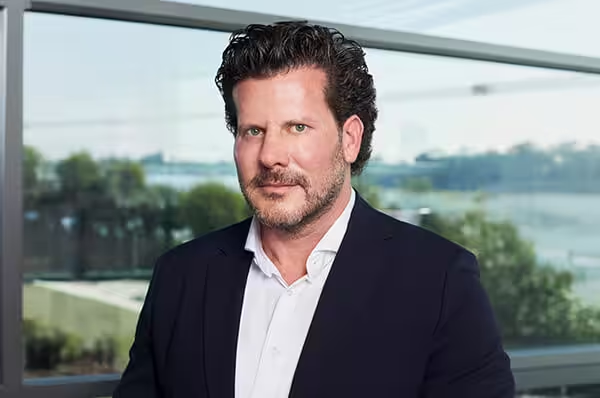
Michael Rainer
Rechtsanwalt, Founder & CEO
Marc Klaas
Rechtsanwalt, Partner

Michael Below
Rechtsanwalt, LL.M., Salary Partner




Berlin
Cologne
Hamburg
Düsseldorf
Frankfurt
Munich
Stuttgart
Leipzig
Local. National. International.
How MTR Legal Builds Your LkSG Compliance
Step by Step to a Legally Secure Solution — With MTR Legal by Your Side
The implementation of due diligence obligations under the Supply Chain Act (LkSG) is crucial for companies, especially in a trade center like Hamburg. Compliance officers and executives of larger companies face the challenge of fulfilling the risk analysis obligation to avoid severe sanctions, which can amount to up to 2% of annual turnover. For companies with complex international structures, typically found in Hamburg's shipping and trading sectors, precise and legally secure implementation of these requirements is essential.
MTR Legal's approach begins with a detailed initial consultation, where the company's individual requirements are analyzed. The relevant due diligence obligations of the Supply Chain Act (LkSG) are thoroughly examined. Subsequently, a tailored strategy is developed, aligned with the company's specific risks and processes. Practical implementation includes the introduction of concrete measures to comply with due diligence obligations. This includes conducting risk analyses, establishing grievance mechanisms, and documenting compliance measures.
For the client, this means benefiting from a structured and legally secure approach. MTR Legal accompanies the entire process and ensures that all legal requirements are met. Through this comprehensive support, companies can minimize risks and focus on their core business. Legal support from MTR Legal thus provides valuable protection against potential sanctions while simultaneously strengthening the trust of business partners and customers in the company's compliance.
Typical Compliance Gaps in the Supply Chain Act
Costly Mistakes, Underestimated Risks, and Pitfalls at a Glance
For companies in Hamburg, especially in the foreign trade and shipping sectors, the correct implementation of due diligence obligations under the Supply Chain Act (LkSG) is crucial. Compliance officers and executives in large companies face the challenge of avoiding potential mistakes in implementation to circumvent significant financial sanctions. Errors in risk analysis or documentation of ESG compliance measures can quickly lead to fines of up to 2% of annual turnover. In a competitive environment like Hamburg, such a mistake can result not only in financial damage but also in reputational loss.
A common mistake in implementing due diligence obligations under the Supply Chain Act is inadequate risk analysis. Companies often underestimate the complexity of international supply chains, leading to incomplete or incorrect analyses. According to the requirements of the LkSG, companies must systematically identify and assess risks in their supply chains. Failures in this area can result in companies not only failing to meet legal requirements but also being unprepared to respond to critical situations. Moreover, the law requires comprehensive documentation and reporting, which can quickly become flawed without legal advice, potentially leading to sanctions.
For clients, this means that comprehensive legal advice is essential when implementing due diligence obligations. The MTR Legal team can help understand and implement the specific requirements of the Supply Chain Act. With our support, you can ensure that all necessary measures are taken to minimize financial risks and protect your company's reputation. Early and well-founded advice can be crucial in avoiding costly mistakes.
Step by Step to a LkSG-Compliant Organization
From Initial Consultation to Implementation — Timeline and Required Documents
For companies in Hamburg, especially those with an international focus, implementing due diligence obligations under the Supply Chain Act (LkSG) is crucial. Compliance with these obligations minimizes the risk of significant sanctions, which can amount to up to 2% of annual turnover. The structural complexity of many Hamburg companies, particularly in foreign trade and shipping, requires precise planning and implementation of legal requirements. A systematic approach to ESG Compliance not only helps avoid financial risks but also contributes to the long-term protection of reputation.
The process begins with a comprehensive risk analysis, typically taking several weeks. Potential risks along the entire supply chain are identified and assessed. During the initial phase, relevant documents, such as corporate policies and supplier contracts, must be provided and analyzed. Following the risk analysis, prevention measures tailored to the specific needs of the company are developed and implemented. Documenting these measures is crucial to demonstrate compliance with the obligations under § 3 LkSG. Regular checks and reports ensure continuous compliance and can take several months depending on the size of the company.
For compliance officers and executives, this means that they must plan the necessary internal resources and external support early to meet the requirements. Close collaboration with legal advisors is essential. MTR Legal offers you well-founded support in this complex process to efficiently and legally implement the requirements of the LkSG. Early advice can help identify potential risks and implement appropriate measures in a timely manner.
Frequently Asked Questions about LkSG Compliance
Answers to the Most Important Questions about ESG Compliance
What does the risk analysis obligation under the LkSG entail?
The risk analysis obligation under the Supply Chain Act (LkSG) requires companies to systematically identify and assess potential risks in their supply chain. This includes human rights violations and environmental damage that may be associated with business activities. The goal is to develop preventive measures to counter these risks. The risk analysis must be regularly reviewed and updated. Non-compliance can lead to sanctions, including fines of up to 2% of annual turnover.
When must a company take measures for LkSG compliance?
Companies must take measures to comply with the Supply Chain Act if they employ at least 1,000 employees and are based in Germany. The law requires companies to implement the prescribed due diligence obligations from January 1, 2023. This includes setting up a risk management system, conducting regular risk analyses, and implementing prevention and remediation measures for identified risks.
What are the possible sanctions for violations of the LkSG?
For violations of the Supply Chain Act, companies face various sanctions. These can include fines of up to 2% of annual global turnover, especially if the company has a turnover of over 400 million euros. Additionally, companies may be excluded from public contract awards. It is therefore crucial to fully meet the requirements of the LkSG to minimize these risks.
How does the implementation of due diligence obligations under the LkSG proceed?
The implementation of due diligence obligations under the LkSG begins with the establishment of an effective risk management system. Companies must first conduct a risk analysis and, based on this, develop measures for prevention and remediation. This also includes setting up a grievance mechanism. The measures must be regularly monitored and adjusted. Transparent reporting on the fulfillment of due diligence obligations is also required to meet legal requirements.
Risk Analysis under LkSG: What Needs to be Examined
Methodology and Documentation — Background and Options for Action
The implementation of due diligence obligations under the Supply Chain Act (LkSG) is of significant importance for companies, especially in an internationally oriented economic location like Hamburg. Compliance officers and executives of companies with more than 1,000 employees face the challenge of legally structuring their supply chains. This is not only essential to meet legal requirements but also to counter potential sanctions, which can amount to up to 2% of annual turnover. A thorough risk analysis forms the foundation for effective compliance management and protects companies from legal and financial risks.
The risk analysis under the LkSG requires a systematic methodology that covers all relevant aspects of the supply chain. Companies must review their processes to the extent that they fulfill the due diligence obligations outlined in § 3 LkSG. This includes identifying and assessing potential risks in the supply chain. Comprehensive documentation is necessary to demonstrate compliance with legal requirements in the event of an audit. These requirements are particularly demanding for companies with complex international structures, which are often found in Hamburg. MTR Legal supports you in taking the necessary legal measures and establishing the corresponding processes.
For clients, this means they must act proactively to meet the requirements of the LkSG. MTR Legal provides comprehensive support in conducting the risk analysis and preparing the necessary documentation. Through close collaboration with our team, you can efficiently implement legal requirements and adapt your corporate structures accordingly. This ensures that your company remains legally secure in the future and potential sanctions are avoided.
Need Legal Assistance?
MTR Legal Hamburg offers professional legal advice. Let’s find the best solution together.
Handling Identified Risks in the Supply Chain
Handling Identified Risks in the Supply Chain — Background and Practice Overview
The topic of risk analysis within the framework of ESG compliance is gaining increasing importance for companies in Hamburg. As a significant foreign trade hub, local companies, particularly in shipping and trade, are heavily affected by the regulations of the Supply Chain Act (LkSG). Implementing due diligence obligations is crucial to minimize risks in the supply chain and avoid sanctions. The risks include human rights violations, environmental damage, and other violations that can have significant legal and financial consequences. For compliance officers and executives with over 1,000 employees, it is therefore essential to engage intensively with the requirements of the LkSG.
Under the Supply Chain Act, companies are required to conduct a comprehensive risk analysis to identify and assess potential violations within their supply chains. This analysis must be regularly updated to promptly recognize new risks. A central element is the sanctioning of non-compliance, which can amount to up to 2% of annual turnover. The legal requirements demand concrete measures to avert identified risks, such as adapting contracts and conducting training. Section 3 of the LkSG defines the necessary due diligence obligations that must be fulfilled to avoid legal consequences.
For companies in Hamburg, this means they must carefully review and, if necessary, adjust their internal structures and processes. Implementing these measures requires close collaboration with legal advisors to ensure all LkSG requirements are met. MTR Legal provides support in accompanying companies in implementing effective compliance strategies and thus minimizing legal risks.