

Anti-Money Laundering Compliance – AML & Obligations for Hamburg
Legal Support for UWG Violations
Anti-Money Laundering in Hamburg: Fulfill AML Obligations with Legal Certainty
MTR Legal advises Hamburg clients on all matters related to AML compliance / anti-money laundering
Hamburg, as Germany’s most significant foreign trade hub and media capital, is home to numerous companies that regularly operate with complex international structures. For Hamburg-based shipping companies, media entrepreneurs, or real estate investors, the requirements of AML compliance are of particular importance. The obligation to adhere to anti-money laundering measures, including the duty to report suspicious activities and conduct KYC processes, is indispensable in these industries. Non-compliance can result in substantial fines, increasing the need for sound legal advice. In this environment, ensuring a robust compliance structure is essential to minimize legal risks and sustainably secure business operations.
MTR Legal is the right partner in Hamburg for companies facing the challenges of anti-money laundering. The firm offers client experience and an interdisciplinary approach that enables the development of tailored solutions for complex compliance issues. The deep roots in Hamburg’s economic life and the understanding of the specific challenges of local key industries make MTR Legal a valuable advisor. Consult with our team in Hamburg to design your compliance strategy with legal certainty and to identify and manage potential risks early on.
- Domstraße 10, 20095 Hamburg
- +49 40 605337390
- hamburg@mtrlegal.com
5000+
Mandate
Team
Experienced Lawyers
Global
Internationally Active
8
Offices
Competence that convinces.
Utilize our expertise für Hamburg and book a consultation to professionally address your concerns.
MTR Legal – Your Attorneys for AML Compliance / Anti-Money Laundering in Hamburg
From initial consultation to implementation — legally secured
- AML Compliance: Who is Obligated to Prevent Money Laundering
- Legal Requirements of the Anti-Money Laundering Act
- AML Compliance / Anti-Money Laundering in Hamburg: Legal Foundations
- How MTR Legal Builds Your AML Compliance
- Common Failures in Anti-Money Laundering
- Step by Step to a AML-Compliant Organization
- Frequently Asked Questions about Anti-Money Laundering
- Structure and Duties of the Money Laundering Officer
- Sanctions for AML Violations
- Interfaces Between Tax Law and AML
- Due Diligence in Customer Relationships
- International Money Laundering Standards and FATF
- AML Checklist for Your Company
International Representation
As a member of the international network of lawyers IR Global, we are your contact for cross-border matters and represent you in an international context.
AML Compliance: Who is Obligated to Prevent Money Laundering
Fundamentals, applications, and why AML compliance / anti-money laundering is relevant for your situation
In the dynamic economic metropolis of Hamburg, AML compliance plays a central role, especially for industries like foreign trade and real estate. Companies are legally required to implement measures to prevent money laundering to minimize legal risks. For lawyers, notaries, and real estate agents, it is essential to know and implement the requirements of the Anti-Money Laundering Act (GwG). Failure to do so can lead to substantial fines and can also significantly damage reputation and business operations. Particularly in Hamburg, where international trade relations and complex corporate structures are commonplace, effective anti-money laundering is indispensable.
The legal requirements include identifying contracting parties, verifying beneficial owners, and documenting collected data. According to § 10 GwG, obligated parties are required to report suspicious transactions immediately to detect and prevent money laundering activities early. Non-compliance with these regulations can result in severe penalties. It is crucial for companies to have an effective Know-Your-Customer (KYC) procedure to reliably verify their customers' identities. Implementing such compliance measures is especially important for Hamburg-based shipping and media companies operating globally to meet international standards.
For clients, this means regularly reviewing and adjusting their internal processes to meet legal requirements. MTR Legal supports you in developing and implementing tailored compliance strategies to minimize the risk of fines and ensure your business activities are legally secure. Through sound legal advice, we ensure that your corporate structures comply with current legal requirements and that you are on the safe side.
Legal Requirements of the Anti-Money Laundering Act
Legal foundations, current developments, and opportunities for structuring
For companies in Hamburg, especially in the fields of foreign trade, shipping, and real estate, compliance with money laundering compliance is of crucial importance. Given the international interconnections and complexity of business structures in these industries, the legal requirements pose a particular challenge. The Anti-Money Laundering Act (GwG) obliges companies to implement effective measures to prevent money laundering. Non-compliance can lead to substantial fines and damage reputation. Therefore, it is essential for companies in Hamburg to carefully follow the provisions of the GwG and take appropriate precautions.
The Anti-Money Laundering Act requires certain companies, such as financial service providers and real estate agents, to establish Know-Your-Customer (KYC) processes. These processes are crucial for verifying the identity of business partners and detecting suspicious activities early. The law stipulates strict reporting obligations, so that in the event of suspicion of money laundering, an immediate report must be made to the relevant authorities. Neglecting this duty can lead not only to fines but also to criminal consequences. The current legal situation and case law emphasize that companies must act not only reactively but also proactively to minimize risks.
For clients in Hamburg, this means they should regularly review and adjust their internal compliance structures. MTR Legal supports you in effectively implementing the legal requirements and optimizing your KYC processes. Our legal advice helps you identify and minimize potential risks. Through a proactive approach, you can not only avoid fines but also strengthen the trust of your business partners.
AML Compliance / Anti-Money Laundering in Hamburg: Legal Foundations
Experienced attorneys for AML compliance / anti-money laundering — personally and directly accessible
In Hamburg, a key foreign trade location with numerous international connections, compliance with anti-money laundering regulations plays a crucial role. For companies such as shipping companies, real estate investors, and media corporations, the requirements of the Anti-Money Laundering Act (GwG) are of great importance to avoid risks such as fines or reputational loss. The MTR Legal team supports clients through tailored compliance solutions that are adapted to the specific requirements of their industry and corporate structure. Our philosophy is to advise you personally and at eye level to ensure effective and sustainable implementation of the GwG requirements.
The complexity of anti-money laundering requires a deep understanding of legal requirements and internal corporate processes. By implementing structured KYC (Know Your Customer) processes and complying with the reporting obligation under § 43 GwG, we minimize the risk of fines for our clients. Our team in Hamburg specializes in analyzing the specific risks and challenges of various industries and developing practical solutions. This also includes advising on the establishment of compliance management systems that meet the individual needs of your company.
For clients, this means they can focus on their core business competencies while we take care of the legal compliance requirements. MTR Legal offers not only professional experience but also the necessary flexibility to quickly respond to changing legal frameworks. This makes us the ideal partner for companies in Hamburg that value legally secure and efficient solutions in the field of anti-money laundering.
Create Clarity – Now!
For legal clarity and strategic foresight – our team is ready to support you. Do not hesitate to contact us.
Your Team
Competent. Assertive. Successful.
Our team for money laundering compliance in Hamburg works with a clear consulting philosophy: personal, structured, and always at eye level with our clients. In working with us, you can expect a precise analysis of your legal requirements and tailored solutions. Our goal is to support you in all aspects of anti-money laundering and to provide you with the assurance that your compliance requirements are always met.
In the area of money laundering compliance, our main focus is on implementing processes in accordance with the Anti-Money Laundering Act (GwG), assisting with suspicious activity reports, and optimizing KYC processes. MTR Legal is the right partner for your company because we understand the complexity of international structures, as often found in Hamburg's shipping companies. Our team offers you the experience to minimize the risk of fines and ensure your compliance. Contact us to discuss your individual requirements.
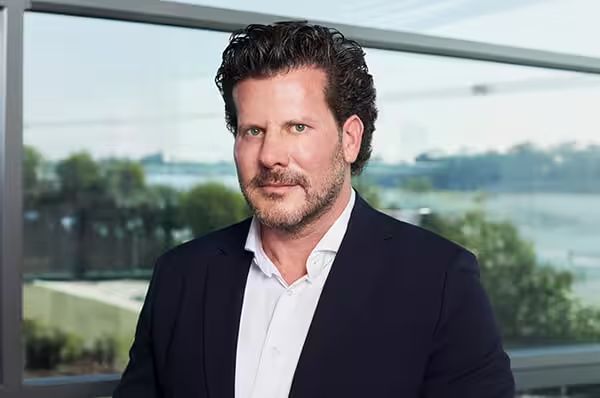
Michael Rainer
Rechtsanwalt, Founder & CEO
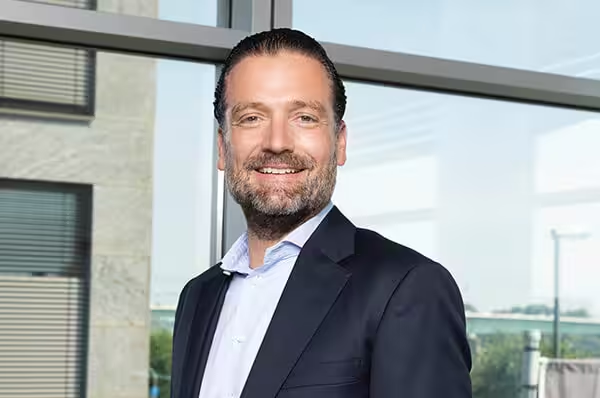
Marc Klaas
Rechtsanwalt, Partner

Michael Below
Rechtsanwalt, LL.M., Salary Partner



Berlin
Cologne
Hamburg
Düsseldorf
Frankfurt
Munich
Stuttgart
Leipzig
Local. Regional. International.
How MTR Legal Builds Your AML Compliance
Step by step to a legally secure solution — with MTR Legal by your side
In Hamburg, a major hub for international trade, compliance with anti-money laundering regulations is of critical importance. Companies that do not meet these requirements risk substantial fines. Lawyers, notaries, real estate agents, and financial service providers, in particular, must ensure that their KYC (Know Your Customer) processes comply with the regulations and that suspicious activity reports are submitted in a timely manner. MTR Legal supports you in meeting these complex requirements and offers tailored solutions that are adapted to the specific needs of your company.
MTR Legal begins the process with a detailed initial consultation to analyze the individual requirements and challenges of the client. Subsequently, our team develops a strategy for implementing AML compliance, which also considers the requirements of the Anti-Money Laundering Act (GwG). We rely on a structured approach that encompasses all relevant processes and control mechanisms to ensure compliance with the regulations. In doing so, we also take into account the specific circumstances of Hamburg's business environment to ensure a tailored solution. Implementation is carried out in close coordination with the client and includes regular reviews to ensure ongoing compliance.
For the client, this means they can focus on their core business while MTR Legal keeps an eye on the legal framework. Compliance with the compliance requirements thus becomes a manageable factor that minimizes the risk of sanctions. Rely on the experience of our team to efficiently and legally implement your legal obligations.
Common Failures in Anti-Money Laundering
Costly mistakes, underestimated risks, and pitfalls at a glance
For companies in Hamburg, especially in key industries such as foreign trade and real estate, compliance with money laundering regulations is of paramount importance. The requirements of the Anti-Money Laundering Act (GwG) not only involve preventing criminal activities but also ensuring the integrity of business processes and reputation. Mistakes in implementation can lead to significant fines and jeopardize business relationships. Especially in a city like Hamburg, known as a major foreign trade hub, companies rely on robust compliance structures to conduct their international business safely and in accordance with the law.
A common mistake in money laundering compliance is an inadequate understanding of the suspicious activity reporting obligation. Companies are required under § 43 GwG to immediately report any suspicion of money laundering. Failures in this area can lead to legal consequences and damage the trust relationship with business partners. Another risk lies in the incomplete implementation of Know-Your-Customer (KYC) processes. Without thorough identity checks, companies risk doing business with unreliable partners. These processes must be regularly reviewed and adapted to current legal requirements to ensure protection against money laundering.
For clients, this means they should continuously review and optimize their internal compliance structures. Collaborating with an experienced team like MTR Legal can be crucial in meeting all legal requirements and identifying risks early. MTR Legal can help you develop tailored solutions specifically designed to meet the complex requirements of companies in Hamburg and beyond.
Step by Step to a AML-Compliant Organization
From initial consultation to implementation — timeline and required documents
In Hamburg, a central hub for international trade and shipping, implementing money laundering compliance is essential for companies. This is particularly true for lawyers, notaries, real estate agents, and financial service providers who are required to comply with the Anti-Money Laundering Act (GwG). Non-compliance can lead to substantial fines. Especially in Hamburg, where complex international structures are common, precise implementation of AML compliance is crucial to minimize legal risks and maintain business reputation.
The AML compliance process typically begins with a comprehensive risk analysis to identify potential weaknesses in business operations. This is followed by the establishment of an internal control system tailored to the specific needs of the company. A central aspect is the adherence to Know-Your-Customer (KYC) processes, which ensure careful identification and verification of business partners. The suspicious activity reporting obligation under § 43 GwG requires that any signs of money laundering be promptly reported to the relevant authorities. The duration of implementation can vary from a few weeks to several months, depending on the complexity of the company. Important documents, such as identity proofs and business documentation, must be continuously updated to meet legal requirements.
For clients, this means that a proactive approach to AML compliance is crucial. By collaborating with MTR Legal, companies can ensure that all legal obligations are efficiently met. Our team supports you in developing and implementing tailored compliance strategies to minimize the risk of fines and ensure smooth business operations. This not only secures your legal interests but also strengthens the trust of your business partners.
Frequently Asked Questions about Anti-Money Laundering
Answers to the most important questions about AML compliance / anti-money laundering
What is the obligation to report suspicious activities under AML compliance?
The obligation to report suspicious activities under the Anti-Money Laundering Act (GwG) requires companies to immediately report suspicious transactions or activities to the relevant authority. This obligation particularly affects lawyers, notaries, real estate agents, and financial service providers. Suspicion exists when facts indicate that funds originate from criminal activities or are used for terrorist financing. A delayed or omitted report can lead to substantial fines. Protecting confidentiality and whistleblower protection are essential aspects to be considered.
When must a company implement KYC processes?
Companies must implement Know Your Customer (KYC) processes as soon as they are considered obligated under the GwG. This particularly affects financial service providers, real estate agents, and other professional groups involved in financial transactions. KYC processes include identifying and verifying the identity of customers and continuously monitoring business relationships to detect suspicious activities early. Implementing these processes is a central part of anti-money laundering and serves to comply with legal requirements.
What risks exist with non-compliance with AML compliance?
Non-compliance with AML compliance requirements can pose significant risks for companies. These include fines that can be imposed for violations of reporting obligations. Additionally, reputational damage and the loss of business partners threaten if compliance requirements are not met. In severe cases, there may even be criminal consequences. Therefore, it is crucial to implement a comprehensive compliance program to meet legal requirements and minimize risks.
What are the costs of implementing an AML compliance program?
The costs of implementing an AML compliance program vary depending on the size of the company, industry requirements, and the complexity of business processes. Typically, the costs include hiring or training a compliance team, developing internal policies, and deploying technical solutions for monitoring and documentation. Although initial investments may seem high, well-implemented programs offer long-term benefits by minimizing risks and potential fines. A detailed cost estimate should be made individually with an experienced team.
Structure and Duties of the Money Laundering Officer
Direct contacts for your situation — without detours
In Hamburg, as a significant international trade location, companies such as shipping companies, media corporations, and real estate investors are particularly challenged to meet the requirements of money laundering compliance under the Anti-Money Laundering Act (GwG). Given the internationally influenced business structures, implementing effective compliance measures is essential to minimize the risk of fines and comply with the suspicious activity reporting obligation. Adhering to KYC (Know Your Customer) processes is crucial to make the origin of funds transparent and prevent illegal transactions. A well-implemented compliance system not only protects against legal consequences but also enhances the trust of business partners and customers in your company.
The legal requirements of the GwG, particularly the obligation to submit a suspicious activity report when there are indications of money laundering, are clearly regulated. Companies must ensure that their internal processes meet the requirements and are regularly updated. § 10 GwG plays a central role, defining the due diligence obligations of the obligated parties. The practical implementation of these obligations requires not only an understanding of the legal requirements but also their integration into daily business operations. Failures can lead to significant fines, which can be both financially and reputationally damaging. A proactive compliance strategy helps minimize these risks and efficiently meet legal requirements.
For clients of MTR Legal, this means they can rely on sound legal advice tailored to their specific needs. The advisory process begins with an initial consultation in which we analyze the individual situation and jointly develop a strategy. During the implementation phase, we assist you in implementing the compliance measures. MTR Legal provides you with the necessary legal support to make your business processes secure and compliant.
Sanctions for AML Violations
Special cases and special topics — background and options for action for clients
In Hamburg, one of Germany's most significant foreign trade locations, companies and entrepreneurs with international business relationships are particularly challenged to meet the requirements of money laundering compliance. The complexity of international trade structures requires a deep understanding of legal requirements, especially when it comes to implementing compliance measures under the Anti-Money Laundering Act (GwG). For lawyers, notaries, real estate agents, and financial service providers, it is essential to know the risks of fines and the obligation to submit suspicious activity reports and act accordingly. Compliance with these regulations is not only legally required but also crucial for maintaining corporate reputation.
The legal requirements of the GwG include conducting KYC (Know Your Customer) processes to verify and document the identity of contracting parties. In special cases, this may require complex checks, especially when it comes to cross-border transactions or holding structures, as often found in the Hamburg shipping industry. Non-compliance with these regulations can lead to substantial fines. Paragraphs such as § 10 GwG, which regulates general due diligence obligations, play a central role and are essential for legal security.
For clients, this means they must act proactively to minimize potential risks. MTR Legal offers support in implementing effective compliance strategies and preparing suspicious activity reports. Our teams are ready to clarify complex legal issues and develop tailored solutions that meet the individual requirements of clients and protect them from legal consequences.
Need Legal Assistance?
MTR Legal Hamburg offers professional legal advice. Let’s find the best solution together.
Interfaces Between Tax Law and AML
Tax aspects in detail — background and practice at a glance
In Hamburg, as a major center for foreign trade and media, compliance with money laundering regulations is essential for companies. Especially for industry players such as shipping companies, real estate investors, and media companies, there is an increased risk of facing legal consequences without appropriate compliance measures. The tax aspects of anti-money laundering significantly influence business processes, ensuring that all financial flows are transparent and traceable. This is crucial not only for protection against fines but also for avoiding criminal risks. Clients must therefore ensure that their compliance structures meet current legal requirements.
A central mechanism within money laundering compliance is adhering to Know Your Customer (KYC) processes. These require companies to carefully verify and document the identity of their business partners. According to the Anti-Money Laundering Act (GwG), suspicious activity reports must be submitted immediately for atypical transactions to minimize legal risks. Furthermore, tax aspects can also be influenced by international tax regulations, which are significant for clients in Hamburg with cross-border business activities. Ignoring these regulations can lead to significant tax and legal consequences, including high fines and criminal prosecution.
For clients, this means they must regularly review and adjust their internal procedures to meet the requirements of the GwG. MTR Legal supports you in developing tailored compliance concepts to meet both tax and legal requirements. Our teams in Hamburg and across Germany are available to help optimize your compliance structures and ensure that you comply with all relevant legal requirements.
Due Diligence in Customer Relationships
Legal foundations, current developments, and opportunities for structuring
Compliance with anti-money laundering regulations is of significant importance for companies in Hamburg, especially due to the complex international structures that many clients in the Hanseatic city exhibit. The Anti-Money Laundering Act (GwG) provides the legal framework for the necessary compliance. It obliges companies to implement effective measures to prevent money laundering. Shipping and trading companies must be particularly vigilant as they are exposed to increased risk due to their international activities. Non-compliance can lead to substantial fines, making careful implementation of legal requirements essential.
The GwG mandates that companies establish Know Your Customer (KYC) processes to verify their business partners' identities. § 10 GwG requires the identification of the beneficial owner and continuous monitoring of the business relationship. Recent court rulings have emphasized the importance of the suspicious activity reporting obligation under § 43 GwG, which requires suspicious circumstances to be reported immediately to the Financial Intelligence Unit. Companies, particularly in the real estate and financial sectors, must therefore regularly review and adjust their internal processes to meet legal requirements.
For clients, this means actively evaluating and potentially optimizing their compliance structures to minimize risks. MTR Legal supports you in efficiently and legally implementing the complex legal requirements. Our teams advise on the implementation of compliance measures and assist you in submitting suspicious activity reports. A proactive approach not only protects against legal sanctions but also strengthens the trust of your business partners.
International Money Laundering Standards and FATF
International references and peculiarities — background and practice at a glance
Implementing AML compliance is of particular importance for companies with international connections, especially in a globally networked city like Hamburg. Many companies here operate in foreign trade and shipping, which brings increased complexity in legal requirements. Compliance with money laundering regulations is not only a legal obligation but also an essential part of risk management. Failures can lead to substantial fines and permanently damage the company's reputation.
In the legal context, the Anti-Money Laundering Act (GwG) is central. Particularly important is the suspicious activity reporting obligation under § 43 GwG, which applies when there is sufficient suspicion of money laundering. Companies must establish processes to identify customers (KYC – Know Your Customer) to detect potential risks early. International business requires increased attention, as different regulations in the involved countries can bring additional challenges. This complexity increases the risk of irregularities, making a sound compliance system essential.
For clients, this means regularly reviewing and adjusting their internal processes to meet legal requirements. MTR Legal offers support in developing and implementing these compliance systems. Our team helps you efficiently implement legal requirements and legally secure your international business activities. This not only minimizes the risk of fines but also protects your company's reputation.
AML Checklist for Your Company
Practical checklist — background and practice at a glance
Compliance with anti-money laundering guidelines is of central importance for companies in Hamburg, especially for lawyers, notaries, real estate agents, and financial service providers. Hamburg's role as a major foreign trade location with complex international structures increases the risk of money laundering activities. Careful AML compliance not only protects against legal sanctions but also strengthens trust in the clients' business practices. Compliance with these regulations is crucial to minimize the risk of fines and maintain the company's image.
The legal requirements for anti-money laundering are anchored in the Anti-Money Laundering Act (GwG), which obliges companies to fulfill certain due diligence obligations. These include identifying contracting parties, conducting regular risk assessments, and documenting and reporting suspicious transactions. Failure to submit suspicious activity reports can lead to substantial fines. Companies must also ensure that their KYC (Know Your Customer) processes are robust and designed to meet legal requirements. A practical checklist helps efficiently implement these processes and ensure that all relevant aspects are considered.
For clients, this means regularly reviewing and adjusting their internal processes to meet current legal requirements. MTR Legal supports you in developing a tailored compliance strategy that is adapted to your specific needs and the peculiarities of the Hamburg market. Our legal teams are at your disposal to ensure that your processes are not only legally compliant but also effective and efficient.