

ESG Compliance – Sustainability Law & Supply Chain Due Diligence for Freiburg
Corporate Criminal Law

LkSG Compliance in Freiburg: Meeting Supply Chain Obligations with Legal Certainty
Your contact in Freiburg im Breisgau for all ESG Compliance matters
In Freiburg im Breisgau, a significant hub for solar and renewable energies as well as medical technology, companies face the challenge of implementing the due diligence obligations of the Supply Chain Act (LkSG). Especially for businesses with cross-border structures into Switzerland or France, adherence to the risk analysis obligation is crucial. Violations can lead to substantial penalties, up to 2% of annual turnover. Freiburg entrepreneurs maintaining close trade relations with Switzerland or planning a relocation must be particularly vigilant to prevent legal risks and effectively shape their compliance strategies.
MTR Legal in Freiburg im Breisgau is the right partner to support you in implementing the LkSG requirements. With extensive client experience and an interdisciplinary approach, the firm offers well-founded advice tailored to the specific needs of Freiburg companies. Our experience extends beyond legal aspects, also considering economic implications. Talk to our team in Freiburg im Breisgau to ensure your company is optimally prepared for the requirements of the Supply Chain Act.
- Basler Straße 115, 79115 Freiburg
- +49 761 20574490
- freiburg@mtrlegal.com
5000+
Mandate
Team
Experienced Attorneys
Global
International Presence
8
Offices
Competence that Convinces.
Utilize our expertise für Freiburg and book a consultation to address your concerns professionally.
Your Team for ESG Compliance in Freiburg — MTR Legal
MTR Legal in Freiburg: ESG Compliance, professionally handled
- Supply Chain Act: Who is Affected and What Needs to be Done
- Legal Requirements of the LkSG and the CSRD
- ESG Compliance in Freiburg: Legal Foundations
- How MTR Legal Builds Your LkSG Compliance
- Typical Compliance Gaps in the Supply Chain Act
- Step by Step to a LkSG-compliant Organization
- Frequently Asked Questions about LkSG Compliance
- Risk Analysis under LkSG: What Needs to be Examined
- Managing Identified Risks in the Supply Chain
International Representation
As a member of the international network of lawyers IR Global, we are your point of contact for cross-border matters and represent you in an international context.
Supply Chain Act: Who is Affected and What Needs to be Done
Background, Risks, and the Right Strategy
The Supply Chain Act (LkSG) is of significant importance to companies, especially those with international business relations. In Freiburg im Breisgau, a city with close economic ties to France and Switzerland, companies are particularly affected by the regulations. The LkSG requires companies with more than 1,000 employees to review and monitor their supply chains for human rights and environmental standards. These regulations are part of the broader ESG Compliance and necessitate a thorough risk analysis to avoid potential legal and financial consequences. Violations can result in penalties of up to 2% of annual turnover.
The legal requirements of the LkSG are detailed in §§ 3-10 LkSG. These include obligations such as conducting risk analyses, implementing preventive measures, and establishing complaint procedures. Companies must ensure their entire supply chains meet these standards, which requires comprehensive knowledge of the legal framework. The practical consequences are far-reaching, as a violation can jeopardize both the company's reputation and its financial stability. Therefore, careful planning and execution of these obligations are essential.
For clients, this means they must act proactively to meet the requirements of the Supply Chain Act. MTR Legal assists companies in implementing and continuously monitoring the necessary compliance structures. With an experienced team, MTR Legal offers tailored solutions that address the specific needs and challenges of companies in Freiburg im Breisgau. This ensures clients not only act in compliance with the law but also successfully maintain their international business relationships.
Legal Requirements of the LkSG and the CSRD
Law, Jurisprudence, and Practical Implementation Explained
The increasing importance of ESG Compliance, especially in the context of the Supply Chain Act (LkSG), presents new challenges for many companies. For compliance officers and executives of companies with more than 1,000 employees, it is crucial to implement due diligence obligations in the supply chain to minimize risks and avoid sanctions. In Freiburg im Breisgau, a location with strong international connections, such legal requirements are particularly relevant. Companies operating cross-border or considering relocation to Switzerland must thoroughly understand the legal framework to remain competitive and avoid legal consequences.
The Supply Chain Act requires companies to conduct a comprehensive risk analysis and implement preventive measures along the entire supply chain. Central norms such as § 3 LkSG define the due diligence obligations companies must fulfill. These obligations include risk analysis, risk mitigation measures, and the establishment of a complaint procedure. Violations of the LkSG can lead to significant fines, up to 2% of annual turnover. Recent court rulings show that courts are increasingly willing to hold companies accountable if they neglect their due diligence obligations. This underscores the necessity of a solid compliance strategy that meets legal requirements.
For companies, this means they must develop a proactive compliance strategy to prevent legal risks. MTR Legal can assist in integrating the LkSG requirements into corporate practice. Our team in Freiburg im Breisgau offers tailored solutions that meet the specific needs of companies operating internationally or planning to relocate abroad. Through a well-founded risk analysis and the implementation of effective compliance measures, companies can strengthen their legal position and avoid sanctions.
ESG Compliance in Freiburg: Legal Foundations
Legally Secure ESG Compliance Advice by Experienced Lawyers
The implementation of due diligence obligations under the Supply Chain Act (LkSG) is becoming increasingly important for companies in Freiburg im Breisgau. In the tri-border region with intensive business relations to France and Switzerland, compliance with ESG standards is a crucial factor for sustainable success. Adhering to legal requirements not only protects against sanctions but also strengthens the trust of business partners and customers in corporate governance. The regional networking and proximity to international markets require a prudent and well-structured compliance strategy that meets both local and cross-border requirements.
The Supply Chain Act obliges companies with more than 1,000 employees to conduct a comprehensive risk analysis. This analysis is a central component of ESG compliance and requires a systematic assessment of the entire supply chain. Violations of due diligence obligations can lead to significant sanctions, up to 2% of annual turnover. This underscores the necessity of legally secure implementation of the requirements. Our team at MTR Legal supports companies in mastering these challenges by developing individual solutions that meet both the legal requirements and the specific needs in Freiburg im Breisgau.
For compliance officers and executives, it is crucial to proactively take measures to meet the requirements of the LkSG. Our approach at MTR Legal is personal and structured. We offer solutions at eye level to support you in implementing and monitoring your ESG compliance. With our experience in cross-border consulting, we can help you minimize risks and strengthen your position in the international business environment.
Create Clarity – Now!
For legal clarity and strategic foresight – our team in Freiburg is ready to support you. Don’t hesitate to contact us.
Your Team
Competent. Assertive. Successful.
Our team in Freiburg im Breisgau follows a consulting philosophy based on personal support, a structured approach, and communication at eye level. We place great importance on understanding the individual needs of our clients and developing tailored solutions. In working with us, you can expect not only legal experience but also practical and actionable strategies for fulfilling the due diligence obligations under the Supply Chain Act (LkSG).
Our team is dedicated to assisting companies in implementing the due diligence obligations according to the LkSG. We offer comprehensive risk analyses and help develop compliance programs that meet legal requirements. MTR Legal is the right partner to protect your company from sanctions of up to 2% of annual turnover. With our experience in cross-border structures, we can optimally advise clients with business relations to Switzerland and France. Contact us to establish legal security and efficient processes in your company.
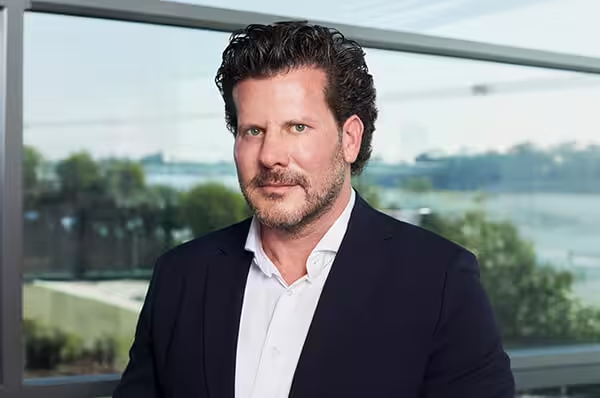
Michael Rainer
Rechtsanwalt, Founder & CEO
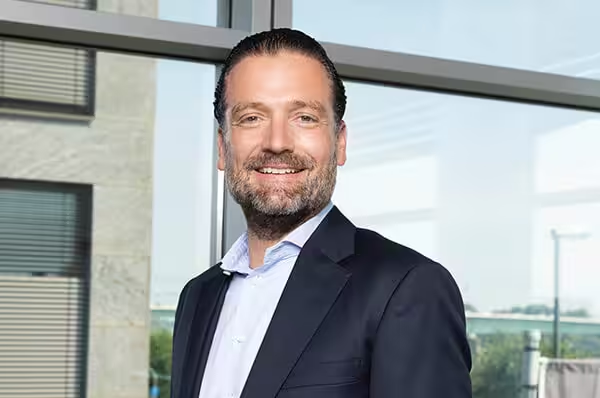
Marc Klaas
Rechtsanwalt, Partner

Michael Below
Rechtsanwalt, LL.M., Salary Partner




Berlin
Cologne
Hamburg
Düsseldorf
Frankfurt
Munich
Stuttgart
Leipzig
Local. National. International.
How MTR Legal Builds Your LkSG Compliance
What Our Clients Can Expect from MTR Legal in ESG Compliance
The implementation of due diligence obligations under the Supply Chain Act (LkSG) is a crucial step for companies, especially those with an international focus in cities like Freiburg im Breisgau. Compliance officers and executives face the challenge of not only meeting legal requirements but also minimizing the risk of sanctions. These can amount to up to 2% of annual turnover, posing a significant economic risk. For companies with cross-border business activities, as often found in Freiburg im Breisgau, a well-founded risk analysis is indispensable.
In implementing ESG compliance, MTR Legal takes a methodical approach. The first step involves a comprehensive initial consultation to determine the specific requirements of the company. This is followed by a detailed analysis, which forms the basis for strategy development. This strategy includes the implementation of due diligence obligations according to the Supply Chain Act and aims to identify and minimize risks. Practical consequences from this analysis include the development of a tailored compliance program that considers the specific needs of the company. The legal requirements from the LkSG are precisely implemented to avoid potential sanctions.
For the client, this means they can rely on a timely structured and targeted implementation of compliance measures. MTR Legal not only provides legal advice but also actively supports the implementation of necessary measures. This ensures that due diligence obligations are implemented efficiently and legally, which is particularly crucial for companies with business relations in the tri-border area.
Typical Compliance Gaps in the Supply Chain Act
Concrete Examples: Where Clients Make Mistakes in ESG Compliance
In Freiburg im Breisgau and beyond, the topic of ESG compliance is of central importance for companies with international business relationships. Implementing the due diligence obligations under the Supply Chain Act (LkSG) is particularly challenging for large companies with more than 1,000 employees. Without well-founded legal support, compliance officers and executives risk not fully meeting the complex requirements. This can have significant financial consequences, especially if sanctions of up to 2% of annual turnover are threatened. For companies operating in an international context, the pressure is additionally increased, as cross-border regulations must be considered.
A common mistake in implementing ESG compliance is inadequate risk analysis, as required by § 5 LkSG. Companies tend to underestimate risks in the supply chain or document them incompletely. The lack of or inadequate recording of risks can result in necessary preventive measures not being taken. Another risk lies in insufficient employee training, leading to a lack of awareness of legal requirements. Practical consequences are not only financial sanctions but also reputational damage, which can have severe impacts, especially in the environmentally conscious region of Freiburg im Breisgau.
For clients, this means that comprehensive legal advice is indispensable to avoid the pitfalls of ESG compliance. The team at MTR Legal supports companies in efficiently implementing the requirements of the Supply Chain Act while considering specific regional circumstances. Through targeted risk analyses and employee training, compliance violations can be avoided, allowing companies to confidently assert their position in the international market.
Step by Step to a LkSG-compliant Organization
Realistic Timeline and Preparation for Your ESG Compliance Mandate
The implementation of ESG compliance, particularly within the framework of the Supply Chain Act (LkSG), is of crucial importance for companies. For compliance officers and executives of companies with more than 1,000 employees in Freiburg im Breisgau, it is essential to understand and implement the due diligence obligations of the LkSG. This is especially important for companies with business relationships in Switzerland or France, as cross-border structures bring additional legal challenges. Non-compliance with due diligence obligations can lead to significant sanctions, up to 2% of annual turnover, which could jeopardize the company's economic stability.
The typical process for implementing ESG compliance begins with a detailed risk analysis, a central element of the LkSG. This analysis requires a comprehensive assessment of supply chains and typically takes several weeks. Specific documents such as supplier contracts and compliance reports are also required. Following the risk analysis is the development and implementation of risk mitigation measures. This phase can take three to six months. It is crucial that management works closely with compliance officers to ensure all measures meet the requirements of § 3 LkSG. The final reporting and documentation of results are necessary to demonstrate compliance with legal requirements.
For the client, this means that a structured and comprehensive planning of the compliance strategy is required. MTR Legal can support you at every step of this process, from the initial risk analysis to the final reporting. The legal experience of our team ensures that your company not only meets the requirements of the LkSG but is also optimally prepared for cross-border challenges. This allows you to focus on your core business and minimize the risk of legal consequences.
Frequently Asked Questions about LkSG Compliance
What You Should Know Before Consulting on ESG Compliance
What are the central due diligence obligations of the Supply Chain Act?
The Supply Chain Act obliges companies to comply with certain due diligence obligations along their supply chain. These include risk analysis, implementation of preventive measures, and establishment of a complaint procedure. Companies must regularly review their supply chains for human rights and environmental risks. The results of these analyses must be documented and, if necessary, submitted to the relevant authorities. The goal is to avoid or minimize negative impacts on people and the environment.
When is the implementation of the Supply Chain Act required?
The implementation of the Supply Chain Act is mandatory for companies with more than 1,000 employees. This regulation applies regardless of the industry and affects both domestic and foreign companies operating in Germany. Companies must ensure they meet all the requirements of the law to avoid legal consequences. The implementation of the law should be planned early to adjust all internal processes accordingly.
What sanctions are threatened for non-compliance with the Supply Chain Act?
Non-compliance with the provisions of the Supply Chain Act can lead to severe sanctions. These can include fines of up to 2% of annual global turnover. Additionally, companies can be excluded from public tenders. It is therefore crucial that companies meet all legal requirements and develop a comprehensive compliance strategy to minimize these risks. Early consultation with an experienced team can be helpful in this regard.
How does the risk analysis under the Supply Chain Act work?
The risk analysis is a central component of the Supply Chain Act. Companies must systematically identify, assess, and prioritize potential risks in their supply chain. Both human rights and environmental aspects should be considered. The analysis includes gathering information about suppliers and assessing the risks they pose. The results of the risk analysis must be documented and regularly updated to ensure all relevant risks are addressed.
Risk Analysis under LkSG: What Needs to be Examined
Background, Risks, and the Right Strategy
The implementation of due diligence obligations under the Supply Chain Act (LkSG) presents significant challenges for companies. Particularly for compliance officers and executives of companies with more than 1,000 employees, the topic is of great relevance. In Freiburg im Breisgau, where many companies operate cross-border, compliance with the requirements is crucial to avoid financial sanctions of up to 2% of annual turnover. A well-founded risk analysis is the first step to meeting legal requirements and sustainably shaping one's supply chain.
A precise LkSG risk analysis requires a systematic methodology and comprehensive documentation. Companies are obliged to identify and assess risks along the entire supply chain. According to the Supply Chain Act, they must take appropriate preventive and remedial measures to avoid potential violations. Continuous monitoring and adjustment of measures are essential to meet the requirements of the law. By incorporating ESG (Environmental, Social, and Governance) factors, companies can ensure not only legal compliance but also fulfill their social responsibility.
For companies in this complex environment, it is essential to develop and implement the right strategies. MTR Legal supports you in efficiently integrating the LkSG requirements into your corporate structures. Our team offers comprehensive advice and tailored solutions to help you minimize legal risks and future-proof your business operations.
Need Legal Assistance?
MTR Legal Freiburg offers professional legal advice. Let’s find the best solution together.
Managing Identified Risks in the Supply Chain
Background and the Right Strategy for Clients
Managing identified risks in the supply chain is of great importance, especially for companies in Freiburg im Breisgau. This is not only due to the geographical location in the tri-border area but also due to the intensive economic ties with Switzerland and France. For companies with more than 1,000 employees, the Supply Chain Due Diligence Act (LkSG) poses a significant challenge. The obligation to conduct a risk analysis is central, as violations can lead to substantial sanctions, up to 2% of annual turnover. In an economically dynamic environment like Freiburg im Breisgau, it is crucial to identify and manage supply chain risks early.
The LkSG requires companies to recognize risks within their supply chains and take appropriate measures to minimize them. These due diligence obligations are legally binding and encompass not only direct suppliers but also indirect partners. Particularly relevant is § 3 LkSG, which describes the risk analysis as a continuous process. Companies must not only identify risks but also develop strategies to proactively address them. Practical consequences arise from the need to create comprehensive reports and regularly review compliance guidelines. For companies with international connections, as often in Freiburg im Breisgau, this is a complex task.
For MTR Legal clients, this means they need support in implementing and monitoring compliance structures. Our team provides well-founded advice to meet legal requirements and conduct business activities legally. Companies should begin implementing control mechanisms early to minimize potential risks and avoid sanctions. Strategic planning and legal advice are crucial to ensuring long-term economic success.