

Anti-Money Laundering Compliance – AML & Obligations for Dusseldorf
Legal Support for UWG Violations
Anti-Money Laundering in Dusseldorf: Securely Meeting AML Obligations
From initial consultation to implementation: AML Compliance in Dusseldorf
In Dusseldorf, a significant international business hub, adhering to anti-money laundering regulations is crucial, especially for companies in real estate, trade, and corporate management sectors. Clients in Dusseldorf, such as real estate investors or international corporate managers, often face the challenge of implementing complex KYC processes and submitting suspicious activity reports on time. Non-compliance with these obligations can result in substantial fines. Particularly in a city characterized by its international focus and the presence of numerous family offices, robust AML compliance is essential to minimize legal risks and maintain uninterrupted business operations.
MTR Legal is the ideal partner in Dusseldorf to support companies in implementing AML compliance. With extensive client experience and an interdisciplinary approach, MTR Legal offers tailored solutions that meet the specific needs of clients in Dusseldorf. The firm understands the dynamics of international business structures and specializes in developing effective compliance strategies. Consult with our team in Dusseldorf to fulfill your legal obligations securely and efficiently and protect your business from potential risks.
- Fürstenwall 172, 40217 Düsseldorf
- +49 211 54553080
- duesseldorf@mtrlegal.com
5000+
Mandate
Team
Experienced Lawyers
Global
Internationally Active
8
Offices
Competence that convinces.
Utilize our expertise für Dusseldorf and book a consultation to professionally address your concerns.
Legal Advice on AML Compliance in Dusseldorf
Experienced Team, Clear Strategy, Secure Implementation
- AML Compliance: Who is Obligated to Prevent Money Laundering
- Legal Requirements of the Money Laundering Act
- AML Compliance in Dusseldorf: Legal Foundations
- How MTR Legal Builds Your AML Compliance
- Common Pitfalls in Anti-Money Laundering
- Step by Step to a AML-Compliant Organization
- Frequently Asked Questions about Anti-Money Laundering
- Structure and Duties of the Money Laundering Officer
- Sanctions for AML Violations
- Interfaces between Tax Law and AML
- Due Diligence in Customer Relationships
- International Anti-Money Laundering Standards and FATF
- AML Checklist for Your Company
International Representation
As a member of the international network of lawyers IR Global, we are your contact for cross-border matters and represent you in an international context.
AML Compliance: Who is Obligated to Prevent Money Laundering
When is AML Compliance Relevant — and What Does Legal Advice Offer?
The implementation of AML compliance is crucial for companies, especially in an international business hub like Dusseldorf. For lawyers, notaries, real estate agents, and financial service providers, compliance with these regulations is not only a legal obligation but also a key factor in risk mitigation. Non-compliance can lead to significant fines and damage the company's reputation. In an environment characterized by international corporations and complex family office structures, it is essential to efficiently design and legally implement processes to prevent money laundering.
The legal foundation for anti-money laundering is the Money Laundering Act (GwG), which requires companies to establish KYC processes (Know Your Customer) and submit suspicious activity reports when there are signs of money laundering. The requirements for transparency and documentation have increased to detect criminal activities early. Companies must ensure their internal processes meet the GwG requirements and are regularly reviewed and updated. Ignoring these obligations can lead to significant fines and impact business relationships.
For clients, this means they must continuously evaluate and adjust their internal processes to meet legal requirements. MTR Legal can provide valuable support by developing tailored solutions that consider both specific needs and legal requirements. Our experience in implementing compliance measures helps you minimize risks and position your company securely.
Legal Requirements of the Money Laundering Act
Overview of Legal Framework for AML Compliance
Compliance with money laundering regulations is crucial for many companies in Dusseldorf. Especially in an international business hub like Dusseldorf, where numerous companies operate with global business connections, there are high demands on preventing money laundering. Companies such as real estate agents and financial service providers are legally required to implement measures to prevent money laundering. This includes establishing effective KYC processes (Know Your Customer) and submitting suspicious activity reports. Violations of these obligations can lead to significant fines, underscoring the urgency of a careful compliance strategy.
The legal framework for anti-money laundering is defined by the Money Laundering Act (GwG). The law requires obligated companies to identify risks and take appropriate preventive measures. Recent legal developments show that courts are increasingly setting strict standards for compliance. Companies must ensure their internal processes comply with legal requirements to avoid severe legal consequences. This also includes regular employee training and adapting internal policies to the latest legal changes.
For clients, this means they must act proactively and ensure their compliance structures meet legal requirements. MTR Legal can support this by reviewing the necessary legal framework and developing tailored solutions. This helps minimize the risk of fines and strengthen confidence in their processes. Close collaboration with legal advisors ensures that companies in a dynamic environment like Dusseldorf are always on the safe side.
AML Compliance in Dusseldorf: Legal Foundations
Your Team in Dusseldorf for All AML Compliance Questions
In an international business hub like Dusseldorf, compliance with anti-money laundering regulations is crucial for companies, especially for lawyers, notaries, real estate agents, and financial service providers. Compliance with the Money Laundering Act (GwG) not only protects against legal consequences such as fines but also secures the company's integrity. For clients in Dusseldorf, who often work with complex international structures, implementing effective AML compliance is essential to legally secure business relationships and ensure long-term economic success.
The MTR Legal team supports your company in implementing compliance structures according to the requirements of the Money Laundering Act (GwG). We assist you in identifying and implementing KYC processes (Know Your Customer) and submitting suspicious activity reports. These mechanisms are necessary to comply with legal obligations and minimize the risk of money laundering within the company. A solid understanding of the legal framework and a structured approach are essential to ensure that all compliance measures are fully and correctly implemented.
As your partner at eye level, the MTR Legal team places great value on personal and structured advice tailored to your company's individual needs. Our experienced advisors are at your side to clarify all aspects of anti-money laundering and develop practical solutions. Together with you, we develop strategies that not only comply with legal requirements but are also efficient and economically sensible. Trust our experience to guide your company in Dusseldorf safely through the legal challenges of AML compliance.
Create Clarity – Now!
For legal clarity and strategic foresight – our team is ready to support you. Do not hesitate to contact us.
Your Team
Competent. Assertive. Successful.
Our team in Dusseldorf is characterized by a personal and structured advisory philosophy. We meet our clients at eye level, fostering a trusting collaboration. In the dynamic economic metropolis of Dusseldorf, clients can expect us to address their specific challenges in the area of AML compliance precisely and efficiently. Our approach is to develop tailored solutions with you that meet legal requirements while considering your individual needs.
In the area of AML compliance, our team focuses on implementing measures according to the Money Laundering Act and supporting the submission of suspicious activity reports. With our solid knowledge of KYC processes and avoiding fines, we are the right partner to position your company securely. Especially in an international environment, as often found in Dusseldorf, our clients benefit from our experience with cross-border structures. Trust our experience and contact us to learn more about our services and optimize your compliance strategy together.
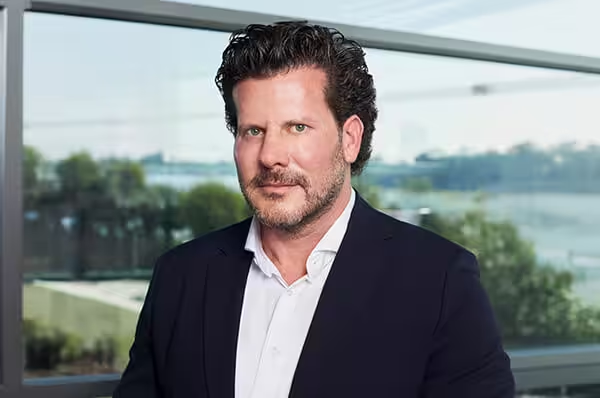
Michael Rainer
Rechtsanwalt, Founder & CEO
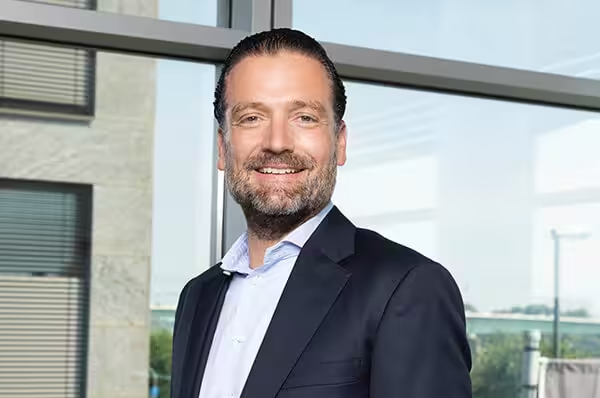
Marc Klaas
Rechtsanwalt, Partner

Michael Below
Rechtsanwalt, LL.M., Salary Partner



Berlin
Cologne
Hamburg
Düsseldorf
Frankfurt
Munich
Stuttgart
Leipzig
Local. Regional. International.
How MTR Legal Builds Your AML Compliance
From Initial Consultation to Outcome — Our Approach
For companies in Dusseldorf subject to the Money Laundering Act, implementing solid AML compliance is crucial. Compliance with anti-money laundering regulations is not only legally required but also protects against significant fines and reputational damage. In the international economic city of Dusseldorf, characterized by diverse corporate structures and family office engagements, precise processes for compliance are essential. Clients, such as real estate agents or financial service providers, face the challenge of efficiently implementing complex legal requirements.
In this context, MTR Legal offers comprehensive advice starting with a detailed initial consultation, followed by an in-depth analysis of existing processes. Based on this, we develop a tailored strategy for compliance with legal requirements, particularly regarding the due diligence obligations under the Money Laundering Act (GwG). A central aspect here is the implementation of effective Know-Your-Customer (KYC) processes, ensuring that all relevant data is collected and continuously monitored. In case of suspicion of money laundering, we promptly initiate the necessary steps for a suspicious activity report to act in compliance with the law and minimize risks.
For clients, this means they can rely on a structured approach that ensures their legal obligations while protecting their business interests. With MTR Legal's support in implementing and controlling compliance measures, companies can ensure they meet all requirements of the Money Laundering Act and focus on their core business. Our comprehensive advice and practical implementation offer you the necessary security and clarity in the complex field of anti-money laundering.
Common Pitfalls in Anti-Money Laundering
Typical Traps in AML Compliance and How to Avoid Them
The implementation of AML compliance is of significant importance for companies in Dusseldorf, an international business hub. Lawyers, notaries, real estate agents, and financial service providers face the challenge of meeting the requirements of the Money Laundering Act (GwG) to avoid fine risks. Especially for internationally active companies and family offices with complex structures, strict adherence to the guidelines is crucial. Without comprehensive legal advice, there is a risk that incomplete KYC processes or delayed suspicious activity reports could lead to significant legal consequences.
A common issue in AML compliance is the inadequate identification and verification of business partners. The law requires obligated companies to implement careful KYC processes to verify their customers' identities. Particularly, § 10 GwG sets extensive obligations here. Another risk lies in the delayed or omitted submission of suspicious activity reports, which are mandatory under § 43 GwG. Non-compliance with these obligations can lead not only to significant fines but also to reputational damage, which can have serious consequences, especially in the dynamic economic metropolis of Dusseldorf.
To minimize these risks, companies should seek legal advice early. The MTR Legal team supports you in implementing effective compliance structures and ensuring all legal requirements are met. This way, you can be confident that your processes meet legal requirements and that you can identify and avert potential risks early.
Step by Step to a AML-Compliant Organization
Typical Process and Key Milestones in AML Compliance
The implementation of anti-money laundering compliance is crucial for companies in Dusseldorf, especially for lawyers, notaries, and real estate agents. In an international business hub like Dusseldorf, with numerous international corporate presences and cross-border structures, the risk of fines and legal consequences for non-compliance is significant. Companies are obligated to implement the requirements of the Money Laundering Act (GwG) to handle suspicious activity reports correctly and conduct the necessary KYC processes. This not only protects against legal risks but also strengthens the trust of business partners and customers.
The process of AML compliance begins with a comprehensive risk analysis, which can take several weeks. This is followed by the introduction of specific internal security measures tailored to the respective corporate structure. Documents such as the risk analysis and internal instructions are crucial here. In case of a suspicious activity report, the company must act immediately and report the incident to the competent authority. A central element is the suspicious activity reporting obligation according to § 43 GwG. Failure to comply with this obligation can result in significant fines. Therefore, it is important that all processes run smoothly and that documentation is always up-to-date and accessible.
For clients of MTR Legal, this means they should rely on structured advice from the start. Our team supports the implementation of necessary compliance measures and ensures that all legal requirements are met. Through close collaboration, we offer you not only legal security but also the flexibility to quickly respond to changes in the legal environment. This way, you can focus on your core business while we keep an eye on the legal framework.
Frequently Asked Questions about Anti-Money Laundering
All Essential Information on AML Compliance at a Glance
What is the Money Laundering Act (GwG) and why is it important?
The Money Laundering Act (GwG) is a key legal instrument for combating money laundering and terrorist financing in Germany. It requires certain companies, including lawyers, notaries, and financial service providers, to take measures to prevent money laundering. This includes identifying customers as part of "Know Your Customer" (KYC) processes and submitting suspicious activity reports for unusual transactions. Compliance with the GwG is crucial to avoid fines and ensure the integrity of the financial system.
When do I need advice on AML compliance?
Advice on AML compliance is necessary if your company is among the obligated entities under the GwG and you want to ensure that all requirements are correctly implemented. This includes introducing appropriate internal security measures and training employees. Legal advice can also be beneficial in the event of a suspicious activity report or planned transactions with increased risk to minimize fine risks and address legal challenges early.
What costs arise from implementing AML compliance?
The costs for implementing AML compliance can vary depending on company size, industry, and specific requirements. They typically include expenses for developing internal processes, training, and using KYC software solutions. Individual advice can help determine specific needs and realistically calculate costs. The risk of fines in case of GwG violations should also be considered.
How does a suspicious activity report under the GwG work?
A suspicious activity report under the GwG is filed when a company detects indications of money laundering or terrorist financing. The report is submitted via the Financial Intelligence Unit (FIU) reporting portal. It should include all relevant information and documents supporting the suspicion. Companies are required to submit the report promptly to meet legal requirements and avoid fines. Legal advice can help ensure the process is correctly structured.
Structure and Duties of the Money Laundering Officer
Concrete Next Steps for Your AML Compliance Mandate
Compliance with AML regulations is crucial for companies in Dusseldorf, especially for lawyers, notaries, real estate agents, and financial service providers. Strict implementation of anti-money laundering requirements not only protects against significant fines but also secures the trust of business partners. In an international business hub like Dusseldorf, where many companies operate with complex corporate structures, the demands for anti-money laundering are particularly high. Implementing effective KYC processes and timely submission of suspicious activity reports are critical to minimizing legal risks and maintaining the company's integrity.
The Money Laundering Act (GwG) provides the legal basis for compliance requirements. Companies must ensure they comply with the provisions of § 10 GwG for identifying and verifying business partners. Violating these provisions can lead to substantial fines and damage the company's reputation. Practical implementation of these requirements requires a precise understanding of the legal framework and its practical consequences. Therefore, sound legal advice is essential to effectively integrate the specific requirements of the GwG into the corporate structure.
MTR Legal offers comprehensive legal advice tailored to your company's needs. The advisory process begins with a detailed initial consultation to identify individual requirements and risks. Based on this, we develop a tailored strategy for implementing AML compliance requirements. Our experienced teams assist you in implementation and support you in submitting suspicious activity reports. Trust our experience to position your company securely and sustainably.
Sanctions for AML Violations
In-Depth: Navigate Securely with MTR Legal
In Dusseldorf, a significant international business hub, AML compliance plays a crucial role for companies across various sectors. Lawyers, notaries, real estate agents, and financial service providers often face the challenge of meeting complex legal requirements. Compliance with the Money Laundering Act (GwG) is not only a legal obligation but also essential to avoid substantial fines. For companies in Dusseldorf, frequently involved in international transactions and cross-border structures, the legally secure implementation of compliance measures is indispensable.
The suspicious activity reporting obligation under § 43 GwG is a central legal aspect that must be observed in anti-money laundering. Companies must promptly submit a report in case of suspected money laundering to address legal consequences. The introduction of KYC processes (Know Your Customer) is an integral part of verifying the identity of contracting parties and identifying risks early. For companies, this means establishing internal processes that meet both legal requirements and can be effectively implemented in daily operations. These measures are particularly important for companies in Dusseldorf, which often interact with international partners.
For clients, this necessitates regularly reviewing and adjusting internal processes to meet legal requirements. MTR Legal supports this by developing tailored compliance solutions specifically designed for the needs of companies in Dusseldorf. Our team ensures that you operate legally and focus on your core business while we monitor the legal framework.
Need Legal Assistance?
MTR Legal Dusseldorf offers professional legal advice. Let’s find the best solution together.
Interfaces between Tax Law and AML
Legally Secured: Tax Aspects in Detail with MTR Legal
The tax aspects of AML compliance are crucial for companies, especially those in an international business hub like Dusseldorf. Companies that fail to meet the requirements of the Money Laundering Act (GwG) risk not only substantial fines but also tax disadvantages that can arise in the context of compliance violations. The financial and legal damage can be enormous, making the implementation of a solid compliance system essential. Clients' questions often concern the integration of compliance requirements into existing KYC processes and the correct execution of suspicious activity reports to minimize tax and legal risks.
In detail, the Money Laundering Act regulates prevention obligations, particularly in §§ 10 ff. GwG. Companies must ensure that all relevant transactions are reviewed and documented to avoid tax irregularities. This includes a comprehensive identification obligation that allows for transparent presentation of the origin of funds. The practical consequence of non-compliance with these regulations is not only the risk of fines but also tax audits that can lead to additional demands. A thorough understanding of the legal framework and the implementation of appropriate measures are therefore indispensable to avert financial and reputational damage.
For clients, this means they must act proactively to optimize their compliance strategy. Legal support from a competent team, such as MTR Legal, can be crucial in integrating the complex requirements of the GwG into existing business processes. MTR Legal offers tailored solutions that meet clients' individual needs and help manage both legal and tax risks.
Due Diligence in Customer Relationships
Overview of Legal Framework for AML Compliance
AML compliance is crucial for companies in Dusseldorf, as they operate in an international business hub characterized by close ties with international corporations and family offices. Compliance with anti-money laundering regulations minimizes the risk of substantial fines and protects the company's reputation. Especially for real estate investors and financial service providers, implementing these compliance measures is essential to meet legal requirements and avoid potential violations. The obligation to report suspicious activity and implement Know-Your-Customer processes (KYC) are key elements to meet legal requirements.
The legal framework for anti-money laundering is established in the Money Laundering Act (GwG). Companies are required to report suspicious cases and take preventive measures. Recent judgments emphasize due diligence and the necessity of a solid compliance structure. Requirements include customer identification, transaction monitoring, and reporting suspicious cases to the relevant authorities. Violations of these obligations can lead to significant financial and legal consequences. Companies must therefore continuously stay informed about legal developments and judgments to adapt and optimize their compliance processes.
For clients, this means they must act proactively and regularly review their internal processes to meet the requirements of the GwG. MTR Legal supports you in developing and implementing tailored compliance strategies that not only comply with legal requirements but are also tailored to your company's specific needs. This reduces the risk of violations and strengthens your position in international competition.
International Anti-Money Laundering Standards and FATF
Legally Secured: International Connections and Particularities with MTR Legal
Compliance with anti-money laundering regulations is crucial for companies with international business relationships. Especially in an international business hub like Dusseldorf, where numerous Japanese and international corporations are based, precise implementation of regulations is essential. Companies such as real estate agents, financial service providers, and family offices face the challenge of legally securing cross-border financial flows. Global networking increases the risk of money laundering activities, making compliance with due diligence not only legally mandatory but also an essential protection mechanism against fines and reputational loss.
The legal requirements for anti-money laundering are complex. Companies must ensure their KYC processes (Know Your Customer) comply with the Money Laundering Act (GwG). A key aspect is the obligation to submit suspicious activity reports to identify potentially illegal activities early. Violations of these obligations can lead to significant fines, as regulated in § 56 GwG. For internationally operating clients, it is particularly important to understand and integrate the differences in anti-money laundering regulations across countries. Implementing an effective compliance strategy that considers international particularities is therefore essential.
For clients, this means a thorough understanding of international anti-money laundering regulations and the implementation of effective compliance mechanisms are required. MTR Legal supports you in mastering these complex challenges. Our team offers legal advice to ensure your compliance strategy is both nationally and internationally compliant. This way, you can minimize the risk of fines and legally secure your business activities.
AML Checklist for Your Company
Legally Secured: Practical Checklist with MTR Legal
In an international business hub like Dusseldorf, characterized by a high density of family offices and international corporate structures, compliance with anti-money laundering regulations is gaining increasing importance. For companies such as lawyers, notaries, and real estate agents, implementing effective anti-money laundering measures is not only a legal obligation but also a crucial risk mitigation measure. A clear, practical checklist can be decisive in ensuring compliance with legal requirements while minimizing the risk of fines. This is particularly relevant in Dusseldorf, where the international scope of business can bring additional challenges.
The legal foundations for anti-money laundering are anchored in the Money Laundering Act (GwG). Companies subject to these regulations must carefully implement KYC processes (Know Your Customer). This includes identifying and verifying business partners to detect and report suspicious transactions early. The GwG requires the submission of a suspicious activity report as soon as signs of money laundering are detected. Non-compliance with these regulations can result in significant fines. For companies in Dusseldorf, this means they must not only meet national legal requirements but also consider international standards to effectively manage their compliance risks.
The practical implementation of these requirements requires sound legal advice to avoid potential pitfalls. MTR Legal supports clients in developing and implementing tailored compliance strategies to meet the complex requirements of the Money Laundering Act. Through close collaboration with our clients, we ensure that all relevant processes are integrated into the existing corporate environment, enhancing not only legal security but also operational efficiency.