

Anti-Money Laundering Compliance – AML & Obligations for Dresden
Legal Support for UWG Violations

Anti-Money Laundering in Dresden: Complying with AML Obligations Securely
Experienced guidance on AML compliance in Dresden — structured and secure
In Dresden, the heart of Silicon Saxony, adhering to anti-money laundering compliance is crucial for businesses. Especially for technology entrepreneurs and investment structurers bringing international corporations to the region, avoiding fines and fulfilling the obligation to report suspicious activities is vital. The dynamic development in the semiconductor, microelectronics, and biotechnology sectors necessitates that companies keep their KYC (Know Your Customer) processes up to date. MTR Legal assists you in efficiently and securely meeting these legal requirements to identify and mitigate potential risks early on.
MTR Legal in Dresden is your reliable partner when it comes to AML compliance. The firm has extensive experience and an interdisciplinary approach, enabling the development of tailored solutions for complex legal issues. Our teams work closely with you to ensure that your compliance strategies are not only legally sound but also economically viable. Rely on our experience and consult with our team in Dresden to optimally fulfill your legal obligations in the area of anti-money laundering.
- Altmarkt 10 B/D, 01067 Dresden
- +49 351 21423980
- dresden@mtrlegal.com
5000+
Mandate
Team
Experienced Lawyers
Global
Internationally Active
8
Offices
Competence that convinces.
Utilize our expertise für Dresden and book a consultation to professionally address your concerns.
AML Compliance Consulting in Dresden: Competent and Structured
Comprehensive AML compliance consulting from a single source
- AML Compliance: Who Is Obliged to Prevent Money Laundering
- Legal Requirements of the Anti-Money Laundering Act
- AML Compliance in Dresden: Legal Foundations
- How MTR Legal Builds Your AML Compliance
- Common Failures in Anti-Money Laundering
- Step-by-Step to a AML-Compliant Organization
- Frequently Asked Questions on Anti-Money Laundering
- Structure and Obligations of the Money Laundering Officer
- Sanctions for AML Violations
- Interfaces between Tax Law and AML
- Due Diligence in Client Relationships
- International Anti-Money Laundering Standards and FATF
- AML Checklist for Your Company
International Representation
As a member of the international network of lawyers IR Global, we are your contact for cross-border matters and represent you in an international context.
AML Compliance: Who Is Obliged to Prevent Money Laundering
Definition, prerequisites, and typical client profiles at a glance
AML compliance is crucial for businesses in Dresden, especially for lawyers, notaries, real estate agents, and financial service providers. In the heart of Silicon Saxony, where technology startups and international investors thrive, adhering to anti-money laundering regulations is essential. Companies that violate the Anti-Money Laundering Act (AML Act) risk substantial fines and legal consequences. The Dresden region, characterized by innovation and international exchange, offers a vibrant environment where implementing compliance structures is not only a legal obligation but also a competitive advantage.
The Anti-Money Laundering Act obliges companies to implement measures to prevent money laundering and report suspicious cases. Central mechanisms include customer identification within the Know Your Customer (KYC) process and the obligation to report suspicions of money laundering. A key aspect is § 10 AML Act, which governs the due diligence obligations companies must observe in business transactions. For companies in Dresden, particularly in the highly networked technology and investment sectors, this means continuously adapting internal processes and training to meet legal requirements and minimize risks.
For clients, this means proactively ensuring compliance with anti-money laundering regulations. MTR Legal supports companies in developing and implementing effective compliance programs. This includes analyzing existing structures, adapting to current legal requirements, and training employees. This not only ensures compliance with legal requirements but also strengthens the trust of your business partners and customers in your integrity and reliability.
Legal Requirements of the Anti-Money Laundering Act
What the law prescribes — and what clients can do with it
In the dynamic economic environment of Dresden, characterized by Silicon Saxony and its high-tech founders, the topic of anti-money laundering is gaining increasing importance. For lawyers, notaries, and financial service providers in Dresden, compliance with anti-money laundering regulations is not only a legal obligation but also a crucial factor in risk mitigation. Companies that disregard the legal framework of the Anti-Money Laundering Act (AML Act) risk substantial fines and reputational damage. The complexity of the regulations requires precise knowledge to optimally protect both legal and economic interests.
The Anti-Money Laundering Act forms the basis for the prevention of money laundering and terrorism financing in Germany. Obligated companies must comply with extensive due diligence obligations, particularly within the Know Your Customer (KYC) processes. Correctly identifying business partners is essential. Recent judgments have clarified the requirements for suspicious activity reports and emphasized the timely submission of such reports. § 43 AML Act demands special attention. However, legal developments also offer leeway to make internal processes more efficient while remaining compliant.
For clients, this means that a strategic approach to implementing AML compliance is necessary. Timely identification of risks and the implementation of appropriate measures are crucial. The team at MTR Legal supports companies in developing tailored compliance strategies that not only meet legal requirements but are also economically viable. This way, clients can conduct their business activities in Dresden and beyond in a legally compliant and secure manner.
AML Compliance in Dresden: Legal Foundations
Comprehensive AML compliance consulting from a single source
In the technology-driven city of Dresden, known as the heart of Silicon Saxony, companies are particularly reliant on comprehensive AML compliance. For lawyers, notaries, real estate agents, and financial service providers, it is crucial to meet the stringent requirements of the Anti-Money Laundering Act (AML Act) to minimize the risk of fines. The MTR Legal team offers structured and personalized advice in Dresden to ensure that your company meets its legal obligations. The complexity of compliance processes and the necessity of submitting suspicious activity reports make professional support indispensable.
The legal requirements of the AML Act include the obligation to identify business partners and implement effective KYC processes (Know Your Customer). Companies must promptly report suspicions to the relevant authorities to fulfill their due diligence obligations. Failure to do so can have significant legal consequences. The MTR Legal team in Dresden assists you in implementing these requirements precisely and efficiently. Our legal experience allows you to focus on your core competencies while we guide you through the maze of compliance regulations.
For clients, this means having a reliable partner by their side who not only provides legal assistance but also develops practical solutions. Through close collaboration and detailed knowledge of local conditions in Dresden, we ensure that your compliance strategies not only meet legal requirements but also contribute to your business success. Trust MTR Legal to ensure your AML compliance is secure.
Create Clarity – Now!
For legal clarity and strategic foresight – our team is ready to support you. Do not hesitate to contact us.
Your Team
Competent. Assertive. Successful.
Our team at MTR Legal in Dresden relies on a personal and structured approach, always working at eye level with our clients. In collaboration, you can expect us to address your specific challenges in the area of anti-money laundering compliance. Our goal is to provide you with comprehensive support in all legal matters and to develop tailored solutions that meet the needs of your company.
In the area of anti-money laundering compliance, our focus is on implementing effective measures to comply with the Anti-Money Laundering Act, assisting with the submission of suspicious activity reports, and optimizing KYC processes. MTR Legal is your ideal partner because we possess deep knowledge and practical experience in the industry, especially in a technology-driven region like Dresden. Our attorneys offer you the assurance of minimizing legal risks while achieving your business goals. Contact us to develop the right strategy for your company together.
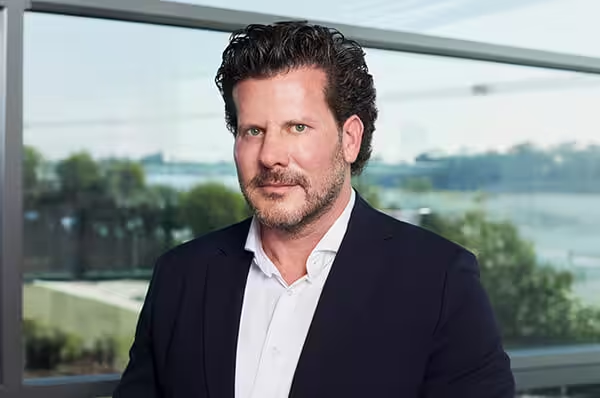
Michael Rainer
Rechtsanwalt, Founder & CEO

Marc Klaas
Rechtsanwalt, Partner

Michael Below
Rechtsanwalt, LL.M., Salary Partner




Berlin
Cologne
Hamburg
Düsseldorf
Frankfurt
Munich
Stuttgart
Leipzig
Local. Regional. International.
How MTR Legal Builds Your AML Compliance
Analysis, strategy, and implementation from a single source
For companies in Dresden and beyond, adhering to anti-money laundering compliance is of central importance. Particularly in the dynamic region of Silicon Saxony, where technology companies and international investors converge, the correct implementation of the Anti-Money Laundering Act (AML Act) requirements presents a significant challenge. The obligation to prevent money laundering and terrorism financing is not only legally mandated but also protects the company from substantial fines and reputational damage. For lawyers, notaries, real estate agents, and financial service providers in Dresden, it is essential to develop and implement a sound compliance strategy.
MTR Legal's approach begins with a comprehensive initial consultation, during which the specific requirements and risks of the company are analyzed. Based on this, we develop a tailored strategy that complies with the Anti-Money Laundering Act (AML Act). This includes setting up effective KYC processes (Know Your Customer) and implementing appropriate internal safeguarding measures. A central aspect is the obligation to submit suspicious activity reports, which can incur high fines if not observed. Our legal teams ensure that all processes are seamlessly integrated into the existing corporate structure to minimize legal risks.
For the client, this means being able to continue business activities legally protected without the risk of significant sanctions. MTR Legal accompanies the entire process from analysis to final implementation, ensuring that companies are well-positioned in the area of anti-money laundering prevention. This allows Dresden's high-tech founders from Silicon Saxony and other clients to operate safely while benefiting from our comprehensive legal advice.
Common Failures in Anti-Money Laundering
What can go wrong — and how legal advice protects
In the dynamic economic landscape of Dresden, shaped by Silicon Saxony, adhering to anti-money laundering compliance is crucial. Companies such as technology startups and international investors face the challenge of implementing legally compliant processes to avoid fines and legal consequences. Especially in industries with high transaction frequencies, such as microelectronics or financial services, the risk of inadvertently violating the Anti-Money Laundering Act (AML Act) increases. Compliance errors can result in not only financial penalties but also long-lasting damage to the company's image.
A common mistake in implementing AML compliance is the lack of understanding of KYC processes (Know Your Customer). These are essential for verifying the identity of customers and business partners. Companies that neglect this risk becoming involved in illegal activities. Another risk lies in inadequate documentation and monitoring of transactions, as prescribed by § 2 AML Act. The obligation to report suspicions of money laundering or terrorism financing is often overlooked or delayed, leading to significant legal consequences.
For companies in Dresden, this means they must take proactive measures to optimize their compliance structures. Legal advice can help understand and effectively implement the complexity of anti-money laundering prevention measures. The team at MTR Legal assists in developing tailored solutions for clients to minimize risks and comply with legal requirements. This ensures that your company not only meets legal requirements but also strengthens the trust of your business partners.
Step-by-Step to a AML-Compliant Organization
Which steps to take and what clients should prepare
Implementing anti-money laundering compliance is crucial for companies in Dresden, especially in the dynamic environment of Silicon Saxony. Technology companies and investors operating in this region must meet strict legal requirements to avoid fines and protect their reputation. Compliance with anti-money laundering regulations is not only a legal necessity but also an important part of corporate ethics. By adhering to compliance guidelines, companies can strengthen the trust of their business partners and customers, which is invaluable in Dresden's technology-driven economy.
The process of anti-money laundering compliance begins with identifying obligations under the Anti-Money Laundering Act, particularly the requirements for KYC processes (Know Your Customer). Companies must ensure they collect and document the necessary information to verify their customers' identities. This typically requires providing identification documents and other relevant materials. A key component of compliance is also submitting suspicious activity reports to the relevant authorities when irregularities are detected. Timely planning of these steps is crucial to meet deadlines and avoid legal sanctions. Companies should familiarize themselves with the provisions of § 2 AML Act to understand the specific requirements.
For companies, this necessitates establishing internal processes that enable continuous monitoring and documentation. MTR Legal assists you in developing tailored compliance strategies that cater to your company's specific needs. Through close collaboration with our teams, you can ensure that all legal requirements are met while focusing on your core business. This way, you remain not only legally secure but also competitive in an ever-changing economy.
Frequently Asked Questions on Anti-Money Laundering
What clients often want to know about AML compliance
What is the obligation to report suspicions under the AML Act?
The obligation to report suspicions is a central component of the Anti-Money Laundering Act (AML Act). Companies and individuals classified as obligated parties must promptly submit a report to the relevant authority if there are facts indicating potential money laundering or terrorism financing. This obligation applies regardless of the amount involved and particularly affects financial service providers, real estate agents, as well as lawyers and notaries in certain contexts. Failure to report or delayed reporting can result in substantial fines.
When is a company required to implement AML compliance?
A company is required to implement AML compliance if it operates in an area defined as high-risk under the Anti-Money Laundering Act. This includes financial service providers, real estate agents, goods dealers, as well as lawyers and notaries involved in certain transactions. These companies must implement measures for risk assessment, customer identification, and suspicious activity reporting. The obligation for compliance arises upon commencement of business activities and requires regular review and documentation of processes.
What costs are associated with implementing AML compliance?
The costs for implementing AML compliance can vary and depend on the size and risk structure of the company. Typical expenses include employee training, the implementation of internal control systems, and possibly consultation by a specialized team. While initial costs can be significant, they serve to protect the company from legal consequences and potential fines that may arise from non-compliance. A precise calculation should be conducted individually.
How does the KYC process work within AML compliance?
The Know-Your-Customer (KYC) process is a key component of AML compliance and involves identifying and verifying the identity of customers. The process begins with collecting basic information such as name and address. In certain cases, verification through identification documents is necessary. Companies must document and regularly update the collected data. The KYC process helps to identify money laundering risks early and respond appropriately.
Structure and Obligations of the Money Laundering Officer
Initial consultation, strategy, and implementation from a single source
Compliance with anti-money laundering is crucial for companies in Dresden, especially in the Silicon Saxony environment. The region is characterized by technology companies and international investors who must ensure strict adherence to legal requirements to prevent money laundering. Due to increased regulatory requirements and complex investment structuring, lawyers, notaries, and other obligated parties are required by law to submit suspicious activity reports and implement KYC processes (Know Your Customer). Failures can result in substantial fines and damage a company's reputation.
The Anti-Money Laundering Act (AML Act) obliges companies to implement comprehensive measures to prevent money laundering and terrorism financing. This includes implementing internal safeguarding measures and developing a risk-based approach to transaction monitoring. The AML Act requires obligated parties to establish processes for identifying and verifying their business partners. This includes regular employee training to ensure all parties understand and can implement legal requirements. Non-compliance can lead to fines and criminal consequences for responsible individuals.
For clients, this means that precise and comprehensive advice is essential. MTR Legal offers tailored support covering all aspects of AML compliance, from initial consultation to strategy development and practical implementation. Our team is at your side to develop an individual strategy specifically tailored to the needs of technology companies in Silicon Saxony. Rely on our experience to minimize legal risks and efficiently meet your compliance requirements.
Sanctions for AML Violations
What you need to know in depth
In Dresden, a hub for technology and innovation, implementing anti-money laundering compliance is crucial, especially for companies in Silicon Saxony. The complexity of money laundering prevention requires a deep understanding of legal requirements, as companies like technology startups and international investors face an increased risk of fines. The requirements for the obligation to report suspicions and conducting KYC processes (Know Your Customer) are particularly relevant in this context to comply with legal obligations and avoid financial sanctions.
A key aspect of anti-money laundering compliance is understanding specific legal requirements such as the Anti-Money Laundering Act (AML Act). Companies must ensure they fulfill their due diligence obligations and act promptly in suspicious cases. This includes identifying the beneficial owner and monitoring transactions. Non-compliance with these regulations can result in significant legal consequences, including criminal prosecution and financial sanctions. Special attention is required for monitoring suspicious activities to timely submit appropriate reports to the relevant authorities.
For clients, this means they must act proactively to strengthen their compliance systems. MTR Legal supports this by offering tailored solutions for complying with anti-money laundering regulations. Our team helps identify and minimize risks by advising and training companies on implementing effective compliance programs. This ensures that our clients not only meet legal requirements but also create a safer business environment.
Need Legal Assistance?
MTR Legal Dresden offers professional legal advice. Let’s find the best solution together.
Interfaces between Tax Law and AML
What clients need to know about tax aspects in detail
The tax aspects of anti-money laundering compliance pose a significant challenge for companies in Dresden, especially in the high-tech sector of Silicon Saxony. Compliance with regulations is essential not only from a legal perspective but also to minimize potential financial risks. For technology companies and international investors in the region, the stringent requirements of the Anti-Money Laundering Act (AML Act) are of particular interest. They must ensure that financial transactions are transparent and traceable to avoid fines or criminal consequences. These compliance requirements are crucial for the long-term success and integrity of the companies.
A central mechanism in anti-money laundering prevention is the obligation to report suspicions under § 43 AML Act. Companies must identify and report suspicious transactions to comply with legal requirements. This requires a comprehensive understanding of KYC processes (Know Your Customer), ensuring that all parties in a financial transaction are correctly identified. Non-compliance with these regulations can result in significant financial sanctions. Additionally, tax reporting obligations are of great importance as they increase transparency and reduce the risk of tax evasion. Companies should therefore continuously review and adjust internal processes to meet legal requirements.
For clients, this means they should proactively take measures to improve their compliance standards. The legal requirements are complex and require regular review of internal processes. The MTR Legal team is at your side to develop individual solutions and effectively implement compliance requirements. This not only ensures legal protection but also strengthens trust in business operations.
Due Diligence in Client Relationships
What the law prescribes — and what clients can do with it
In Dresden, one of Germany's leading technology centers, compliance with anti-money laundering regulations plays a crucial role, especially for companies in the high-tech and financial sectors. The requirements of the Anti-Money Laundering Act (AML Act) are complex and have far-reaching implications for lawyers, notaries, real estate agents, and financial service providers. For these actors, it is essential to implement effective compliance measures to avoid fines and secure the integrity of their business activities. The obligation to submit a suspicious activity report when signs of money laundering are present underscores the urgency of strictly following processes for customer identification and monitoring (KYC).
The Anti-Money Laundering Act, particularly § 2 AML Act, defines the obligations of the mentioned professions and contains clear guidelines for establishing internal safeguarding measures. These regulations are continuously specified by current judgments and developments in case law. A key requirement is conducting a risk analysis to identify and assess potential threats. The law also provides for sanctions in case of violations, which can be not only financial but also damaging to reputation. Companies must therefore continuously adapt their compliance strategies to meet legal requirements and protect their business relationships.
For clients, this means they must act proactively and systematically implement compliance structures. Support from experienced legal advisors like the team at MTR Legal can be crucial in developing tailored solutions that meet the specific requirements of the company. This includes advising on the introduction of KYC processes and preparing for potential legal challenges to secure business operations in the dynamic environment of Dresden.
International Anti-Money Laundering Standards and FATF
What clients need to know about international references and specifics
International references and specifics in the context of anti-money laundering compliance are crucial for companies, especially those in innovative regions like Dresden. As part of Silicon Saxony, a leading microelectronics cluster in Europe, Dresden companies are often in the international spotlight. However, this globalization also brings challenges, particularly regarding compliance with anti-money laundering guidelines. For internationally operating companies, inadequate implementation of compliance requirements can pose significant financial risks, including fines and reputational losses. Therefore, it is essential to engage with the international aspects of anti-money laundering compliance and the associated legal requirements.
In Germany, the Anti-Money Laundering Act (AML Act) regulates the requirements for anti-money laundering. However, companies operating internationally must also consider the regulations of other countries, increasing complexity. A major challenge lies in implementing Know-Your-Customer (KYC) processes, which ensure that all business partners are transparent and verifiable. The obligation to submit a suspicious activity report when signs of money laundering are present is a central component of these processes. Violations of reporting obligations can lead to substantial fines. The requirements of the AML Act are dynamic and require continuous adjustments to meet international standards.
For MTR Legal clients, this means they must proactively engage with anti-money laundering regulations to minimize compliance risks. Our team supports companies in fulfilling specific legal requirements and developing effective compliance strategies. This includes implementing tailored KYC processes and advising on the submission of suspicious activity reports. Compliance with international anti-money laundering regulations is not only a legal necessity but also a crucial contribution to risk mitigation and protecting the company's reputation.
AML Checklist for Your Company
What clients need to know about practical checklists
Compliance with anti-money laundering requirements is crucial for companies in Dresden, especially in the dynamic technology and investment landscape of Silicon Saxony. Lawyers, notaries, and financial service providers often face the challenge of understanding and applying the complex regulations of the Anti-Money Laundering Act (AML Act). A practical checklist can serve as a valuable tool to ensure all legal requirements are met. Particularly in a technology-driven environment like Dresden, where international investors and technology companies operate, precise implementation of compliance requirements is essential to minimize the risk of fines and reputational damage.
A key component of anti-money laundering prevention is compliance with Know-Your-Customer (KYC) processes, regulated in § 10 AML Act. These processes require careful verification of the customer's identity and regular updating of data. Additionally, the obligation to report suspicions under § 43 AML Act ensures that suspicious activities are promptly reported to the relevant authorities. The practical checklist helps structure these processes and implement the requirements efficiently. Companies must also note that non-compliance with these regulations can result in significant financial sanctions, making a systematic approach indispensable.
For MTR Legal clients, this means they can rely on comprehensive support in implementing and monitoring their compliance measures. Our team offers tailored solutions that are aligned with the specific needs and risks of your company. Through close collaboration with our clients, we ensure that they not only meet legal requirements but are also positioned for long-term legal security.