

ESG Compliance – Sustainability Law & Supply Chain Due Diligence for Bremen
Corporate Criminal Law
LkSG Compliance in Bremen: Securely Fulfilling Supply Chain Obligations
Your contact in Bremen for all ESG Compliance matters
Bremen, as a significant trading hub with a strong export orientation, faces specific challenges due to the Supply Chain Act (LkSG). Particularly for companies in the aerospace or foreign trade sectors located in the region, implementing due diligence obligations is crucial. The obligation for risk analysis and potential sanctions of up to 2% of annual turnover make careful planning indispensable. For Bremen-based foreign traders, who are often involved in complex international supply chains, non-compliance with legal requirements can have significant financial implications.
MTR Legal in Bremen offers comprehensive support in implementing LkSG requirements. The firm is distinguished by its extensive client experience and interdisciplinary approach, allowing it to combine legal issues with economic insight. With a deep understanding of Bremen’s key industries, we are the ideal partner to guide companies safely through the requirements of the Supply Chain Act. Talk to our team in Bremen to optimize your compliance strategy and minimize legal risks.
- Hollerallee 26, 28209 Bremen
- +49 421 51236880
- bremen@mtrlegal.com
5000+
Mandate
Team
Experienced Attorneys
Global
International Presence
8
Offices
Competence that Convinces.
Utilize our expertise für Bremen and book a consultation to address your concerns professionally.
Your Team for ESG Compliance in Bremen — MTR Legal
MTR Legal in Bremen: ESG Compliance, professionally handled
- Supply Chain Act: Who is Affected and What Needs to Be Done
- Legal Requirements of the LkSG and the CSRD
- ESG Compliance in Bremen: Legal Foundations
- How MTR Legal Builds Your LkSG Compliance
- Typical Compliance Gaps with the Supply Chain Act
- Step by Step to a LkSG-Compliant Organization
- Frequently Asked Questions about LkSG Compliance
- Risk Analysis under LkSG: What Needs to Be Examined
- Handling Identified Risks in the Supply Chain
International Representation
As a member of the international network of lawyers IR Global, we are your point of contact for cross-border matters and represent you in an international context.
Supply Chain Act: Who is Affected and What Needs to Be Done
Background, Risks, and the Right Strategy
The Supply Chain Act is of significant importance for companies in Bremen, especially for export-oriented sectors like aerospace and foreign trade. Compliance officers and managing directors face the challenge of effectively implementing due diligence obligations to meet legal requirements and avoid potential sanctions. Compliance with these obligations is not only a legal necessity but also an essential part of the ESG strategy increasingly demanded by investors and business partners. The complexity of supply chains and the associated risks require a well-founded risk analysis and a clear strategy to meet the law's requirements.
The Supply Chain Act requires companies with more than 1,000 employees to conduct a comprehensive risk analysis and take appropriate measures to prevent human rights violations and environmental damage in the supply chain. According to § 3 LkSG, companies must establish and document processes for identifying and assessing risks. Non-compliance can result in sanctions of up to 2% of annual turnover, which can have significant financial impacts. For Bremen-based companies in logistics and foreign trade, it is especially important to closely monitor cross-border structures to meet legal requirements and maintain international reputation.
For compliance officers, this means that proactive measures are necessary to meet the requirements of the Supply Chain Act. MTR Legal supports clients by developing tailor-made compliance programs that are tailored to the specific risks and structures of each company. With our experienced team, we help you implement the necessary processes and minimize potential risks to ensure long-term legal security.
Legal Requirements of the LkSG and the CSRD
Law, Jurisprudence, and Practice Explained
In Bremen, a significant trading and logistics hub, ESG compliance is particularly relevant. The requirements of the Supply Chain Act (LkSG) affect companies with more than 1,000 employees and demand a careful risk analysis along the entire supply chain. For managing directors and compliance officers in the region, understanding the complex legal frameworks is crucial to avoid sanctions that can amount to up to 2% of annual turnover. Thus, ESG compliance is not only a legal obligation but also a competitive advantage in Bremen's highly export-oriented economy.
The legal framework for ESG compliance is largely determined by the Supply Chain Act, which defines explicit due diligence obligations. Companies are required, according to § 3 LkSG, to conduct a risk analysis and take preventive measures. Current jurisprudence shows that courts are increasingly focusing on compliance with these obligations and consistently sanctioning violations. A key mechanism is the documentation requirement, which forces companies to comprehensively document their measures. This not only creates transparency but also offers opportunities to develop individual compliance strategies that meet both legal requirements and business objectives.
For clients of MTR Legal, this means that well-founded advice and implementation of ESG compliance structures are essential. Our team assists in the legal assessment and optimization of compliance processes to minimize risks and seize opportunities. This is particularly important for Bremen-based companies with an international focus, as they often have to manage complex cross-border supply chains. A proactive approach to ESG compliance can thus not only provide legal security but also contribute to sustainable business development in the long term.
ESG Compliance in Bremen: Legal Foundations
Legally Secure ESG Compliance Advice by Experienced Lawyers
For companies in Bremen, especially for foreign traders and logistics companies, compliance with the due diligence obligations under the Supply Chain Act (LkSG) is crucial. In a region with strong export orientation and internationally networked structures, non-compliance can lead to significant risks, including reputational losses and sanctions of up to 2% of annual turnover. The implementation and monitoring of these obligations require a precise and legally secure approach, which the MTR Legal team in Bremen provides.
The Supply Chain Act obliges companies to conduct a comprehensive risk analysis to ensure human rights and environmental due diligence along the entire supply chain. The regulations in the LkSG are decisive here. MTR Legal supports clients in the structured implementation of these requirements by developing tailor-made compliance programs. These programs take into account both the company-specific circumstances and the international interconnections of Bremen's economy. Through close cooperation with our clients, we ensure that all legal obligations are fulfilled not only on paper but also in practice.
For managing directors and compliance officers with more than 1,000 employees, this means they can rely on well-founded advice that takes place at eye level. MTR Legal is the right partner to effectively tackle the complex requirements of the LkSG and minimize legal risks. Through our personal and structured approach, we can ensure that ESG compliance not only remains a legal requirement but also creates sustainable value for your company.
Create Clarity – Now!
For legal clarity and strategic foresight – our team in Bremen is ready to support you. Don’t hesitate to contact us.
Your Team
Competent. Assertive. Successful.
Our team in Bremen follows a consulting philosophy based on personal exchange and structured approach. We work at eye level with our clients to develop tailor-made solutions for the complex requirements of the Supply Chain Act (LkSG). In Bremen, an important trading hub with strong export orientation, our clients can expect dedicated and precise support that is oriented towards the individual needs of their corporate structures.
The MTR Legal team in Bremen focuses on the implementation of due diligence obligations under the LkSG. We offer comprehensive risk analyses and develop compliance strategies to avoid potential sanctions. MTR Legal is the right partner to master the legal challenges in the field of ESG compliance. Our in-depth knowledge of local and international trade structures makes us particularly valuable for Bremen-based companies. Use our experience to efficiently implement your compliance requirements. Contact us to secure and future-proof your legal matters.
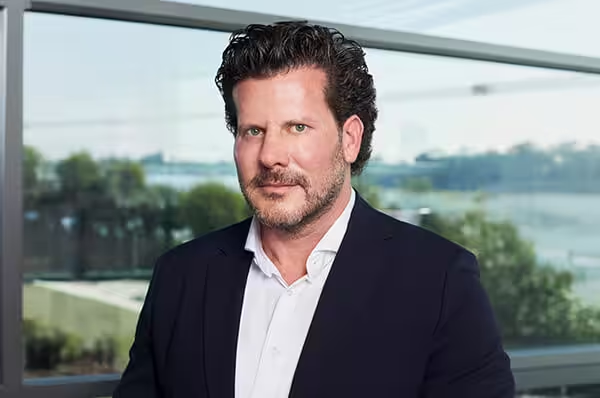
Michael Rainer
Rechtsanwalt, Founder & CEO
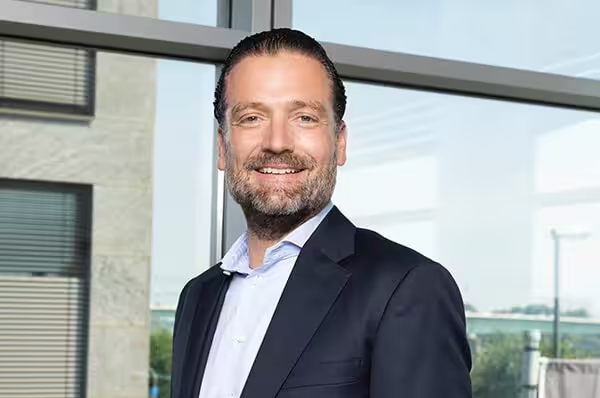
Marc Klaas
Rechtsanwalt, Partner

Michael Below
Rechtsanwalt, LL.M., Salary Partner




Berlin
Cologne
Hamburg
Düsseldorf
Frankfurt
Munich
Stuttgart
Leipzig
Local. National. International.
How MTR Legal Builds Your LkSG Compliance
What Our Clients Can Expect from MTR Legal in ESG Compliance
The implementation of due diligence obligations under the Supply Chain Act (LkSG) is crucial for many companies, especially those with an international focus like in Bremen. The city is a significant trading and logistics hub, so companies here often operate with complex supply chains. Compliance with the LkSG requirements is not only important from a legal perspective but also for a company's reputation. Insufficient implementation can lead to financial sanctions and sustainably damage the company's reputation. Therefore, it is essential to precisely understand and implement the requirements.
As part of our ESG compliance mandates, MTR Legal offers comprehensive support in implementing the LkSG. Our approach begins with an initial consultation to analyze existing structures and conduct a detailed risk analysis. This is particularly important as the LkSG requires companies to identify and assess risks in their supply chain. Strategy development takes into account the specific challenges and requirements arising from the law. The practical implementation occurs in clearly defined steps to ensure that all due diligence obligations are met. Non-compliance can result in sanctions of up to 2% of annual turnover, underscoring the importance of correct implementation.
For our clients, this means they benefit from a structured and legally secure process tailored to their individual needs. MTR Legal accompanies you from analysis to implementation, ensuring that all compliance requirements of the LkSG are met. Timely and professional implementation of these obligations not only protects against potential sanctions but also strengthens your company's position in international competition.
Typical Compliance Gaps with the Supply Chain Act
Concrete Examples: Where Clients Make Mistakes in ESG Compliance
The implementation of due diligence obligations under the Supply Chain Act (LkSG) is crucial for companies, especially those in Bremen that are strongly export-oriented. Companies that neglect these obligations risk significant sanctions, which can amount to up to 2% of annual turnover. These risks particularly affect compliance officers and managing directors of large companies with over 1,000 employees. Without precise risk analyses, companies risk violating the LkSG requirements and endangering their competitiveness. In a dynamic trade environment like Bremen, such mistakes can have serious consequences for international trade and logistics.
A typical mistake companies make without legal advice is inadequate risk analysis, which is required as part of ESG Compliance. The Supply Chain Act requires companies to closely monitor not only their own processes but also those of their suppliers. Without comprehensive analysis and knowledge of the relevant legal requirements, gaps can easily arise, leading to violations. Practical consequences include fines and reputational losses. Particularly tricky is the incorrect assessment of supply chain risks, often resulting from an incomplete or faulty data basis. Many companies also lack clear processes for regularly reviewing and adjusting their compliance strategies.
For clients, this means that careful and continuous review of supply chain processes is essential. MTR Legal can help design the risk analysis under the LkSG correctly and thus avoid legal pitfalls. Our team provides you with the necessary support to develop and implement effective compliance strategies that not only meet legal requirements but also ensure the long-term stability and growth of your company.
Step by Step to a LkSG-Compliant Organization
Realistic Timeline and Preparation for Your ESG Compliance Mandate
For companies in Bremen engaged in global trade or logistics, implementing due diligence obligations under the Supply Chain Act (LkSG) is crucial. The law's requirements aim to minimize human rights and environmental risks along the supply chain. Failure to meet these obligations can have significant financial consequences, including sanctions of up to 2% of annual turnover. These compliance requirements are particularly relevant for Bremen-based companies with an international corporate structure, as they not only provide legal security but also protect reputation in the global market.
The ESG compliance process begins with a detailed risk analysis, which typically takes several weeks. This analysis identifies potential risks in the supply chain and lays the foundation for further measures. The next step is the implementation of preventive measures, followed by the creation of a report that meets the requirements of the LkSG. This report must be regularly updated to ensure compliance with regulations. Ongoing monitoring and documentation are also critical components of the process to timely identify and address potential violations. The legal requirements according to § 3 LkSG also stipulate that companies must provide specific documentation demonstrating compliance with due diligence obligations.
For clients of MTR Legal, this necessitates early planning and implementation of the appropriate measures. Our team provides comprehensive support in creating a tailored compliance plan that meets your company's specific needs. Through proactive advice and close guidance throughout the process, we ensure not only legal compliance but also the long-term stability of your business relationships.
Frequently Asked Questions about LkSG Compliance
What You Should Know Before Consulting on ESG Compliance
What is the Supply Chain Act (LkSG) and what obligations does it include?
The Supply Chain Act (LkSG) obliges companies to fulfill human rights and environmental due diligence obligations along their supply chains. Key obligations include risk analysis, preventive measures, remedial measures, and the establishment of a complaints procedure. Companies must regularly publish reports and document compliance with the regulations. The law aims to prevent human rights violations and environmentally harmful behavior in global supply chains and can result in sanctions of up to 2% of annual turnover in case of violations.
When must companies implement the requirements of the LkSG?
Companies with more than 3,000 employees have been required to implement the requirements of the Supply Chain Act since January 1, 2023. As of January 1, 2024, the law also applies to companies with more than 1,000 employees. This means that affected companies should start implementing the necessary processes and structures in a timely manner to meet legal requirements on time and avoid potential sanctions.
What sanctions are threatened for violations of the LkSG?
Violations of the Supply Chain Act can have significant financial consequences. Possible sanctions include fines of up to 2% of the company's global annual turnover. In addition, the affected company may be temporarily excluded from public contract awards. These sanctions underscore the importance of thorough and timely implementation of the LkSG requirements to minimize compliance risks.
How does the risk analysis under the LkSG work?
The risk analysis is a central component of the Supply Chain Act and requires a systematic recording and assessment of potential risks in the supply chain. Companies must regularly check whether human rights or environmental violations are imminent, considering the entire supply chain. The analysis should be based on defined criteria and forms the basis for all further measures such as prevention and remedy. A thorough risk analysis helps to identify violations early and take appropriate measures.
Risk Analysis under LkSG: What Needs to Be Examined
Background, Risks, and the Right Strategy
The implementation of due diligence obligations under the Supply Chain Act (LkSG) poses a central challenge for many companies, especially in a trade and logistics hub like Bremen. Compliance officers and managing directors of companies with over 1,000 employees are particularly addressed here. The obligation for risk analysis is a key component of the legal requirements of the LkSG. It serves to identify potential risks in the supply chain and take appropriate measures. Failure to do so can result in sanctions amounting to up to 2% of annual turnover, highlighting the need to consistently meet legal requirements to avoid financial repercussions.
The risk analysis under the LkSG involves methodical steps that must be tailored to the specific needs and structures of a company. The legal framework is defined by the law's requirements, which set concrete demands on documentation and reporting. Compliance officers must ensure that all identified risks are comprehensively documented and appropriate measures are initiated. The provisions according to § 3 LkSG are decisive, setting the framework for risk analysis and its implementation. Practical consequences arise particularly from the need to regularly create reports and continuously monitor compliance with due diligence obligations.
For companies, this means they must closely examine and, if necessary, adjust their internal processes and structures. MTR Legal offers you comprehensive support by assisting you in implementing an effective risk analysis and helping to efficiently meet the legal requirements of the LkSG. With our experience, we ensure that you are legally protected and meet the complex compliance requirements.
Need Legal Assistance?
MTR Legal Bremen offers professional legal advice. Let’s find the best solution together.
Handling Identified Risks in the Supply Chain
Background and the Right Strategy for Clients
In Bremen, a significant trade and logistics center, implementing due diligence obligations under the Supply Chain Act (LkSG) is crucial for companies. The obligation for risk analysis particularly affects compliance officers and managing directors of companies with more than 1,000 employees. They must ensure that potential risks in the supply chain are identified and appropriate measures are taken. Given the possible sanctions, which can amount to up to 2% of annual turnover, careful handling of these legal requirements is essential. This is particularly relevant for Bremen-based foreign traders and logistics companies operating in international markets.
The legal requirements of the LkSG include conducting a risk analysis, identifying and assessing human rights and environmental risks along the entire supply chain. Companies must define and implement appropriate preventive and remedial measures according to the Supply Chain Due Diligence Act. These mechanisms require not only a detailed knowledge of the legal provisions but also the ability to integrate them into operational practice. Non-compliance with these obligations can not only lead to significant financial sanctions but also sustainably damage the company's reputation.
For clients, this means that a proactive approach to compliance strategy is essential. Well-founded advice from the MTR Legal team can help effectively navigate and implement the complex legal requirements. This not only minimizes the risk of sanctions but also strengthens the company's position in the supply chain. Implementing a comprehensive compliance strategy is therefore not only a legal necessity but also a key component of business success.