

Whistleblower Protection Act – HinSchG Compliance & Whistleblowing System for Aachen
Defense against allegations of illegal employment – swift & decisive.
Whistleblower Protection in Aachen: Establishing Reporting Systems and Compliance
MTR Legal advises clients in Aachen on all matters related to the Whistleblower Protection Act
The Whistleblower Protection Act (HinSchG) is of particular importance for companies in Aachen, especially in the technology transfer and automotive sectors, which are influenced by the proximity to RWTH Aachen University. For founders of spin-offs and medium-sized enterprises, implementing a whistleblower system is not only a legal obligation but also a necessity to avoid fines. Additionally, there is a risk of abusive reports that need to be handled with legal experience. Therefore, it is crucial for companies in Aachen to establish a legally secure position and diligently implement the requirements of the HinSchG.
MTR Legal is the right partner in Aachen to support companies in implementing the Whistleblower Protection Act. With extensive experience in legal consulting for technology companies and an interdisciplinary approach, MTR Legal offers tailored solutions. Our team understands the unique challenges faced by companies in Aachen and can assist in establishing an effective whistleblower system. Speak with our team in Aachen to ensure your company is legally protected and meets regulatory requirements.
- Oppenhoffallee 143, 52066 Aachen
- +49 241 89030580
- aachen@mtrlegal.com
5000+
Mandate
Team
experienced lawyers
Global
Internationally active
8
Offices
Competence that convinces.
Utilize our expertise für Aachen and book a consultation to address your concerns professionally.
MTR Legal – Your Lawyers for Whistleblower Protection Act in Aachen
From initial consultation to implementation — legally secured
- Whistleblower Protection Act: What Companies Need to Implement
- Legal Framework of the HinSchG
- Whistleblower Protection Act in Aachen: Legal Foundations
- How MTR Legal Builds Your Compliance Reporting System
- Common Mistakes in HinSchG Implementation
- Step by Step to a Legally Compliant Reporting Office
- Frequently Asked Questions about Whistleblower Protection
- Internal Reporting Office: Structure and Legal Requirements
- Handling Incoming Reports: Procedures and Protection Obligations
Internationally Represented
As a member of the international network of lawyers IR Global, we are your contact for cross-border matters and represent you in the international context.
Whistleblower Protection Act: What Companies Need to Implement
What clients need to know — Background and action options for clients
The Whistleblower Protection Act (HinSchG) is particularly significant for companies in Aachen, as it mandates the implementation of an effective whistleblower system for businesses with 50 or more employees. This legal requirement primarily affects medium-sized technology companies and spin-offs from RWTH Aachen University, which often experience rapid growth and exceed the employee threshold. Compliance with the law not only protects the company from potential fines but also promotes a transparent corporate culture, essential for success in the competitive technology landscape of Aachen.
The HinSchG mandates that companies establish internal reporting channels that allow employees to anonymously report violations. The legislator has detailed the requirements for these reporting channels in § 8 HinSchG to prevent abuse and ensure the confidentiality of reports. Failure to meet this obligation can lead to significant fines. Companies must also ensure that reported issues are promptly and thoroughly examined. Practically, this means that compliance officers and executives must focus not only on setting up these systems but also on their continuous monitoring and adaptation.
For clients, this necessitates creating appropriate structures in a timely manner to meet the requirements of the HinSchG. MTR Legal supports you in developing and implementing a tailored whistleblower system that complies with legal requirements while considering the specific needs of your company. Our teams at various locations, including Aachen, are at your service to help avoid costly legal consequences and establish a sustainable compliance culture.
Legal Framework of the HinSchG
Legal foundations, current developments, and scope for action
The implementation of a whistleblower system in accordance with the Whistleblower Protection Act (HinSchG) is significantly important for companies with 50 or more employees. Especially in a dynamic environment like Aachen, characterized by RWTH Aachen University and numerous technology spin-offs, compliance with these legal requirements is a crucial component of compliance. The law mandates that companies establish internal reporting channels through which employees can report violations. Avoiding fines and protecting against abusive reports are key aspects that must be considered.
The HinSchG is based on the EU Whistleblower Directive and obligates companies to create secure reporting channels. Particularly relevant are the regulations in § 8 HinSchG, which outline the requirements for confidentiality and independence of reporting offices. Court rulings in recent years have also clarified that companies are responsible not only for the implementation but also for the effectiveness of these systems. The practical consequences are far-reaching: an inadequately designed whistleblower system can lead not only to financial penalties but also damage the company's image.
For compliance officers and executives, this means they must act proactively. MTR Legal can assist in understanding the legal framework and developing tailored solutions that meet the specific requirements of a company. Especially in the technology-oriented environment of Aachen, it is crucial to establish a whistleblower system that meets both legal requirements and the specific needs of the industry.
Whistleblower Protection Act in Aachen: Legal Foundations
Experienced lawyers for Whistleblower Protection Act — personal and directly accessible
The Whistleblower Protection Act, or HinSchG, plays a significant role for companies in Aachen, particularly for medium-sized businesses and innovative technology spin-offs from RWTH Aachen University. Companies with 50 or more employees are required to implement an effective whistleblower system to identify and address compliance violations early. Failure to comply with this obligation can lead to substantial fines and legal risks for the company. This is where the team at MTR Legal comes in, to support companies in Aachen in the introduction and optimization of such systems.
Our approach at MTR Legal aims to combine legal obligations with practical solutions. A structured whistleblower system in accordance with HinSchG minimizes the risk of compliance violations and strengthens the company's integrity. Through clear communication channels and training, we promote an environment that focuses on both the protection of whistleblowers and the prevention of abusive reports. The legal foundation provided by the HinSchG allows us to develop tailored solutions that are customized to the needs of technology companies and suppliers in Aachen.
For compliance officers and executives, this means that a functioning whistleblower system not only fulfills legal requirements but also serves as a tool for improving corporate culture. Our team at MTR Legal offers personal and level-headed advice to ensure that your company in Aachen is not only legally compliant but also benefits from a transparent and fair working environment in the long term.
Create Clarity – Now!
For legal clarity and strategic foresight – our team in Aachen is ready to support you. Do not hesitate to contact us.
Your Team
Competent. Assertive. Successful.
Our team in Aachen places great emphasis on personal and structured advice, always conducted on an equal footing. When working with MTR Legal, you can expect us to provide fact-based and practical solutions tailored to your specific needs. Our clients benefit from our extensive experience and deep understanding of the local economy, which makes us particularly strong in advising companies from the technology and supplier sectors.
In the area of the Whistleblower Protection Act (HinSchG), our team offers specialized support in implementing whistleblower systems. We assist you in meeting legal requirements and avoiding potential fines. With our experience in compliance and IT & Digital, we are the right partner to effectively counteract abusive reports. Our tailored solutions help you minimize legal risks and ensure the integrity of your company. Contact us to discuss your individual requirements and find a customized solution.
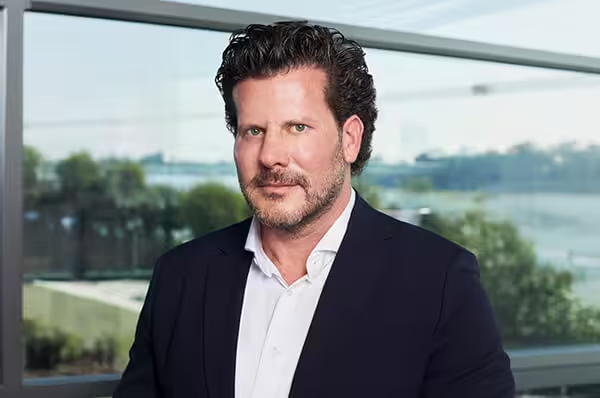
Michael Rainer
Rechtsanwalt, Founder & CEO
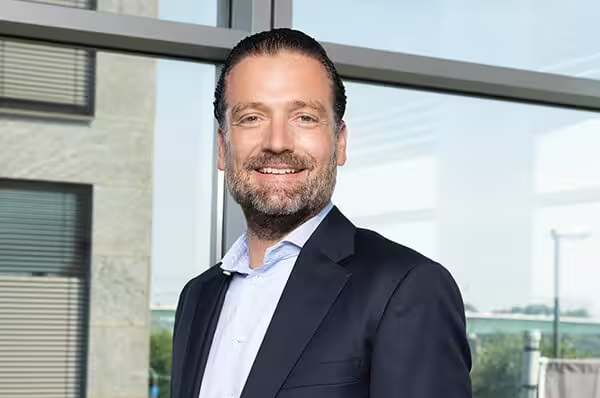
Marc Klaas
Rechtsanwalt, Partner

Michael Below
Rechtsanwalt, LL.M., Salary Partner



Berlin
Cologne
Hamburg
Düsseldorf
Frankfurt
Munich
Stuttgart
Leipzig
Local. Nationwide. International.
How MTR Legal Builds Your Compliance Reporting System
Step by step to a legally secure solution — with MTR Legal by your side
The implementation of a whistleblower system under the Whistleblower Protection Act (HinSchG) is a legal obligation for companies with more than 50 employees. For companies in Aachen, especially for founders of technology spin-offs from RWTH, this presents a significant challenge. The timely and proper establishment of such a system is not only necessary from a legal perspective but also an important step in risk minimization. An effective whistleblower system protects the company from potential fines and contributes to the creation of a transparent corporate culture, which is particularly important in an innovation-driven environment like Aachen.
Our approach at MTR Legal begins with a comprehensive initial consultation, in which we analyze the specific requirements of your company. Based on this, we develop a tailored strategy for implementing the legal requirements of the HinSchG. This includes establishing internal reporting channels and training employees to prevent abusive reports. The practical implementation takes place in several steps, where we work closely with your team to ensure that all legal requirements are met. The entire process usually takes several weeks, depending on the size and structure of the company.
For you as a client, this means that you are not only legally secured but also strengthen the trust of your employees. MTR Legal supports you in making the process efficient and legally secure. With our experience in compliance and our local knowledge in Aachen, we can optimally accompany your company and contribute to the successful implementation of the whistleblower system.
Common Mistakes in HinSchG Implementation
Costly mistakes, underestimated risks, and pitfalls at a glance
The implementation of a whistleblower system under the Whistleblower Protection Act (HinSchG) is not only a legal obligation for companies with 50 or more employees but also an essential part of the compliance strategy. Especially in Aachen, a technology hub with many spin-offs from RWTH, compliance with regulatory requirements is crucial to avoid legal sanctions. However, many companies underestimate the complexity of the implementation or neglect important details, which can lead to significant fines. Improperly set up systems can also increase the risk of abusive reports, leading to internal workload and reputational damage.
Without sound legal advice, clients risk overlooking essential aspects of the HinSchG. A common mistake is insufficient anonymity for whistleblowers, which can violate the provisions of § 8 HinSchG. Additionally, employee training is often neglected, leading to misunderstandings and misuse of the system. Practically, this can result in genuine issues not being uncovered or false reports poisoning the workplace atmosphere. Companies that fail to meet the requirements of the HinSchG risk not only fines but also legal disputes that could have been avoided.
For clients, this means they need to act proactively and not take the implementation of a whistleblower system lightly. Engaging an experienced team like MTR Legal can ensure that the system meets legal requirements and that internal processes run smoothly. Comprehensive advice and regular system reviews can help minimize risks and strengthen compliance.
Step by Step to a Legally Compliant Reporting Office
From initial consultation to implementation — timeline and required documents
The Whistleblower Protection Act (HinSchG) represents an important legal obligation for companies with more than 50 employees. Especially in a city like Aachen, heavily influenced by the innovative power of RWTH Aachen University and its spin-offs, companies face the challenge of implementing an effective whistleblower system. This is not only relevant to meet legal requirements and avoid fines but also to strengthen integrity and trust within the workforce. By introducing such a system, potential issues can be identified and resolved early, ultimately protecting the company's reputation and stability.
The process of implementing a whistleblower system typically begins with an initial consultation, where the specific requirements of the HinSchG are analyzed. This particularly focuses on the legal requirements for anonymity and the protection of whistleblowers. An important step is the creation of an internal policy that outlines how reports are processed and what documents are required. This policy must be aligned with the company's compliance requirements. Implementation can take several weeks, depending on the size of the company and the existing compliance structure. The necessary documentation includes work instructions and communication strategies that must be regularly updated to meet legal requirements.
For the client, this means they need to take action to meet the legal requirements of the HinSchG in a timely manner. MTR Legal supports companies in developing and implementing tailored whistleblower systems to minimize legal risks and ensure effective compliance management. Our team's guidance ensures that all steps are professionally executed and the company is legally protected.
Frequently Asked Questions about Whistleblower Protection
Answers to the most important questions about the Whistleblower Protection Act
What is the Whistleblower Protection Act?
The Whistleblower Protection Act, or HinSchG, serves to protect individuals who report misconduct or violations in a professional context. It implements the EU Whistleblower Directive into German law and requires companies with 50 or more employees to establish an internal whistleblower system. The law aims to protect whistleblowers from retaliation and thus encourage the reporting of legal violations. Companies must ensure that reports are treated confidentially and the identity of whistleblowers is protected.
When must a company implement a whistleblower system?
Companies are required to implement a whistleblower system if they employ at least 50 employees. This obligation arises from the Whistleblower Protection Act, which provides for a staggered introduction. Companies with 50 to 249 employees have until December 17, 2023, to establish an appropriate system. For larger companies, the obligation has been in effect since January 1, 2023. Implementation should be carefully planned to meet legal requirements.
What does it cost to implement a whistleblower system?
The costs for implementing a whistleblower system can vary and depend on various factors such as the choice of technical solution, employee training, and ongoing system management. Companies should conduct a cost-benefit analysis to find the solution that suits them best. A professionally set up system can avoid long-term costs from potential fines or legal disputes. The legislator foresees fines of up to 20,000 Euros for non-implementation.
How do I deal with abusive reports?
Abusive reports pose a challenge as the system should not be misused for personal vendettas. Companies should develop clear guidelines and procedures to identify and handle such cases appropriately. It is important that every report is initially taken seriously and reviewed to detect abuse. In cases of confirmed abuse, disciplinary measures can be taken against the whistleblower. Transparent communication about possible consequences can have a preventive effect.
Internal Reporting Office: Structure and Legal Requirements
Technical and organizational requirements — Background and action options for clients
The establishment of an internal reporting office under the Whistleblower Protection Act (HinSchG) is not only a legal obligation for companies with 50 or more employees but also a central measure for risk minimization. For compliance officers in Aachen, particularly in technology-oriented companies, implementing such systems can be challenging. The regional proximity to RWTH Aachen University, a significant technology transfer hub, underscores the importance of legally secure structures to avoid jeopardizing innovation processes. A well-functioning reporting office contributes to building trust and prevents potential fines that may arise from non-compliance.
Legally, the HinSchG requires companies to establish internal processes that ensure anonymized and confidential reporting. Both technical and organizational measures must be considered. The reporting office must be capable of securely processing information to guarantee the protection of whistleblowers. Companies must comply with data protection requirements according to the GDPR to ensure the integrity and confidentiality of the data. Additionally, the law stipulates that the internal reporting office operates independently to ensure impartial handling of reports.
For clients, this means they need to review and possibly adjust their existing compliance structures. MTR Legal assists companies in efficiently implementing the technical and legal requirements. Through consultation and implementation of tailored solutions, we help minimize legal risks and fulfill the legal mandates of the HinSchG. This is particularly important for companies operating in dynamic markets like Aachen to secure their innovative capabilities while acting in compliance with the law.
Handling Incoming Reports: Procedures and Protection Obligations
Confidentiality and investigation obligation — Background and action options for clients
For companies in Aachen, characterized by the innovative power of RWTH Aachen University, implementing a whistleblower system under the Whistleblower Protection Act (HinSchG) is crucial. Companies with 50 or more employees are legally required to establish such a system. Failing to meet this obligation can result in substantial fines. Moreover, an effective system not only protects against legal consequences but also promotes a culture of transparency and integrity within the company. Especially for founders of technology spin-offs, ensuring professional handling of incoming reports is essential to positively influence the corporate climate.
The HinSchG sets clear requirements for confidentiality and the obligation to investigate reports. Companies are required to protect the identity of the whistleblower and treat the information confidentially. A breach of this obligation can have not only legal but also reputational consequences. Furthermore, the law demands a thorough investigation of incoming reports, with an emphasis on the obligation to document. In particular, § 8 HinSchG regulates confidentiality, while § 11 HinSchG describes the investigation obligation. For companies, this means implementing appropriate measures to ensure these requirements are met and comply with legal mandates.
For compliance officers and executives, this necessitates establishing internal processes that ensure both the protection of whistleblowers and the efficient handling of reports. MTR Legal supports you in developing and implementing a tailored whistleblower system. Our team provides legal experience to ensure all requirements of the HinSchG are met and risks remain minimized.